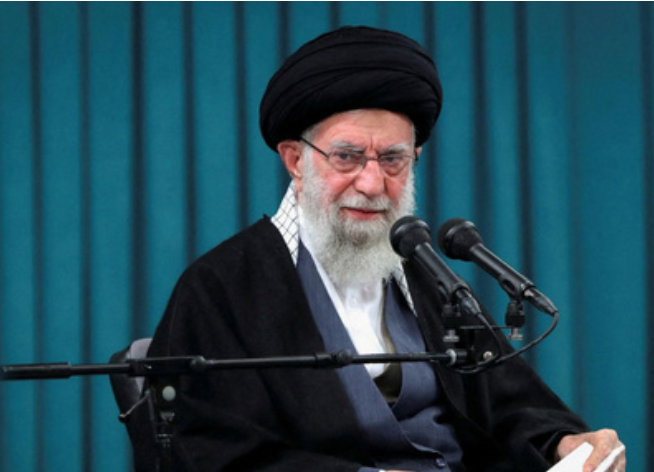
Iran’s supreme leader, Ayatollah Ali Khamenei, was killed in Israeli attacks, with U.S. support, on Saturday. He was 86 years old.
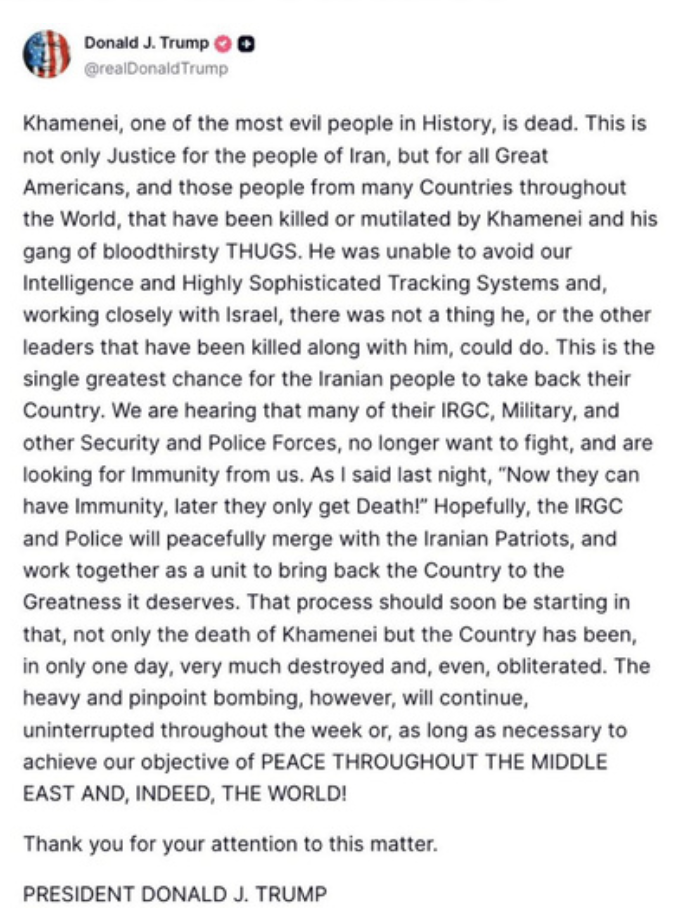
President Trump announced the Iranian leader’s death on social media, saying Khamenei could not avoid U.S. intelligence and surveillance.
A source briefed on the U.S.-Israeli attacks on Iran told NPR earlier Saturday that an Israeli airstrike killed Khamenei.
During his 36-year rule, Khamenei was unwavering in his steadfast antipathy to the U.S. and Israel and to any efforts to reform and bring Iran into the 21st century.
Khamenei was born in July 1939 into a religious family in the Shia Muslim holy city of Mashhad in northeastern Iran and attended theological school. An outspoken opponent of the U.S.-backed Shah Mohammad Reza Pahlavi, Khamenei was arrested several times.
GULF ON EDGE — SRI LANKANS WATCH AND WAIT
When superpowers exchange fire, migrant workers hold their breath.
The escalation between the United States and Iran has sent tremors across the Gulf and for Sri Lanka, this is not distant geopolitics. It is personal. Hundreds of thousands of Sri Lankan citizens live and work across the UAE, Bahrain, Kuwait, Qatar and Saudi Arabia. Their remittances underpin our foreign exchange stability. Their safety underpins family survival.
The Foreign Ministry has called for de-escalation and urged vigilance. Emergency contacts have been circulated. Missions are monitoring developments. It is the correct diplomatic tone, neutral, measured, non-provocative.
But anxiety is real.
Missile alerts in Abu Dhabi. Air defence systems activated in Bahrain. Shipping lanes under scrutiny near Hormuz. Airlines rerouting. Insurance premiums climbing. These are not abstractions. These are signals.
The deeper concern is economic. If Gulf instability disrupts oil flows, remittance corridors or employment markets, Sri Lanka feels it immediately. A spike in crude prices strains our import bill. A slowdown in Gulf construction or services hits job security. The connection is direct.
Colombo must quietly prepare contingency plans: evacuation logistics if required, financial buffers if remittance flows tighten, and energy hedging if crude volatility persists.
Panic is unnecessary. Preparedness is not.
For Sri Lanka, the Middle East is not just a region on a map. It is our external labour market. Our energy artery. Our foreign exchange lifeline.
When the Gulf shakes, we do not observe. We brace
TRUMP’S AT IT AGAIN — IRAN BOMBED AND BOMBS FLY ACROSS THE GULF
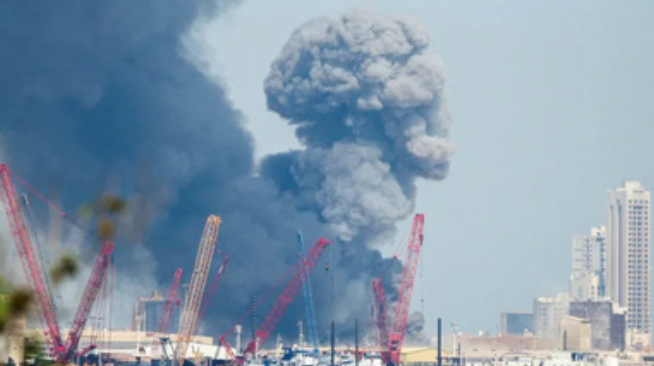
Major combat operations erupted early today as the United States and Israel launched a coordinated military campaign against Iran in what Washington is calling a pre-emptive strike on Tehran’s strategic and military infrastructure. U.S. President Donald Trump announced the offensive dubbed “Operation Epic Fury” citing an existential threat from Iran’s missile arsenals, nuclear ambitions, and support for regional militias. Explosions were reported across key Iranian cities including Tehran, Isfahan, and Tabriz, with communications severely disrupted in the capital and hospitals on high alert as the strikes unfolded.
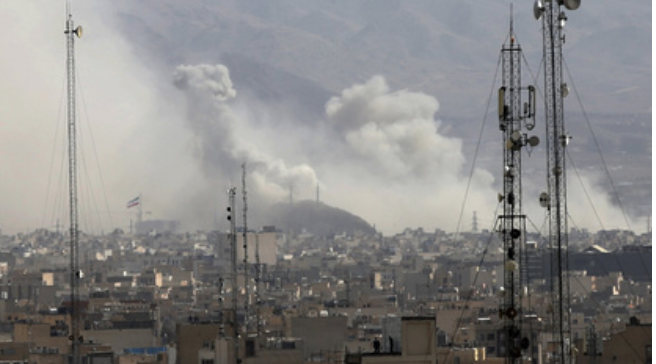
In swift retaliation, Iran’s Revolutionary Guards fired waves of ballistic missiles toward Gulf states hosting U.S. forces, with blasts and air-defence alerts in Abu Dhabi (UAE), Kuwait, Bahrain, Qatar, and Jordan.
One fatality from Iranian missiles was reported in Abu Dhabi, while several other Gulf capital regions scrambled to intercept incoming launches. Bahrain’s military confirmed impacts near the U.S. Fifth Fleet base, and global carriers cancelled flights across the region’s airspace.
WHAT SPARKED IT? — WHY THE U.S. WENT TO WAR
The Trump administration claims the strikes are aimed at destroying Iran’s missile infrastructure, crippling its naval capabilities, and dismantling its support for armed proxies deemed hostile to U.S. and allied interests.
Trump has repeatedly linked Iranian activities — including nuclear development and alleged terrorism support — to threats against regional allies and global security, framing the offensive as unavoidable after Tehran rebuffed diplomatic pressures and nuclear negotiations.
Critics argue the policy amounts to regime change by force, pointing to Trump’s vocal encouragement for Iranians to overthrow their government and for U.S. military dominance to reshape Tehran’s political landscape.
Internal U.S. debate is already emerging, with some lawmakers questioning the legal basis of launching such a broad military campaign without clear Congressional authorization.
IS THERE A JUSTIFICATION? — SUSTAINED ARGUMENT FOR THE ATTACKS?
Proponents in Washington and allied capitals argue the strikes were necessary to neutralise imminent military threats and forestall Iran’s empowerment of proxy groups across the Middle East.
They claim that repeated diplomatic overtures failed to curb Tehran’s nuclear ambitions and that decisive action was required to protect regional stability. Supporters also suggest that a weakened Iranian military presence could embolden internal reform movements.
Opposition voices — including former U.S. military personnel and international legal experts — counter that the offensive lacks transparent justification grounded in verifiable, imminent threats, raising questions about both legality under international law and the strategic wisdom of escalating a long-standing regional conflict.
THE UN RESPONSE — A STRUGGLE TO CONTAIN ESCALATION
At the United Nations, calls for maximum restraint and respect for international law are emerging, but no unified condemnation or resolution has yet been passed. Some member states emphasise the urgency of protecting civilians and returning to diplomatic channels, while powerful Security Council members remain sharply divided.
The lack of a robust multilateral rebuke reflects broader geopolitical fractures over Middle East security policy.
EUROPE’S POSITION — SUPPORTIVE? RELUCTANT?
“WHAT CAN WE DO?”
European leaders have largely reacted with cautious support for de-escalation and calls for restraint, stopping short of full endorsement of military action. Statements emphasise respect for international law and civilian protection, but few European capitals have openly backed Washington’s strategy.
Analysts suggest many EU nations are in a difficult position: aligned with U.S. security interests, yet wary of a wider war they have little appetite to fight directly and limited leverage in the Middle East Some voices within European foreign ministries privately express concern that support for U.S. military action could undermine diplomatic credibility and fuel broader instability, leaving European leaders to balance alliance loyalty with domestic and regional pressures — in many cases electing cautious wording over outright strategic endorsement.
SriLankan Airlines warns of flight delays amid Middle East airspace closures
SriLankan Airlines has warned of possible flight delays due to the closure of airspace in several Middle Eastern countries following heightened tensions between Israel and Iran.
The airline said some flights are being rerouted via Saudi Arabian airspace to maintain passenger safety and operational continuity.
The closures come amid escalating military tensions, with explosions reported across the UAE, Bahrain, Qatar, and Kuwait as Iran retaliates against US-Israeli strikes on Tehran
USA ATTACKS IRAN – OIL PRICES RISING
Crude Oil Price Movement
• Brent crude, the global benchmark most relevant for Sri Lankan imports , has been trading near six- to seven- month highs (around $72–$73 per barrel) amid fears of supply disruption from Iran and tensions around the Strait of Hormuz.

• WTI crude (U.S. benchmark) also rose, finishing the week about 2.5%–3% higher as geopolitical risk premiums built in.
• Analysts have baked a $4–$10 per barrel geopolitical risk premium into price forecasts for 2026 because of the standoff, versus forecasts a month earlier.
Why Prices Are Rising
• Traders are worried about possible disruption to Iranian exports or regional shipping through the Strait of Hormuz , a chokepoint for roughly 20% of global oil exports.
• Even if a direct disruption doesn’t occur, market uncertainty and risk premiums are pushing prices up because crude markets hate instability.
Implications for Sri Lanka’s Imports
Sri Lanka imports crude on the global market, usually priced around Brent. With prices now elevated by geopolitical risk:
• Each $1 increase in Brent crude roughly adds cost to every barrel Sri Lanka buys.
• If Brent stays near $72–$75/bl rather than, say, $60–$65, Sri Lanka’s bill for a typical shipment rises proportionally. • For example (very rough calculation)*:
o A crude shipment might be ~500,000 barrels (typical tanker size).
o A $7 per barrel price rise adds ~$3.5 million extra per shipment.
o On ~10 shipments per year, that’s roughly $35 million more annuallycompared with lower price scenarios , just from a $7/barrel geopolitical premium.
Bottom Line
Geopolitical tensions have pushed crude prices above recent averages, mostly through risk premiums. Traders are pricing in the possibility of disruptions, even if actual supply hasn’t yet been cut , which lifts global benchmark prices and raises the cost of imports like those Sri Lanka makes monthly.