
By Kithmi Gunaratne
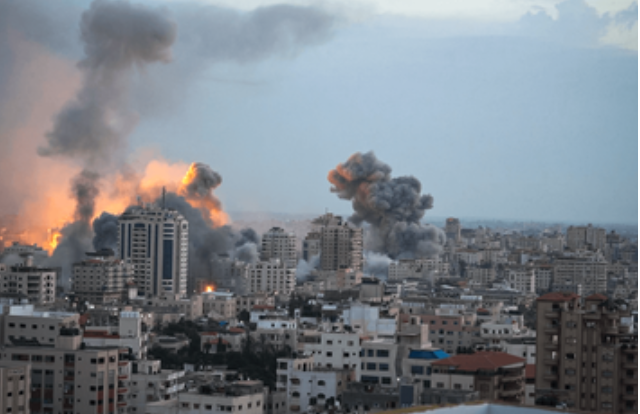
In the small hours before dawn, the sky over Tehran burned again. What Washington and
Jerusalem described as a necessary act of pre-emption — precision strikes aimed at degrading
Iran’s military and nuclear capabilities — was heard across the region as something far more
ominous: the sound of a long-simmering confrontation shedding its last restraints.
The United States and Israel insist their actions were defensive, designed to curb a state they accuse of arming proxies and edging ever closer to nuclear threshold status. Iran calls it aggression, an assault not only on its sovereignty but on the already fragile scaffolding of international law.
Between those competing narratives lies a region once more thrust into uncertainty.
The Middle East is no stranger to brinkmanship. Yet this moment feels qualitatively different.
For years, the conflict existed in the shadows — sabotage operations, cyber intrusions,
assassinations and proxy clashes from Lebanon to Yemen. Diplomacy, however strained,
functioned as a pressure valve. The erosion of the nuclear agreement and the gradual hollowing out of sustained negotiations removed that valve.
What remains is a region crowded with rival alliances, emboldened non-state actors and leaders more fluent in deterrence than dialogue. Insuch an atmosphere, calibration becomes perilous. Every strike risks miscalculation; every retaliation redraws the boundaries of escalation.
Iran’s leadership, navigating sanctions, economic stagnation and internal dissent, frames
resistance as survival. Israel, shaped by its own security doctrine and existential anxieties,
frames force as necessity. Washington, wary of entanglement yet unwilling to relinquish
strategic influence, attempts to balance projection with restraint. But balance is an unstable
posture in a region where perception often carries as much weight as action.
Gulf monarchies quietly assess the vulnerability of energy infrastructure. Turkey hedges its bets. Armed militias await signals. Oil markets react in real time.
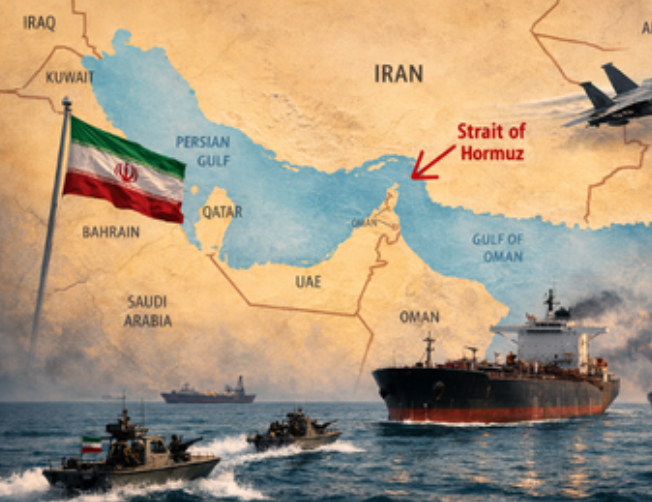
The Strait of Hormuz — that narrow maritime artery through which a significant portion of the
world’s oil flows — suddenly appears even narrower. Even the suggestion of disruption sends prices surging and insurance premiums climbing.
Europe, still recalibrating its energy security, braces for volatility. Asian economies dependent on stable supply chains weigh the inflationary consequences. A conflict measured in missile ranges quickly becomes one measured in grocery bills and transport fares.
For Sri Lanka, thousands of miles from Tehran yet economically entwined with the Gulf, the
unease is immediate and personal. The island’s fragile recovery from sovereign default rests
heavily on remittances sent home by Sri Lankan workers in Saudi Arabia, the United Arab
Emirates, Qatar and beyond. Any prolonged instability that unsettles those labour markets or
forces workers to return would ripple through household economies across the island. Families
reliant on monthly transfers would feel the tremor long before central bank statistics register alarm. Energy vulnerability compounds the anxiety.
Sri Lanka imports the bulk of its fuel. A sustained spike in global oil prices would strain public finances, push up the cost of transport and food, and test the social resilience of a population that has only recently endured shortages and austerity.
Policymakers in Colombo must navigate diplomatic neutrality with care, mindful that alienating any major partner carries consequences in a multipolar world where economic survival often depends on strategic ambiguity.
Beyond immediate economics lies a deeper question about the trajectory of the global order.
This confrontation unfolds at a time when international institutions appear strained and
great-power competition increasingly defines geopolitical behaviour. Calls for de-escalation
echo through diplomatic chambers, yet the machinery of deterrence grinds on. China and
Russia observe closely, assessing how American resolve evolves and where influence might
expand. If the conflict remains contained, it may harden alliances and reinforce existing blocs.
If it spirals, it could accelerate a broader realignment in which regional powers assert greater
autonomy and global governance grows more fragmented.
There is a tendency to treat each Middle Eastern crisis as cyclical — another eruption in a
familiar pattern. But patterns change. The region’s populations are younger and more
connected. Economic diversification is uneven. Public patience is thinner. Prolonged instability
risks fuelling migration, radicalisation and governance breakdowns whose consequences do not respect borders. Europe will confront it in asylum debates; Africa in food security pressures; Asia in commodity volatility. Interdependence ensures that no war remains neatly contained.
And yet, amid the rhetoric of deterrence and strategic necessity, a quieter truth persists. War,
however surgical its presentation, seeps beyond military targets. It reshapes investment flows
and election narratives. It alters tourism decisions and insurance calculations. It widens
inequalities between states that can absorb shocks and those that cannot. For Sri Lanka and
other small economies, the central question is not who prevails militarily, but how to insulate
fragile progress from distant decisions made in moments of crisis.
History will judge this moment not only by the explosions that lit the Tehran skyline, but by what followed them. Military superiority may secure tactical advantage; it rarely secures enduring peace. The more difficult labour lies in rebuilding diplomatic pathways that have withered under distrust. It requires security frameworks that reassure without humiliating, economic openings that incentivise stability, and political courage to accept compromise as strength rather than surrender.
For smaller nations navigating an increasingly polarised world, resilience will depend on diversification, of energy sources, trade partners and alliances, and on reviving traditions of strategic non-alignment rooted in pragmatism rather than ideology.
There is, too, an older wisdom that speaks across centuries to the present moment. As
Gautama Buddha taught,
“Hatred does not cease by hatred, but only by love; this is the eternal rule.” In an age defined by precision weaponry and instantaneous retaliation, that teaching is not
naïve idealism. It is a reminder that peace is not the absence of power, but the discipline to
wield it with restraint.
Whether global leaders choose escalation or empathy will determine if this
latest conflagration becomes another passing blaze , or the fire that reshapes the century.
(KITHMI GUNARATNE IS A PUBLISHED POET AND A STUDENT OF INTERNATIONAL AFFAIRS)