
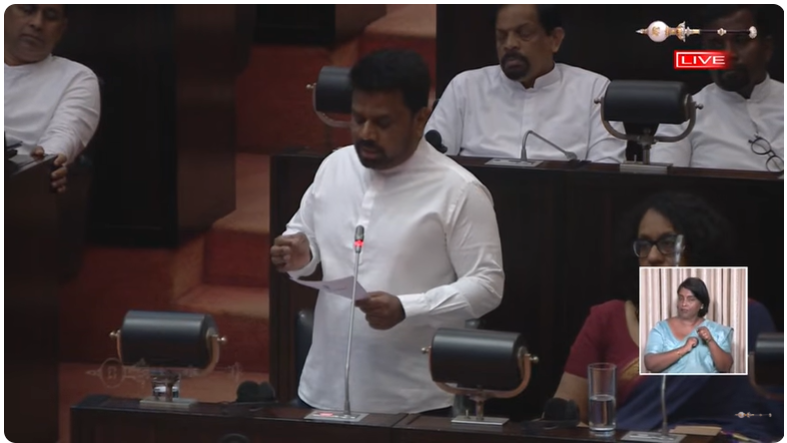
Sri Lanka is undertaking significant upgrades to its fuel storage capacity through several multi-billion-rupee infrastructure projects aimed at expanding storage capabilities and automating distribution processes, President Anura Kumara Dissanayake announced to parliament.
The cornerstone of this expansion is a new 86,000 metric ton (MT) storage complex, which will complement the existing facilities in Kolonnawa. This project entails the construction of six new tanks and the replacement of two decommissioned units. “We are building six brand-new tanks. Additionally, two existing tanks that were decommissioned are being replaced with two brand new ones—bringing the total to eight new tanks. We plan to complete this 86,000 MT capacity complex by 2027,” Dissanayake stated.
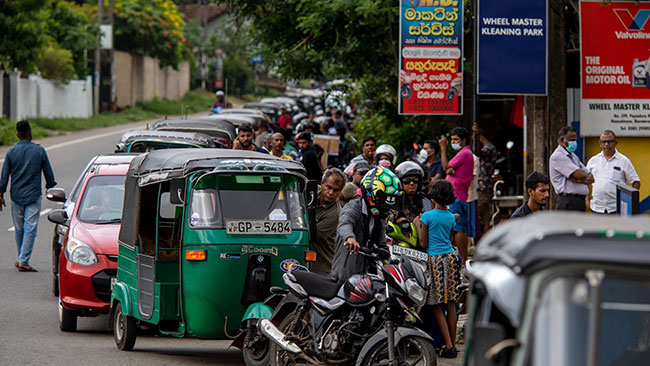
The investment for the six-tank cluster is projected at 3.32 billion rupees, while the two replacement units will require an additional 1.45 billion rupees. “This will add roughly 10 days of additional storage capacity to our reserves,” Dissanayake added. The daily demand for petrol and diesel in the country varies between 8,600 and 8,800 MT, he noted.
In a strategic move to establish Bandaranaike International Airport (BIA) as a regional aviation hub, the government is expediting the construction of a dedicated oil pipeline from Muthurajawela to Katunayake to transport Jet-A1 fuel. This initiative includes the development of a 63,000 MT jet fuel storage facility, which will offer a 10-day buffer for the aviation sector. Tenders for this project have attracted interest from private sector entities, and the contract is anticipated to be awarded within three weeks.
The Ceylon Petroleum Corporation (CPC) has commenced the upgrade of colonial-era oil storage tanks in Trincomalee. The restoration of these tanks is being complemented by a new tender for pipeline systems to ensure the operational functionality of the total 210,000 MT capacity.
Additionally, the government is progressing towards automating gantry systems, with a 1.5 billion rupee tender in process to modernize loading facilities. This shift from manual cranes is expected to expedite the dispatch of fuel bowsers.
Nonetheless, analysts have emphasized that Sri Lanka needs to further liberalize its fuel sectors and attract substantial foreign direct investment in areas such as fuel storage and distribution.