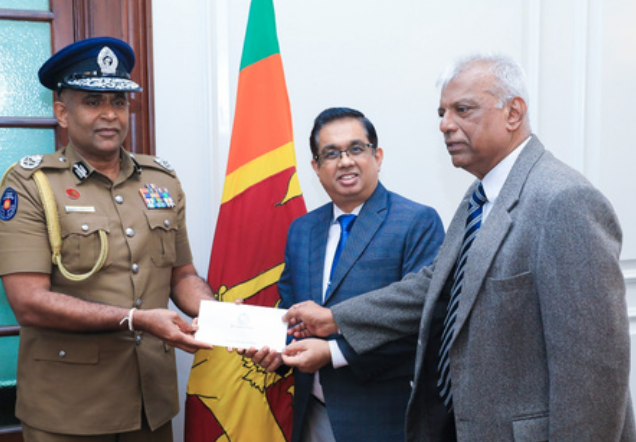
The Sri Lanka Police’s donation of Rs 50 million — equivalent to one day’s pay — to the Rebuilding Sri Lanka fund following Cyclone Ditwah has been widely praised as an act of institutional solidarity. Symbolically, it matters. Practically, it raises harder questions.
There is no disputing the human cost of the cyclone. Relief funding is essential. Public institutions stepping forward sends an important signal in a society fatigued by elite indifference. But symbolism must not be allowed to replace scrutiny.
The police are not a charity. They are a constitutionally mandated arm of the state, funded by taxpayers, entrusted with law enforcement, accountability, and public trust. When such an institution makes a donation, it blurs lines between duty and discretion.
Where did the money come from? How was the decision made? Was consent genuinely collective? These are not cynical questions. They are governance questions — the kind Sri Lanka has learned to ask too late, too often.
More broadly, the gesture reflects a deeper problem: disaster response in Sri Lanka still relies heavily on ad-hoc contributions rather than institutional resilience. Funds are mobilised after crises, not embedded before them. Donations substitute for preparedness.
There is also the uncomfortable optics of a police force making financial gestures while facing longstanding concerns over accountability, politicisation, and public confidence. Solidarity cannot be selective. Trust is built through conduct, not cheques.
This does not negate the value of the contribution. It contextualises it.
If the donation prompts broader transparency, institutional reform, and sustained disaster preparedness, it will have served a purpose beyond symbolism. If it remains a one-day headline, it will change little.
Sri Lanka does not lack gestures. It lacks systems.