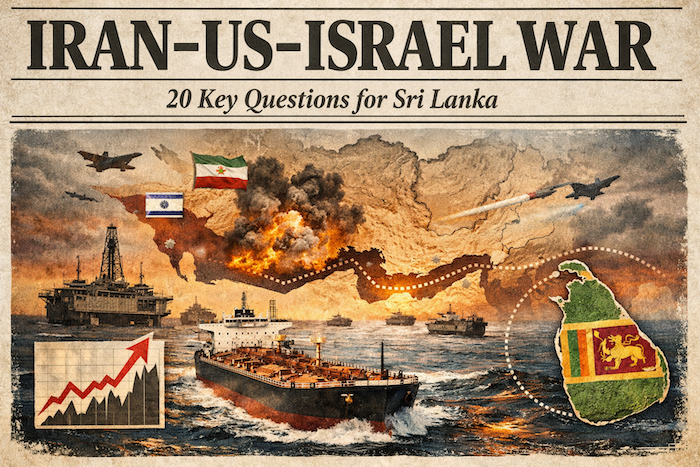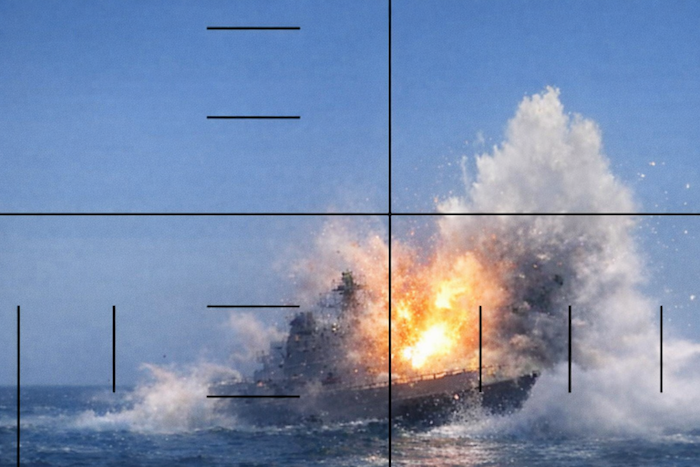
Sri Lanka has unexpectedly found itself on the edge of a widening global conflict after a U.S. submarine strike sank an Iranian naval vessel near the island’s southern coast—an incident that occurred within Sri Lanka’s Exclusive Economic Zone (EEZ) and triggered rescue operations by the Sri Lankan Navy. The episode has revived uncomfortable historical memories and raised serious questions about the country’s territorial integrity and neutrality.
According to international reports, the Iranian warship IRIS Dena was struck by a U.S. submarine in the Indian Ocean roughly 40 kilometers off Sri Lanka’s southern coast near Galle. The attack killed at least 87 sailors while 32 survivors were rescued by Sri Lankan authorities after distress signals were received. The strike took place within Sri Lanka’s EEZ but outside its territorial waters, forcing the island nation to respond to a humanitarian crisis triggered by a conflict in which it is not a participant.
Sri Lanka’s government quickly mobilized naval and air assets to rescue survivors and transport injured sailors to hospitals in Galle. Officials said the priority was saving lives and stabilizing the situation after the vessel sank.
Yet the broader implications extend beyond rescue operations. By carrying out a military strike in waters closely linked to Sri Lanka’s jurisdiction, the United States has risked dragging a neutral nation into a regional war endangering Sri Lankan civilians, fishermen, shipping lanes, and coastal communities.
A Dangerous Precedent for a Neutral Island
Sri Lanka has long maintained a foreign policy rooted in non-alignment. The Indian Ocean surrounding the island is one of the world’s most vital maritime routes, carrying energy supplies, trade cargo, and naval deployments from major powers. A military confrontation occurring so close to the island’s coast introduces risks that go far beyond diplomacy.
The incident highlights three immediate concerns:
- Civilian safety: Local fishermen and commercial vessels operate daily in the waters surrounding the southern coast. A military strike in this zone exposes them to potential danger.
- Shipping disruption: The sea lanes south of Sri Lanka are among the busiest in the world; conflict could disrupt global trade routes.
- Neutrality risk: Conducting hostilities within Sri Lanka’s EEZ risks implicating the country in conflicts between major powers.
For a small island state dependent on maritime stability, such actions threaten both security and economic confidence.
Echoes of a War From 1942
For many Sri Lankans, the incident evokes a painful historical memory. The last time a major military attack occurred near Sri Lankan shores was during World War II, when Japanese forces launched air raids on the island.
On 5 April 1942, carrier-based aircraft of the Imperial Japanese Navy bombed Colombo in what became known as the Easter Sunday Raid. The attacks targeted strategic naval facilities used by the British Eastern Fleet stationed in Ceylon.
Just days later, Japanese aircraft also bombed Trincomalee harbour, one of the largest natural harbours in the world, destroying ships and military infrastructure.
The attacks demonstrated how quickly global conflicts could reach Sri Lanka’s shores when foreign powers treated the island merely as a strategic point in a wider war.
Today’s naval strike off the southern coast though occurring in international waters—serves as a stark reminder that the island remains geographically vulnerable to the rivalries of larger powers operating in the Indian Ocean.
What Should Sri Lanka Do Now?
The immediate humanitarian response by Sri Lanka’s armed forces has been widely praised. However, beyond rescue operations, the government must carefully consider diplomatic and security steps to safeguard the country’s sovereignty.
Policy analysts suggest several measures:
1. Issue a formal diplomatic clarification
Sri Lanka may seek explanations from all involved parties regarding military operations conducted within its EEZ to ensure its neutrality is respected.
2. Reinforce maritime surveillance
Enhanced naval and aerial monitoring could help prevent future incidents from occurring dangerously close to Sri Lankan waters.
3. Advocate for Indian Ocean neutrality
Sri Lanka has historically supported the idea of the Indian Ocean as a “Zone of Peace.” Renewing this diplomatic initiative could help reduce militarization in regional waters.
4. Protect civilian maritime activity
Clear warnings and safety advisories for fishing fleets and commercial vessels may be necessary if regional tensions continue.
A Strategic Crossroads
Sri Lanka’s location at the center of the Indian Ocean’s busiest sea lanes has always been both a blessing and a vulnerability. From colonial naval bases to wartime bombing raids, history shows that global conflicts often reach the island’s shores even when it seeks neutrality.
The sinking of the Iranian warship near Sri Lanka’s economic zone may ultimately become more than just a naval incident. It is a reminder that in times of global tension, even neutral nations must remain vigilant to protect their sovereignty, security, and people.
For Sri Lanka, the lesson from history remains clear: when great powers clash in the Indian Ocean, the island cannot afford to remain silent about its territorial integrity.