By Kithmi Gunaratne
For nearly eight decades, the world has operated under a fragile but powerful assumption: that power, however unevenly distributed, would be constrained by rules.
Those rules, international law, the United Nations, human rights conventions and diplomatic norms formed the architecture of the global order constructed after the second world war. They were never perfect. Powerful states bent them, ignored them and occasionally violated them outright. But they still felt compelled to justify their actions within the language of law. Even when the rules were broken, they mattered.
That assumption is now collapsing.
The war with Iran is not just another regional conflict. It is something more consequential: a signal that the rules meant to govern international behaviour are rapidly losing their authority.
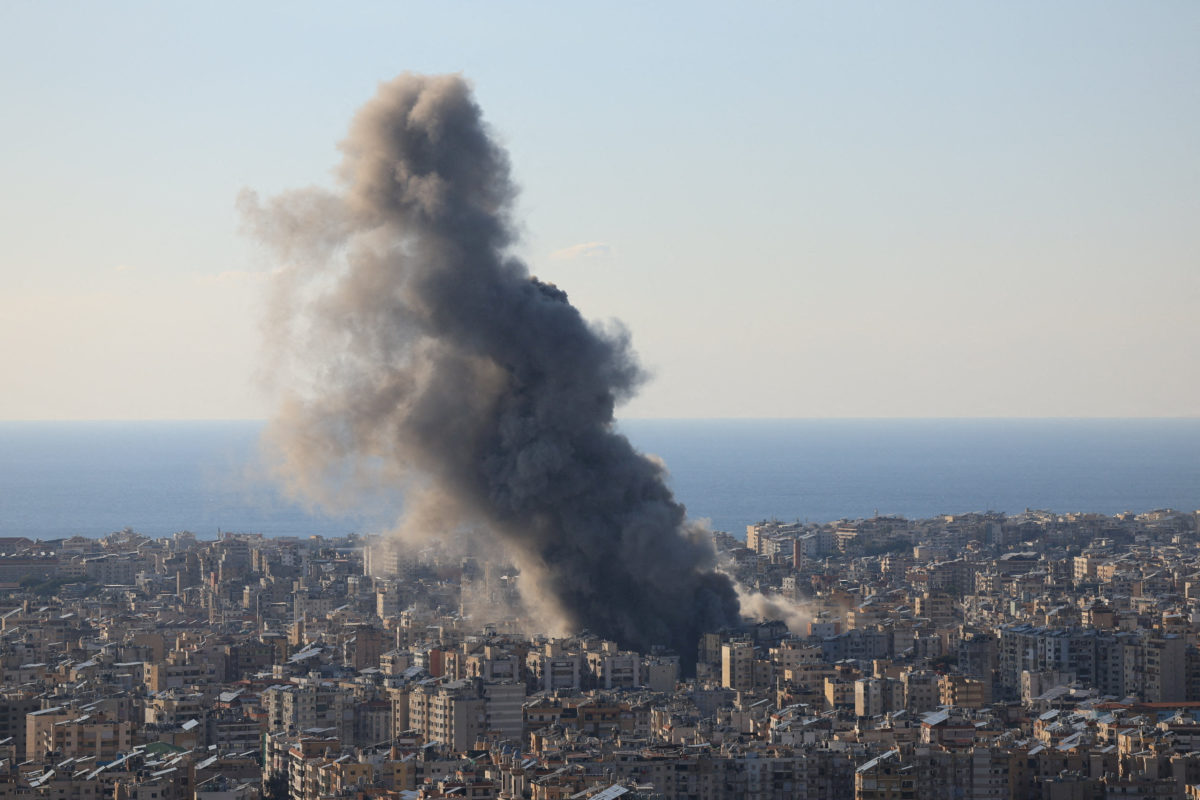
In late February 2026, the United States and Israel launched large-scale strikes across Iran, targeting military facilities, command centres and political leadership in what Washington described as an operation designed to cripple the Iranian regime and halt its nuclear ambitions.
The strikes killed Iran’s supreme leader, Ayatollah Ali Khamenei, along with dozens of senior officials and commanders in the opening hours of the assault.
The operation was extraordinary in both scale and implication. A sovereign state had been attacked without authorisation from the United Nations Security Council, and the killing of a country’s head of state was openly acknowledged as part of the strategy. The justification offered by Washington was strategic necessity: preventing Iran from acquiring nuclear weapons and weakening a hostile regime.
Yet the legal framework that once governed such decisions was largely absent from the conversation.
The United Nations convened emergency discussions, but like many crises before it, the institution was reduced to issuing appeals for restraint while events moved far beyond its control. The system designed to regulate war was forced into the role of spectator.
Iran’s response has turned the conflict into a regional confrontation. Tehran launched missiles and drones at Israeli targets and US military installations across the Gulf, while attacks struck infrastructure and shipping routes tied to the global energy system. The Strait of Hormuz, one of the world’s most important energy corridors, has been disrupted as the conflict spreads across the region.
What makes the moment historically significant is not simply the violence of the war, but what it reveals about the state of the international order.
The rules that once governed the use of force were meant to prevent precisely this scenario. The UN Charter prohibits aggressive war except in cases of immediate self- defence or when authorised collectively by the Security Council. The principle was supposed to mark a decisive break from the world that produced two global wars.
But rules only exist when powerful states believe they must follow them.
The attack on Iran suggests that belief is fading. The United States, long the chief architect and defender of the post-1945 system, has increasingly treated international law as optional when strategic interests are at stake. Under Donald Trump, the language of sovereignty and national interest has replaced the rhetoric of multilateralism that once framed American foreign policy.
The message this sends to the rest of the world is unmistakable. If the state that helped design the rules no longer sees itself bound by them, the incentive for others to respect them diminishes rapidly.
Already the consequences are visible. The Iran war has drawn in multiple actors across the Middle East, destabilised global energy markets and raised the possibility of a broader regional war involving state and non-state forces alike.
Yet beyond the immediate conflict lies a deeper transformation.
International law does not function primarily through courts or enforcement mechanisms. It works because states collectively accept its legitimacy. Violations carry diplomatic, political and reputational costs that make them risky even for powerful governments.
When those costs disappear, the law becomes little more than rhetoric.
That is the danger revealed by the war with Iran. The structures of the post-war order still exist. The United Nations still meets. Diplomats still speak the language of international law. But the belief that these institutions meaningfully constrain the actions of powerful states is weakening.
When that belief erodes, the nature of global politics begins to change. The rules remain on paper, but power returns as the ultimate arbiter.
International orders rarely collapse suddenly. They decay slowly, continuing to function even as their authority fades. For decades the system built after 1945 shaped how wars were justified, how diplomacy was conducted and how states understood their obligations to one another. The war with Iran suggests that era may be ending.
What replaces it is uncertain. It may be a fragmented world of competing power blocs, where alliances and military strength matter more than treaties. It may be a thinner international system in which cooperation survives only where absolutely necessary on climate change, pandemics or nuclear proliferation.
But one thing is already becoming clear.
The rules that once claimed to govern the international system are no longer taken for granted. And when the rules begin to disappear, the world tends to become a far more dangerous place.