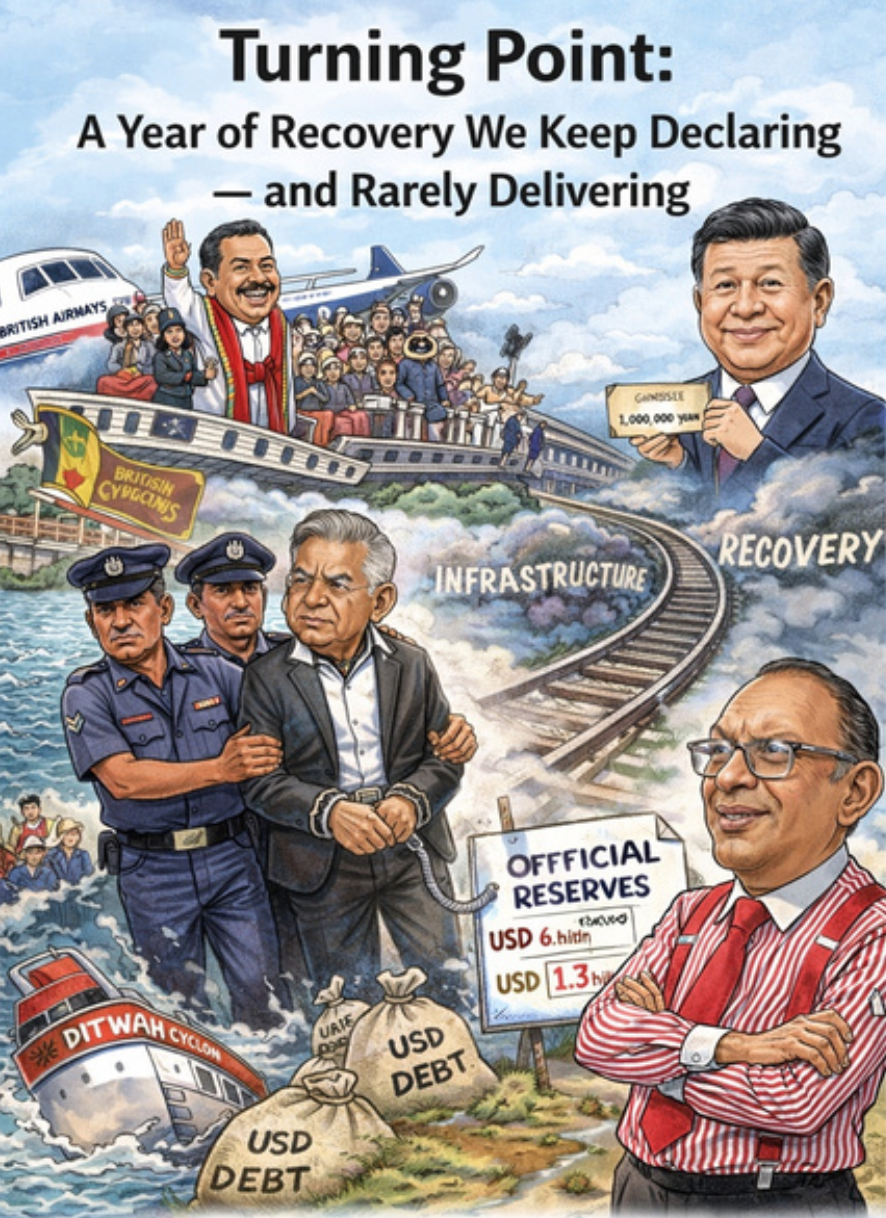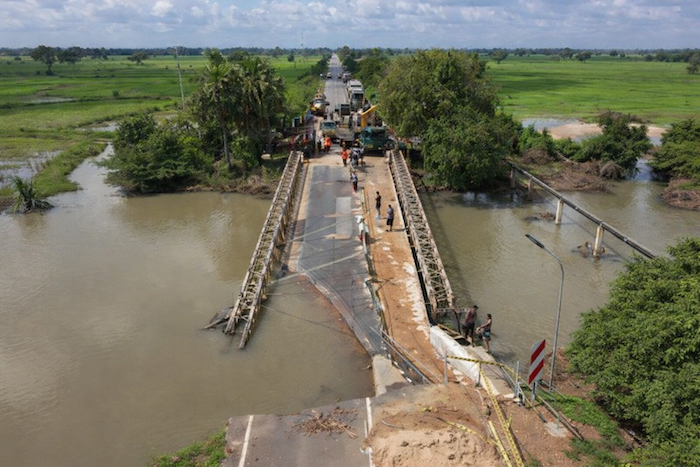
Sri Lanka’s economy, only recently hauled back from the brink, has found itself under renewed scrutiny after Cyclone Ditwah. The questions came fast and predictably: Has the IMF programme gone off the rails? Is the recovery now in jeopardy? Are we back where we started?
The short answer is no.
The longer answer is more uncomfortable.
Let us dispense with the loudest myth first. The IMF agreement has not “gone to pot.” Sri Lanka remains within its Extended Fund Facility framework. There has been no rupture, no walk-out, no dramatic pulling of the plug. What has occurred instead is a pause in process — a deferral of a scheduled review — while the economic and fiscal impact of Ditwah is assessed.
That distinction matters. IMF programmes are designed with contingencies precisely because economies do not operate in laboratory conditions. Natural disasters, wars, pandemics — these are not breaches of discipline; they are tests of resilience. In Sri Lanka’s case, the Fund has responded not with punishment, but with flexibility, including emergency financing to address immediate reconstruction and balance-of-payments pressures.
So why the anxiety?
Because beneath the headlines lies a more fragile truth: Sri Lanka’s recovery, while real, is thin-skinned. It has stabilised. It has not yet hardened.
The progress since the depths of 2022 is undeniable. Inflation has been brought down from catastrophic levels. Growth has returned, modest but meaningful. Reserves have been rebuilt from near-zero. Fiscal discipline, however painful, has restored a measure of credibility that markets had long written off.
But this is stabilisation, not transformation.
The economy remains narrow, exposed, and acutely sensitive to shocks. Tourism, remittances, and a handful of exports still carry disproportionate weight. Debt, even after restructuring, continues to loom. And social buffers — the very shock absorbers that matter most when disaster strikes — remain thin.
Ditwah did not break the recovery. It revealed its limits.
The cyclone’s damage — to housing, agriculture, infrastructure, and livelihoods — will push reconstruction costs into the billions. It will complicate fiscal arithmetic. It will test the government’s ability to balance compassion with discipline, relief with restraint. These are not theoretical dilemmas. They are the daily mechanics of governance in a country still healing from systemic collapse.
This is where careless narratives become dangerous.
To declare the recovery “over” is premature. To declare it “secure” is equally misleading. Sri Lanka today is walking a narrow ridge: one side marked by reform fatigue and populist temptation, the other by social strain and political impatience.
The IMF programme remains the anchor — but an anchor does not steer the ship. That work belongs to domestic policy: consistency, credibility, and an unglamorous commitment to building growth engines that do not rely on weather, sentiment, or geopolitical luck.
There is also a deeper lesson here. IMF agreements can impose discipline, but they cannot manufacture resilience. Climate shocks, global trade shifts, and external volatility will continue to buffet small open economies like Sri Lanka. The question is not whether shocks will come, but whether institutions are strong enough to absorb them without panic or reversal.
For now, the signs are mixed but not grim. The programme is intact. Confidence has not evaporated. But the margin for error is slim, and the cost of complacency high.
Newsline bottom line:
Sri Lanka has stabilised the crisis, not conquered it. Ditwah has not derailed the recovery — it has reminded us how easily it could be. The challenge now is to convert fragile stability into durable strength, before the next shock arrives.
Recovery, after all, is not declared. It is sustained.