Dear Ambassador,
There are moments in diplomacy when silence is a skill. And there are moments when silence becomes complicity. This feels very much like the latter.
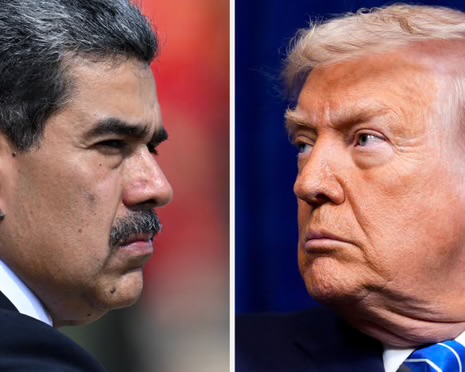
The United States has announced—without visible embarrassment—that it has deposed a sitting Venezuelan president, renditioned him to American jurisdiction, and now proposes to oversee Venezuela’s political transition and, while at it, its oil assets. One struggles to decide which part of that sentence most insults the intelligence of the international community.
As the accredited representative of that state in Sri Lanka, a country frequently lectured on sovereignty, constitutional order, and the sanctity of democratic process, may I ask—plainly—whether this gives you even a moment’s diplomatic pause.
Because from where we sit, incredulity is the only honest response.
We are told—repeatedly—that the modern world is governed by rules, not force. That sovereignty matters. That unilateralism is dangerous. That democracy cannot be imposed at gunpoint. These are not fringe arguments. They are the very pillars upon which the “rules-based international order” is sold to smaller nations like ours, often with considerable moral flourish.
And yet, when it suits Washington, those rules appear remarkably flexible.
The removal of a foreign head of state by external force, followed by extraterritorial rendition, and capped with an announcement of external supervision over a nation’s political future and resource base, is not a grey area. It is not a legal curiosity. It is regime change—executed unilaterally and justified retroactively. If any other power attempted this, the word “empire” would already be doing the rounds in policy briefings and op-eds.
But when the flag is American, we are expected to call it stewardship.
Sri Lanka knows something about external supervision. We know what it means to be told—sometimes correctly, sometimes not—that our institutions are inadequate, our governance flawed, our politics immature. We are advised to defer, comply, reform, and behave. All of which might carry more moral weight if the advising power practiced what it preached when dealing with countries that happen to sit atop inconvenient quantities of oil.
It is the oil, Ambassador, that gives the game away.
Transitions, when externally managed, have a habit of becoming resource management exercises. Elections can wait. Constitutional niceties can be postponed. Stability must be ensured—especially around pipelines, ports, and production. This is not cynicism. It is history. And history has been unkind to populations whose democratic futures were “overseen” in this manner.
One wonders what lesson this is meant to teach the world. That sovereignty is conditional? That elections matter until they produce the wrong outcome? That legality is a function of power, not principle? If so, it is a curious curriculum for a country that positions itself as democracy’s final exam invigilator.
You may argue that Venezuela is an exceptional case. That the ends justify the means. That tyranny must be confronted. Very well. But exceptionalism is a dangerous habit in international affairs. Every empire has believed itself the exception. None ever survived the consequences of that belief.
So I ask, not rhetorically but seriously: how does an ambassador stand before a country like Sri Lanka and speak of rule of law, sovereignty, and democratic norms while representing a government that so casually violates all three? How does one reconcile the lecture with the ledger?
Perhaps you can. Diplomats are trained to manage such contradictions.
But the rest of us are not.
And from here, what we see is not leadership of the democratic world, but a troubling slide into the very conduct that the democratic world once claimed to oppose.
Incredulity, Ambassador, is no longer a reaction. It is a position.
Yours sincerely,
Faraz Shauketaly
NewsLine / Turning Point
farazcolombo@gmail.com