In recent weeks, conversations have been dominated by unpredictable global politics, T20 World Cup fever, progress on the 2025 Corruption Perceptions Index (CPI), emerging health concerns, and the usual political drama.
Sri Lanka has made notable progress on the CPI by Transparency International (TI), ascending 14 places in the rankings that evaluate more than 180 countries and territories based on perceived levels of public sector corruption. This improvement indicates growing confidence in governance reforms, with a three-point rise in the country’s score reflecting a shift in how experts and business leaders perceive institutional integrity today.
As governance indicators have improved, focus has increasingly shifted to public health. Authorities report that approximately 100 new cancer cases are detected daily in Sri Lanka, with nearly 40 deaths each day. Meanwhile, there is heightened vigilance over the potential entry of the Nipah virus, following cases reported in the region, including India and Bangladesh.
On the economic front, external reserves have shown slight movements. Sri Lanka’s official reserve assets recorded a marginal 0.2 percent decline in January, easing to USD 6.824 billion by the end of the month.
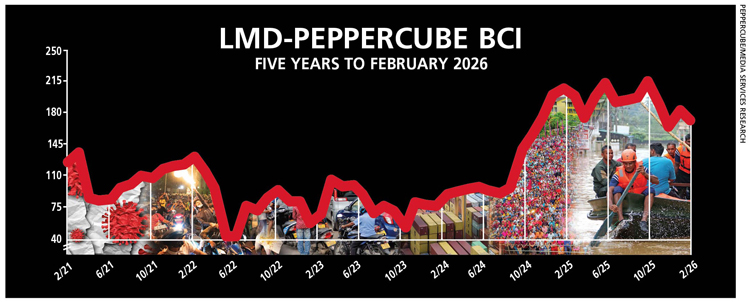
Against this complex backdrop, the latest LMD-PEPPERCUBE Business Confidence Index (BCI) has fallen once again, dropping by 11 basis points from 182 in January to 171 in February. The barometer remains 46 points higher than its historic median of 125 but sits 18 points below the 12-month average of 189. Comparatively, the index stood at 204 in February last year, 33 points higher than the current reading.
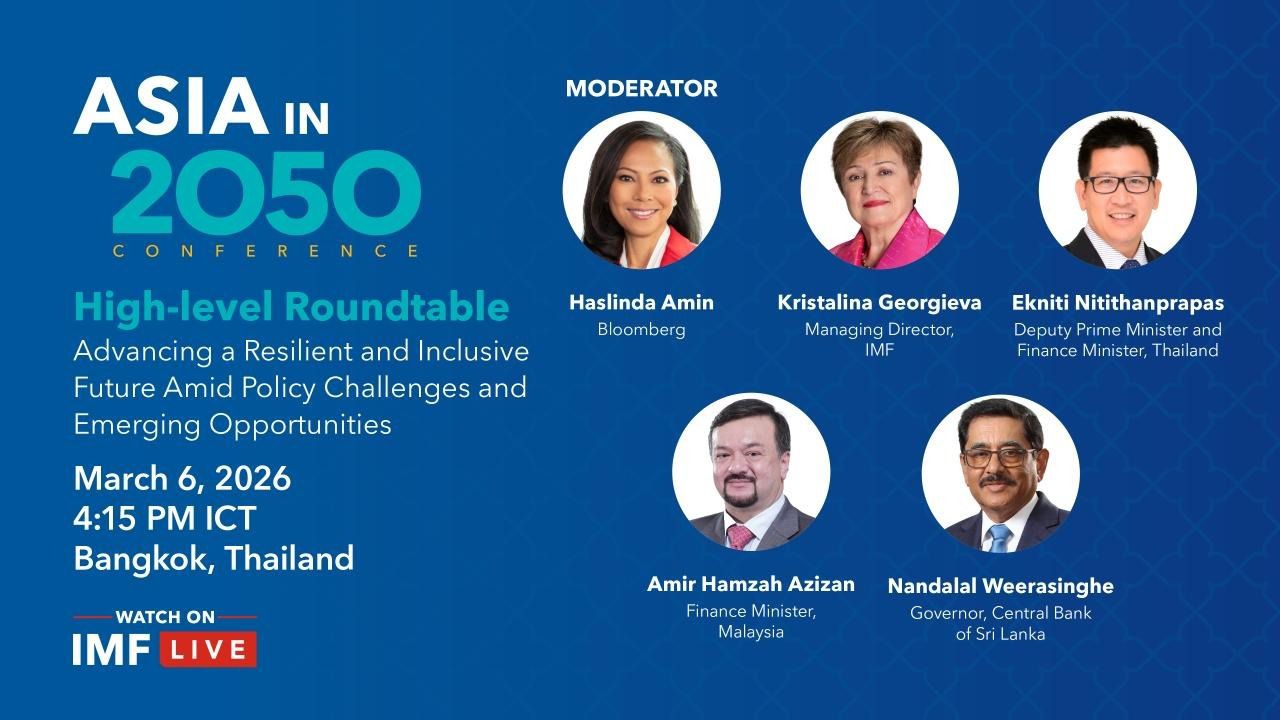
According to PepperCube Consultants, the February BCI continues to reflect lingering uncertainty and the prospect of an economic slowdown following Cyclone Ditwah, which disrupted business activities in December. However, towards the end of January, the Governor of the Central Bank of Sri Lanka, Dr. Nandalal Weerasinghe, stated that despite the initial shock, Ditwah is unlikely to materially affect economic growth. He noted that the country has moved past the setback and expressed confidence that economic targets will not require revision.
Overall, the index points to a fragile business environment: the rebound in January, followed by a renewed decline in February, underscores the fickle nature of confidence, especially as the after-effects of the cyclone continue to emerge.
Sentiment has once again shifted towards caution after what proved to be a temporary surge, highlighting a fragile and fluctuating barometer over the past 12 months. Geopolitical uncertainties also persist. Fresh tariff threats linked to US ambitions over Greenland have unsettled European leaders, while the IMF has reiterated that uncertainty carries economic costs, reinforcing the view that unpredictability has become the new normal.
It follows that the trajectory of business confidence in the coming months remains difficult to predict. Given how the year has begun, it could be that the pendulum will continue to swing between optimism and caution. That said, intermittent bursts of positivity cannot be ruled out!