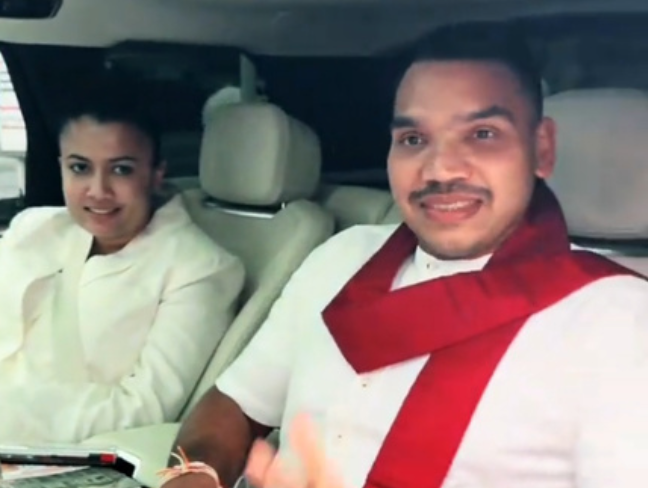
It appears that invitations extended to Namal Rajapaksa to speak at the Oxford Union and at Cambridge have been withdrawn following objections from sections of the Tamil diaspora.
The argument being advanced is that he is a controversial figure in Sri Lanka, that he carries political baggage, and that he is therefore not a suitable representative to be given such platforms.
But the Oxford Union was never designed to host saints. It was built to host controversy. For over two centuries, it has invited revolutionaries, architects of war, defenders of empire, intelligence chiefs, and deeply polarising political actors. The Union’s tradition has not been moral endorsement. It has been adversarial engagement. Bring them in. Challenge them. Question them.
If a politician faces allegations or criticism, the debating chamber is precisely where those issues should be confronted. That is the purpose of open discourse.
Namal Rajapaksa has been publicly accused in Sri Lanka of various forms of political impropriety. He has denied wrongdoing and remains an active political figure. In democratic systems, allegations are not convictions. If platforms begin excluding speakers on the basis of controversy alone, the list of permissible political figures would shrink dramatically across every democracy in the world.
Politics, by its nature, generates opposition. If the standard becomes “no objections,” then almost no consequential political figure will qualify.
The more troubling issue is institutional confidence. Has the Oxford Union shifted from debate to de-platforming? If organised pressure is sufficient to determine who may speak, then the Union risks moving away from its tradition of intellectual confrontation toward curated caution.
If the concern is that Rajapaksa should answer difficult questions about Sri Lanka’s political history, then the chamber is the ideal setting. If the concern is that he should not be heard at all, that reflects a different philosophy altogether.
There is irony here. Sri Lanka is often criticised for narrowing democratic space. Yet Western academic institutions increasingly appear willing to narrow theirs when controversy arises. Is this moral clarity, or institutional risk aversion dressed as principle?
This is not about endorsing any individual. It is about whether institutions still believe in the strength of public interrogation. If a speaker’s record is questionable, expose it. If their answers are weak, let them falter under questioning. That is how democratic debate functions. Silence does not weaken controversial figures; it often strengthens their narrative.
The Oxford Union’s reputation was built on intellectual courage. If controversial figures are excluded before they are questioned, the chamber changes character. It becomes less a debating society and more a controlled forum.
The question is not whether one politician deserves a microphone. The question is whether institutions still trust debate itself.