“While we argue about brain drain, CodeGen shows what happens when you keep the brains, sell the IP, and invoice the world.”
Sri Lanka exports tea with ceremony. Apparel with discipline. And tech—often with a shrug, as if software is something that happens “elsewhere” and only occasionally visits us via a Wi-Fi signal.
That’s why CodeGen is worth a closer look.
Because CodeGen is one of those rare Sri Lankan stories where the product is not a commodity, not a subcontract, not a “body-shop” pipeline—but proprietary intellectual property built here and sold globally.
And if you want a single line to describe the company’s core business: CodeGen builds travel technology— systems that power the unglamorous, high-stakes machinery behind tourism: inventory, bookings, pricing, distribution, and the digital plumbing that connects airlines, tour operators, cruise lines, DMCs and OTAs.
In a world where travel is “experience” to the customer and “complexity” to the operator, CodeGen makes the complexity behave.
Origins: Sri Lankan roots, global ambition
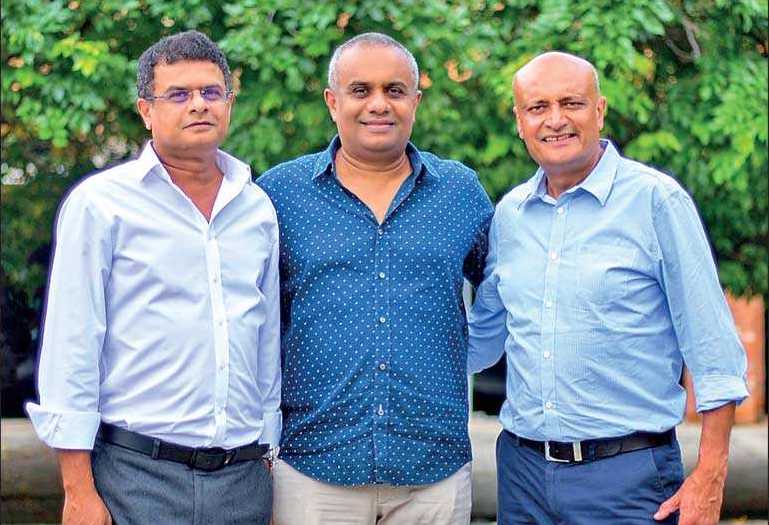
CodeGen dates its founding to 1999, and has been publicly profiled with founders including Dr. Harsha Subasinghe, Kusal Subasinghe, and Bharat Patel.
The company has maintained operations across multiple geographies while keeping a major footprint in Sri Lanka —something increasingly rare in the “incorporate abroad, hire here, move later” playbook.
CodeGen’s own corporate positioning describes it as a travel technology provider with 25+ years in the sector, serving global travel organisations, and operating with offices across continents.
What they actually sell
If Sri Lankan tech has a habit of hiding behind vague phrases like “digital transformation,” CodeGen is unusually concrete. Its flagship proposition centres on TravelBoxAITM and a broader TravelBox product suite— technology designed to connect and automate travel workflows, from supplier management and package creation to revenue management and multi-channel distribution.
This matters because travel is not a simple “website-and- payments” business. It’s real-time inventory, rapidly shifting prices, cancellations, supplier contracts, and thousands of permutations that can break a booking at the speed of one bad API. CodeGen’s USP is that it operates in that messy middle—where reliability is the product.
They also sell integration muscle: host-to-host connectivity, API engines, and aggregation—unsexy terms that are essentially the difference between a travel company scaling… and a travel company collapsing into Excel.
Achievements: global footprint, Sri Lankan engine
Independent profiles and company statements consistently emphasise CodeGen’s global reach—being used across many markets and serving major travel organisations.
But the Made in Sri Lanka point is not “we have overseas clients.” Lots of Sri Lankan firms do.
The point is: the delivery engine is anchored here.
CodeGen is listed in Sri Lanka’s Export Development Board directory with a Colombo address—positioned as a “premium exporter,” and described as a provider of end- to-end travel tech for a global client list.
Their contact footprint also explicitly shows Sri Lanka as a base—at Trace Expert City, Colombo.
And they’ve publicly engaged local talent pipelines: for example, a formal MoU with the University of Sri Jayewardenepura is documented by the university, involving Dr. Harsha Subasinghe (as CEO of CodeGen International) among the signatories.
This is how you know a company is not merely “operating” in Sri Lanka—it is investing in Sri Lanka’s humancapital.
Financials: the honest answer
Now, the question every reader asks: How big are they, financially?
CodeGen is privately held (as reflected in widely used corporate profiles), and it does not publish the kind of detailed, audited financial disclosures you would expect from a listed entity.
So any neat revenue figure floating around the internet should be treated as exactly that: floating.
But here is what can be said without guessing: it is an export-facing software business selling proprietary platforms into global travel—meaning its revenues are structurally tied to foreign markets and foreign currency demand. In a Sri Lankan context, that is not just a business model; it’s a macroeconomic asset.
Anchored in Sri Lanka—even while going global
In 2023, a CodeGen Group company (CodeGen Innovations) publicised a milestone: registering an office in Port City Colombo, describing it as a step intended to strengthen its global reach.
Some will read “offshore registration” and mutter darkly. Fine. But here’s the more relevant lens: whether you like Port City or not, CodeGen’s narrative is not “exit Sri Lanka.” It is “use Sri Lanka as a platform.”
That distinction matters in a country bleeding skilled talent.
Why this story matters
Sri Lanka’s tech conversation often swings between two extremes:
“We are a global IT hub!”
“Everyone is leaving; nothing works!”
CodeGen sits in the inconvenient middle: a Sri Lankan- rooted firm building complex IP for a global industry— while maintaining a visible base at home.
The pro-people policy question is simple: why aren’t we producing ten more CodeGens?Not ten more slogans. Ten more product companies.
Because when a Sri Lankan company exports IP—not bodies—jobs improve, salaries rise, and the brain drain slows. And that, more than any ribbon-cutting, is what “Made in Sri Lanka” should mean in 2026.