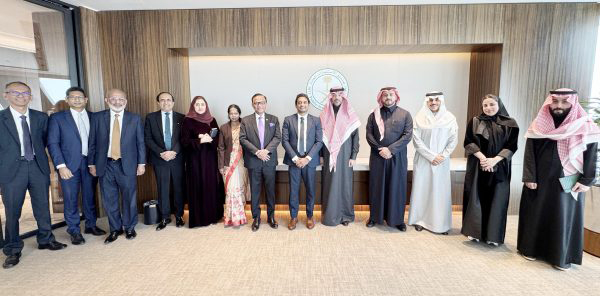
In a recent parliamentary session, the Committee on Public Finance (CoPF) endorsed the Foreign Exchange Regulations Nos. 01 and 02 of 2026 and the associated Order under Section 22 of the Foreign Exchange Act after engaging with officials from the Central Bank of Sri Lanka.
The meeting, chaired by Hon. Dr. Harsha de Silva, provided a platform for thorough discussions regarding the implications of these regulations on foreign investments, the processes for emigrants transferring funds abroad, and strategies aimed at managing the outflow of foreign exchange from Sri Lanka.
Key participants included Hon. Deputy Ministers Chathuranga Abeysinghe and Nishantha Jayawera, along with Members of Parliament Ravi Karunanayake, Ajith Agalakada, Nimal Palihena, Wijesiri Basnayake, Thilina Samarakoon, Champika Hettiarachchi, and Attorney-at-Law Lakmali Hemachandra. Representatives from the Ministry of Finance, Sri Lanka Customs, the Department of Trade and Investment Policy, the Department of Import and Export Control, and the Central Bank’s Department of Foreign Exchange were also present.
Submit Your Press Release
Get your company news, announcements, launches, appointments and events in front of a wider audience.


The Committee delved into the provisions of Foreign Exchange Regulations No. 01 of 2026, discussing the eligibility criteria for individuals making foreign investments, the sectors permitted for investment, and the limitations placed on capital transfers abroad. The discussions highlighted opportunities for Sri Lankan businesses to broaden their operations internationally and the necessary financial support required for such endeavors.
Regarding Foreign Exchange Regulations No. 02 of 2026, the Committee reviewed the guidelines and restrictions governing emigrants moving their assets from Sri Lanka. A briefing was provided on the current rules concerning capital transfers under the Emigrant’s Allowance and the remittance of ongoing income, such as rental yields, interest, and dividends.
Additionally, the Committee addressed the Order issued under Section 22 of the Foreign Exchange Act. Central Bank officials outlined the temporary measures enacted to control foreign exchange outflows, emphasizing the importance of protecting the country’s foreign reserves amidst challenging economic circumstances.
Officials also indicated that as the economic situation improves, there may be a gradual easing of these restrictions.
The Committee further examined the export revenues generated by exporters in the previous year, discussing the possibility of utilizing a portion of these earnings to promote business expansion abroad. The necessity of providing the requisite support for local companies to enhance their presence in global markets was emphasized.
Moreover, the Committee scrutinized the unauthorized foreign exchange outflows and the monitoring systems established to address this issue. They discussed the measures implemented to reconcile discrepancies between banking and Customs records concerning imports and exports and underscored the need for improved collaboration among relevant agencies to deter foreign exchange misuse.
Discussions also encompassed the constraints on bank guarantees and other financial resources that local firms, particularly in construction, face when pursuing international opportunities.
During the deliberations, Committee members cautioned that excessive regulation could deter business activities, potentially impeding economic growth. The Chairman remarked that restricting foreign exchange outflows might inadvertently decrease the influx of foreign currency into the country.
He further questioned the discrepancy between the USD 2 million limit stated in the Regulations and the USD 0.75 million figure noted in the Order concerning the expansion of publicly listed companies.
In reply, officials from the Department of Foreign Exchange clarified that the USD 0.75 million threshold would be applicable for approximately six months, with a review scheduled for 2027 to consider adjustments. They mentioned a corresponding limit of USD 0.2 million for non-listed companies.
The Department of Foreign Exchange indicated that any funds exceeding these limits could be converted with the approval of the Monetary Board of the Central Bank, determined by the business’s financial statements. It was also suggested that businesses with higher asset values might have better prospects for receiving such approvals.
Source: Financial Chronicle Biz English | Sri Lanka Business News.