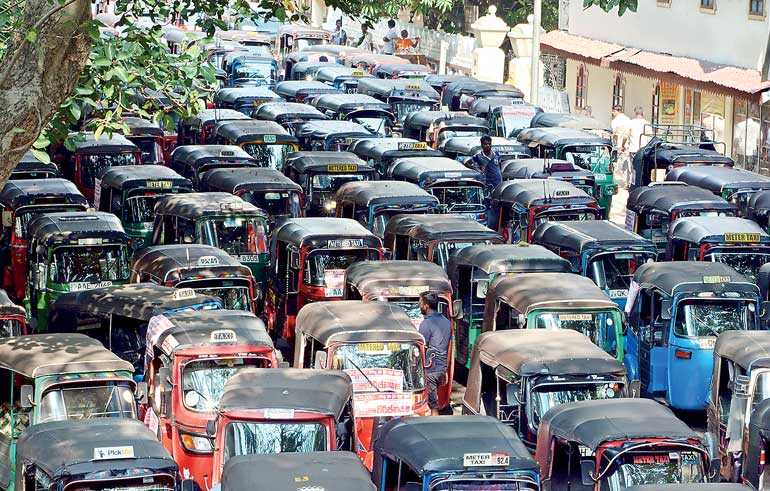
The Court of Appeal has intervened in the ongoing debate regarding the legality of foreign tourists driving tuk-tuks in Sri Lanka using International Driving Permits alongside local permits issued under Sri Lankan law.
In case C.A. (Writ) 1154/25, Hon. Justice Dhammika Ganepola and Hon. Justice Adithya Patabendige issued Interim Orders that maintain the current legal framework, effectively reinstating the conditions that existed prior to media reports around November 20, 2025, which suggested that foreign visitors might be restricted from driving tuk-tuks based solely on International Driving Permits.
Sri Lanka, a signatory to the 1949 Geneva Convention on Road Traffic, is bound by a system of reciprocity that obligates member states to recognize each other’s International Driving Permits, facilitating consistent cross-border mobility. To fulfill these international commitments, Sri Lanka implemented regulations through Gazette No. 11,603 of 1958 under the Motor Car (Convention) Ordinance, which remain in effect.
According to this statutory framework, foreign visitors with valid International Driving Permits are permitted to drive in Sri Lanka upon acquiring a local covering permit. These permits are issued either by the Department of Motor Traffic or by the Automobile Association of Ceylon, as specified by law.
This is a legally mandated procedure, not a discretionary administrative measure. For many years, tourists have driven tuk-tuks under this system without any issues. Businesses, including the Petitioner in this case, have developed their operations based on this framework, which supports hundreds of Sri Lankan families. This arrangement not only adheres to domestic regulations but also reflects Sri Lanka’s dedication to international reciprocity and treaty obligations.
When the case was presented in Court, the Bench identified a significant public law issue regarding whether the contested decision was made within the authorized legal framework or in violation of it. The Court noted that allowing the directive to proceed before a final ruling could negatively impact existing permits and business operations, while interim relief would simply maintain the current situation.
Consequently, Interim Orders have been issued to preserve the status quo.
The Court will now examine the legality of the challenged directive. Until a decision is reached, the existing legal framework remains in effect.
Representing the Petitioner were Mr. Avindra Rodrigo, President’s Counsel, along with Ashiq Hassim and Nishika Fonseka. Mr. Sanjay Rajaratnam, President’s Counsel, with Edward Jayasinghe, appeared for the Automobile Association of Ceylon. Ms. Avanthi Weerakoon, State Counsel, represented the State Respondents, including the Commissioner General of Motor Traffic and the Inspector General of Police.