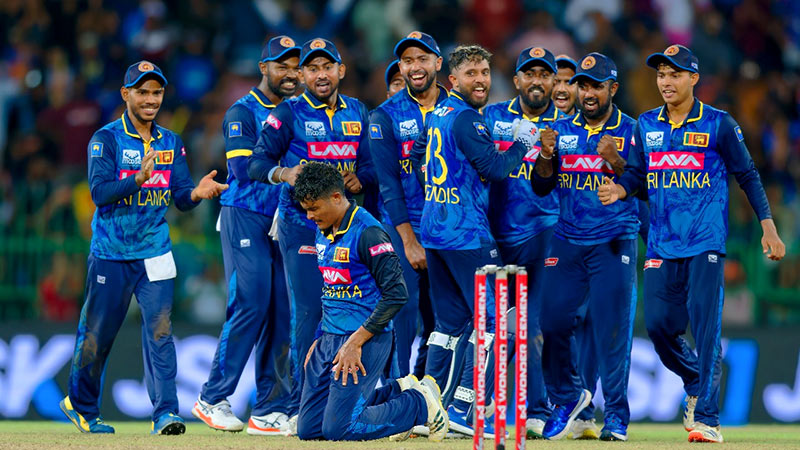
In Sri Lanka, cricket has always carried emotion. What it has not always carried is strategic economic planning. That may need to change.
A single high-profile international fixture — particularly a marquee encounter such as India vs Pakistan — can inject an estimated USD 8–18 million into the local economy over just a few days. That figure combines hotel occupancy, aviation uplift, food and beverage spending, local transport, retail activity and associated services. Consider the mechanics.
If 8,000–12,000 international visitors arrive for a major fixture and stay three to four nights, that translates into roughly 24,000–48,000 room nights. At average Colombo rates between USD 120 and 200, accommodation revenue alone could range between USD 3–9 million.
That is before factoring in secondary spend.
Visitors typically spend between USD 80 and 150 per day on dining, transport, shopping and entertainment. Over a four-day period, 10,000 visitors could generate an additional USD 3–6 million circulating through restaurants, ride services, bars and small businesses. Airlines benefit too. High-demand fixtures drive late bookings, premium fares and improved load factors, potentially contributing another USD 1–3 million in incremental aviation revenue linked directly to the event window.
Add to this the broadcast effect. India–Pakistan fixtures attract hundreds of millions of viewers globally.
While media rights revenue flows primarily to cricket boards, the host country gains brand exposure equivalent to tens of millions of dollars in destination marketing. These are conservative figures.
They exclude longer-term tourism uplift, repeat visitation, infrastructure utilisation and investor perception shifts. And yet Sri Lanka is scheduled to host only six Test matches this year.
That is the economic equivalent of leaving a factory half- idle.
Sri Lanka possesses five internationally recognised cricket venues — Colombo, Kandy, Galle, Dambulla and Hambantota — each with global broadcast familiarity.
Few countries of comparable size have that density of sporting infrastructure relative to population.
The opportunity is not just in bilateral series. It lies in:
• Neutral-host tournaments
• Tri-nation competitions
• Women’s international cricket
• Youth world events
• Franchise exhibition windows
• Off-season regional competitions
If one major match can conservatively generate up to USD 18 million in short-term activity, then a calendar featuring 10–12 significant fixtures annually could plausibly inject USD 80–180 million in direct and near- direct economic activity.