There is something deeply troubling about the spectacle now unfolding in Colombo.
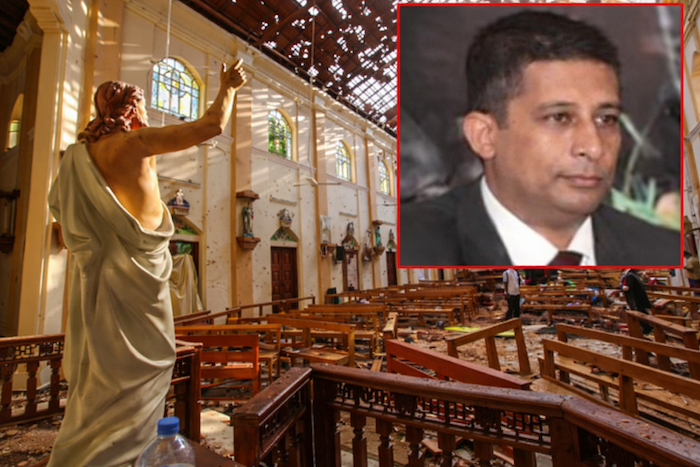
Crowds have gathered to sign petitions demanding that former State Intelligence Service chief Suresh Sallay be released and that investigations into his alleged role in the Easter Sunday bombings be halted.
One must ask a simple question.
Have these protestors forgotten the dead?
On that dark morning of 2019 Sri Lanka Easter Sunday Bombings, the country witnessed one of the most brutal acts of terror in its modern history. Churches filled with worshippers were turned into killing fields. Hotels filled with travellers became scenes of horror.
Two hundred and eighty human beings lost their lives.
They were mothers, fathers, sons, daughters, tourists and worshippers.
Their only crime was being alive on a Sunday morning.
And yet today, instead of demanding truth, some appear determined to demand silence.
Let us be absolutely clear about one fundamental principle of any civilised society.
An arrest is not a conviction.
An investigation is not a declaration of guilt.
The very purpose of an investigation is to establish facts — not to pronounce judgment.
If a person is innocent, an investigation is the mechanism that proves it.
If a person is guilty, an investigation is the mechanism that reveals it.
To demand that an investigation should not even take place is to demand that truth itself be suppressed.
What kind of logic is this?
If those gathering in Colombo truly believe in the innocence of the man they are defending, they should be the first to demand a full and transparent investigation that clears his name.
Instead, they appear to be demanding that the door to inquiry be slammed shut before the facts are even examined.
That is not justice.
That is fear of the truth.
The families of the victims of Easter Sunday have waited years for answers. Many of them still visit graves that were dug in haste in April 2019. Many still live with questions that have never been properly addressed.
Those families deserve more than political theatre.
They deserve the truth — wherever it leads.
No individual, no intelligence officer, no politician and no institution should be beyond scrutiny when nearly three hundred people have been murdered.
To forget that would be to forget the victims themselves.
And a nation that forgets its dead risks losing its conscience.
Faraz Shauketaly