Colombo, Sri Lanka — In the quiet language of diplomacy, the message from the European Union to Sri Lanka was unmistakable: trade access comes with conditions, and patience is not unlimited.
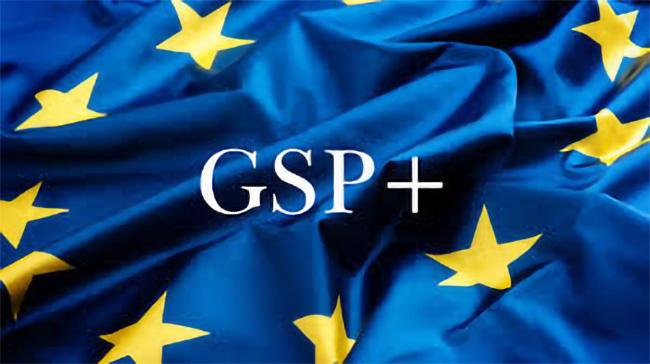
As Sri Lanka struggles to rebuild its economy after a historic financial collapse, European officials have renewed pressure on the government to fulfill long-standing commitments tied to the continuation of GSP+, a trade arrangement that allows many Sri Lankan exports to enter European markets free of tariffs. For a country still dependent on export earnings and fragile investor confidence, the stakes are unusually high.
The EU’s warning was delivered not as a threat but as part of its routine monitoring process. Yet beneath the procedural tone lies a deeper concern in Brussels — that Sri Lanka’s political promises of reform have repeatedly outpaced implementation.
For Sri Lanka, the arrangement is more than a trade concession. It is an economic lifeline. The European Union remains one of the island’s largest export destinations, absorbing billions of dollars’ worth of apparel, fisheries products and manufactured goods each year. Losing preferential access would expose exporters to tariffs that industry leaders say could erode competitiveness almost overnight.
But GSP+ was never intended to be purely economic. The program is built on compliance with 27 international conventions covering human rights, labour protections, environmental standards and governance reforms. Countries receive market access in exchange for aligning domestic laws and institutions with international norms.
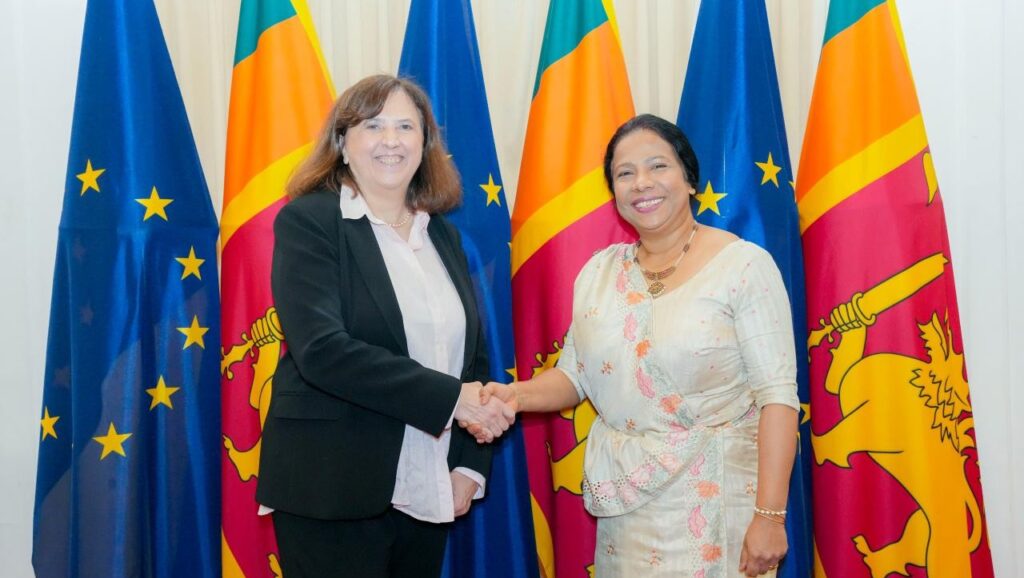
European officials say progress in Sri Lanka has been uneven.
At the center of scrutiny is the country’s Prevention of Terrorism Act, a law long criticised by rights groups for enabling prolonged detention without trial. Successive Sri Lankan governments have pledged to repeal or replace it, but reforms have moved slowly, complicated by domestic political sensitivities and security concerns.
European diplomats increasingly frame the issue less as legal technicality and more as credibility. The question, one official familiar with the discussions said privately, is no longer whether reforms are promised but whether they are delivered.
The EU’s concerns extend beyond security legislation. Monitoring missions have examined judicial independence, anti-corruption enforcement, labour rights protections and the space available for civil society organizations. Environmental obligations — including sustainable fisheries management and climate commitments — also form part of the evaluation.
For Sri Lanka’s leaders, the timing is delicate. The country is emerging from its worst economic crisis since independence, having defaulted on foreign debt in 2022 and endured shortages of fuel, food and medicine that triggered mass protests and political upheaval. Economic stabilization has depended heavily on restoring export earnings and rebuilding external confidence.
Business groups warn that uncertainty over GSP+ could ripple through the economy. The apparel sector, one of the country’s largest employers, relies heavily on European demand. Even modest tariff increases could shift orders toward competing manufacturing hubs in Asia.
Yet within Sri Lanka, the EU’s conditions are politically contested. Some policymakers argue that trade preferences should not be linked to domestic legal reforms, while others acknowledge that access to global markets increasingly comes tied to governance expectations.
The tension reflects a broader global shift. Trade agreements once focused primarily on tariffs and quotas now increasingly embed standards related to human rights, labour conditions and environmental performance. For smaller economies, compliance has become part of remaining integrated in high-value markets.
European officials have avoided setting explicit deadlines, but their language has grown firmer, emphasizing “measurable progress” and “effective implementation.” Diplomatic observers interpret the phrasing as a signal that future reviews will be less forgiving of delays.
For Sri Lanka, the dilemma is stark but familiar: balancing domestic political realities against international economic dependence.
The outcome may determine not only the future of a trade concession but also how the country positions itself in a world where economic recovery is increasingly tied to governance reform — and where access to markets is no longer granted without expectations in return.