FAO maps show scale of damage to Sri Lanka’s agriculture from flooding

by

in

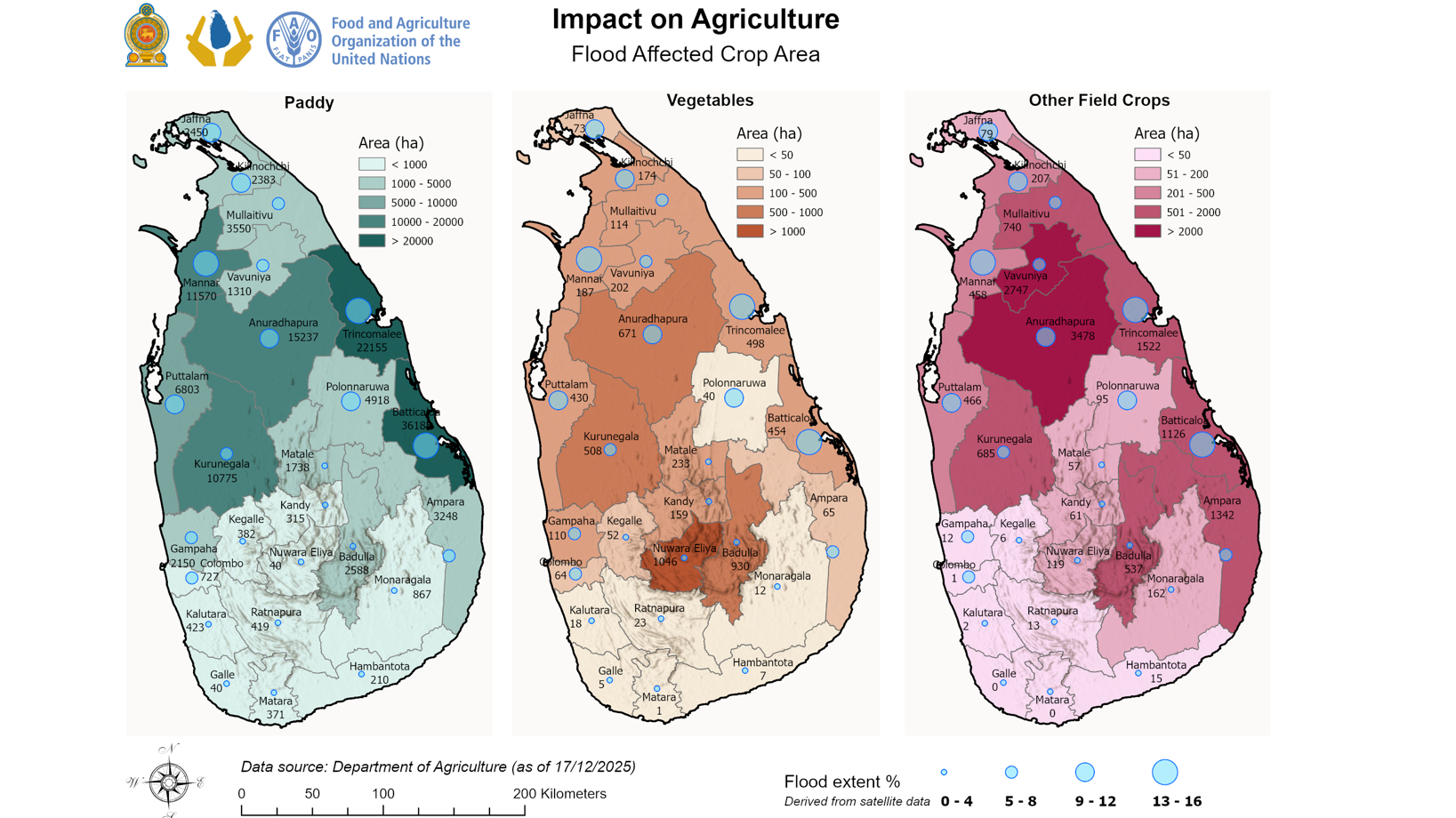
Approximately 58,340 hectares of paddy fields in Trincomalee and Batticaloa have been affected by floods caused by Cyclone Ditwah, according to data maps compiled by the UN Food and Agriculture Organisation (FAO) and Sri Lanka’s Department of Agriculture.

The maps indicate that the most severe damage has occurred in several key agricultural districts, impacting not only paddy but also vegetables and other field crops. The newly released data from the Department of Agriculture, compiled with support from the FAO, underscores the widespread effects of flooding on Sri Lanka’s agricultural sector.

“These impacts threaten livelihoods, food production, and household food security, particularly for smallholder farmers,” the FAO stated. The organisation is collaborating closely with national authorities and other partners to assess the damage, prioritise urgent needs, and support efforts toward timely recovery and rehabilitation.

The maps were created using data from the Department of Agriculture and flood extent information derived from satellite imagery.

(Colombo/Dec18/2025)


Deals from DealBook.lk


Latest News


  • Israel Initiates Offensive Against Iran, Reports International Media

    Israel Initiates Offensive Against Iran, Reports International Media

    Israel initiated a pre-emptive strike against Iran on Saturday, escalating tensions in the Middle East and casting a shadow over hopes for a diplomatic resolution to Iran’s prolonged nuclear dispute with Western nations, as reported by Reuters citing Israeli Defence Minister Israel Katz. “The State of Israel launched a pre-emptive attack against Iran to remove

    Read more


  • Sri Lanka’s Construction Surge in January 2025 Highlights Labor Shortage Challenges: PMI Report

    Sri Lanka’s Construction Surge in January 2025 Highlights Labor Shortage Challenges: PMI Report

    In January 2026, Sri Lanka’s construction sector witnessed a significant surge in activity, as indicated by a rise in the Purchasing Managers Index (PMI) to 75.0 from December’s 67.1, according to data compiled by the central bank. This marks the second-highest reading on record, following the peak of 75.7 in July 2020. The central bank

    Read more


DAILY NEW DIGEST


▶︎•၊၊||၊|။|||||။၊|။•