Fitch Ratings has elevated Sri Lanka’s Long-Term Issuer Default Ratings (IDRs) from ‘CCC+’ to ‘B-‘ with a Stable Outlook. This upgrade signifies the country’s successful implementation of macro-stabilization strategies alongside structural reforms, which have mitigated external financing risks and bolstered resilience against economic shocks. Notable enhancements in fiscal and external balances, along with a gradual recovery of foreign exchange reserves, have contributed to this positive shift. Efforts in fiscal discipline and revenue generation are anticipated to support ongoing primary surpluses, thereby ensuring a decline in the government debt-to-GDP ratio and reducing the likelihood of reoccurring external imbalances.
Despite recent restructuring and macroeconomic adjustments, Sri Lanka’s credit profile is still constrained by elevated government debt-to-GDP and debt service ratios when compared to similar-rated countries. The country’s foreign exchange reserves remain modest, particularly in light of an expected increase in external debt obligations over the next five years. A comprehensive list of rating actions can be found at the conclusion of this commentary.
Key Rating Drivers
Revenue Growth Enhances Primary Surpluses: Projections indicate a robust primary surplus of 2.6% of GDP for 2026, although this is a decrease from the exceptional 5.4% surplus recorded in 2025. This growth in revenue is attributed to successful tax reforms and a temporary rise in import duties driven by a surge in demand for imported vehicles. Increased government spending for reconstruction efforts following Cyclone Ditwah in 2025 and targeted energy support measures will lead to an overall deficit of 4.1% of GDP in 2026, up from 2.3% in 2025.
We expect primary surpluses to exceed 2% of GDP in the coming years, supported by consistent revenue and controlled expenditures. Although revenue may decline with reduced auto imports, ongoing revenue mobilization initiatives should help maintain collections at nearly 16% of GDP. The 2024 Public Financial Management Act limits non-interest spending to 13% of GDP until 2031, promoting fiscal discipline, although this cap is projected to be exceeded in 2026 due to cyclone reconstruction costs. As the 2029 elections approach, there may be increased risks of fiscal slippage despite the ongoing reforms.
Gradual Improvement in Fiscal Weaknesses: While government debt and interest-to-revenue ratios remain high in comparison to peer nations, there are signs of gradual improvement. It is expected that debt will decrease to 92.9% of GDP by 2026, down from 96.7% in 2025, with further declines anticipated over the next five years to the low-80% range. The interest-to-revenue ratio is projected to fall to 41.0% in 2026 from 45.6% in 2025, a peak of 76.3% in 2023, although this remains significantly above the ‘B’ median of 12.7%. Limited fiscal space necessitates strict adherence to newly established fiscal frameworks to ensure sustainability.
Current Account Under Pressure from Energy Costs: We anticipate that high energy prices will result in a current account deficit of 1.2% of GDP in 2026, reversing a three-year trend of an average surplus of 1.5%. The ongoing conflict between the US and Iran has increased energy import costs and temporarily impacted tourism revenues. However, steady remittance inflows are providing some relief against these challenges. Given the uncertainties surrounding the US-Iran conflict and Sri Lanka’s status as a major net importer of energy and fertilizers, risks remain elevated. As conditions stabilize in 2027, we expect the current account to return to near equilibrium.
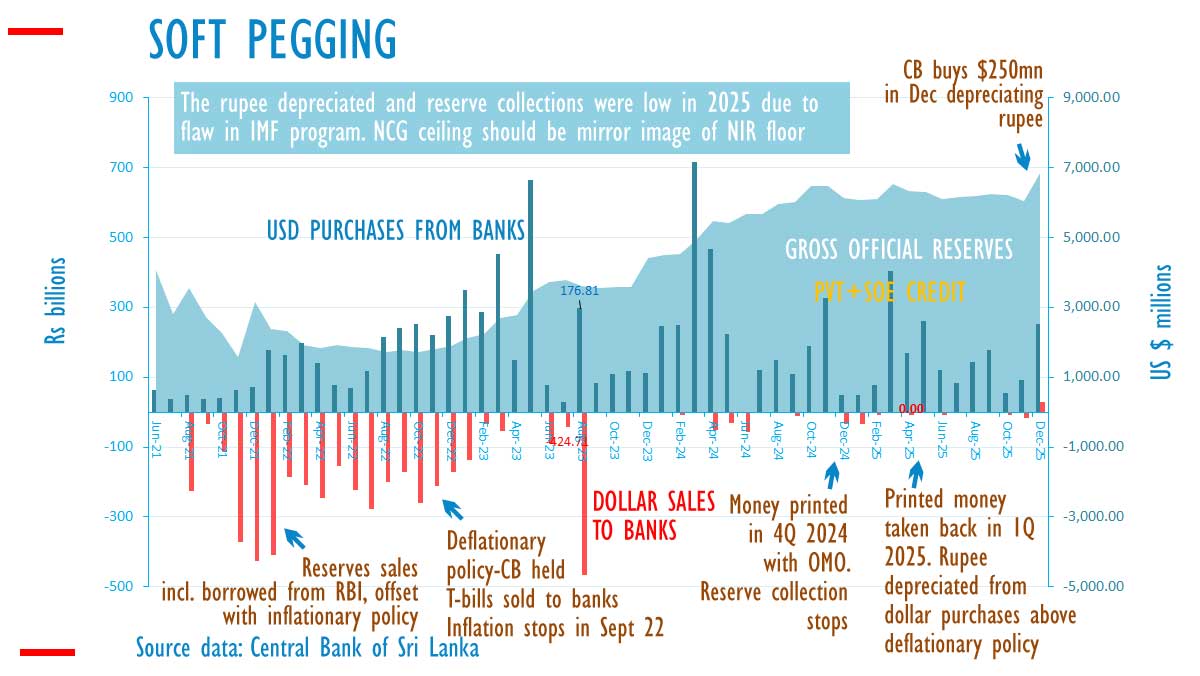
Satisfactory Near-Term Financing Conditions: Continued financial support from the IMF and other multilateral organizations is providing crucial external financing to alleviate current account pressures. This backing, combined with a commitment to greater exchange rate flexibility, is expected to facilitate an increase in foreign exchange reserves, projected to reach USD 7.7 billion (2.9 months of current external payments) by the end of 2026. Nonetheless, external shocks have restrained reserve accumulation, and risks remain tilted toward the downside.
Increasing Debt Repayments: External buffers are currently limited, and external debt repayments are set to escalate over the next five years, especially after 2028, which exposes the country to continued vulnerability from external shocks or policy missteps. We anticipate reaching the highest macro-linked bond threshold, which will lead to increased interest and principal repayments. The government is contemplating a return to global bond markets in 2027, coinciding with the conclusion of the current IMF Extended Fund Facility program in March 2027. A subsequent IMF facility could provide further policy support and financing stability.
Resilience in Economic Performance: Despite recent challenges posed by Cyclone Ditwah and the US-Iran conflict, Sri Lanka’s economy has shown resilience. However, GDP growth is expected to slow to 4.1% in 2026, down from an average of 5.0% over the past two years. Risks are oriented downward, particularly due to the country’s energy dependencies. Medium-term GDP growth is projected to hover just above 4%. Ongoing challenges include attracting foreign direct investment, enhancing the export sector, and revitalizing state-owned enterprises, although sustained reform efforts could yield positive outcomes.
Rising Inflation Rates: We project that headline inflation will average 6.3% in 2026, a notable increase from -0.5% in the previous year, driven by global energy shocks and El Niño effects contributing to domestic price pressures. In response, the Central Bank of Sri Lanka (CBSL) raised its policy rate by 100 basis points in May to 8.75% to combat inflation risks and stabilize the exchange rate. We do not foresee additional rate hikes, as price pressures are expected to be temporary, with inflation predicted to drop below the CBSL’s 5% target by next year.
Governance and ESG Considerations: Sri Lanka ranks moderately on the World Bank Governance Indicators (WBGI), positioned at the 39.6 percentile, reflecting a recent history of peaceful political transitions and a moderate capacity for political participation, alongside established rule of law and corruption levels. This governance context, while not critically elevated, does have a negative impact on the nation’s credit profile.
Rating Sensitivities:
Factors that could lead to negative rating actions include a deterioration in public finances due to reduced fiscal discipline or weakened revenue collection, resulting in lower primary balances, and a resurgence of large current account deficits. Conversely, positive rating actions could arise from significant reductions in government debt-to-GDP and interest-to-revenue ratios, supported by effective fiscal consolidation and sustainable revenue growth.
Fitch’s proprietary Sovereign Rating Model (SRM) now assigns Sri Lanka a score that corresponds to a ‘B-‘ rating on the Long-Term Foreign-Currency (LT FC) IDR scale, an upgrade from ‘CCC+’ in the previous assessment. The final LT FC IDR was not adjusted from the SRM output. The SRM utilizes various factors based on three-year averages, including one year of forecasts, to yield a score reflective of a LT FC IDR.
The senior unsecured long-term debt ratings are in line with the Long-Term IDR, as Fitch anticipates average recovery prospects in the event of default. A Recovery Rating of ‘RR4’ has been assigned to these debt instruments.
The Country Ceiling for Sri Lanka is set at ‘B-‘, consistent with the LT FC IDR. This designation indicates the absence of significant constraints or incentives against capital or exchange controls that would impede the private sector’s ability to convert local currency into foreign currency for debt servicing purposes.
Fitch’s Climate Vulnerability Signals did not indicate a heightened risk for Sri Lanka, and the country has received varying ESG Relevance Scores reflecting its political stability, rule of law, and other governance factors, which have implications for its credit profile.