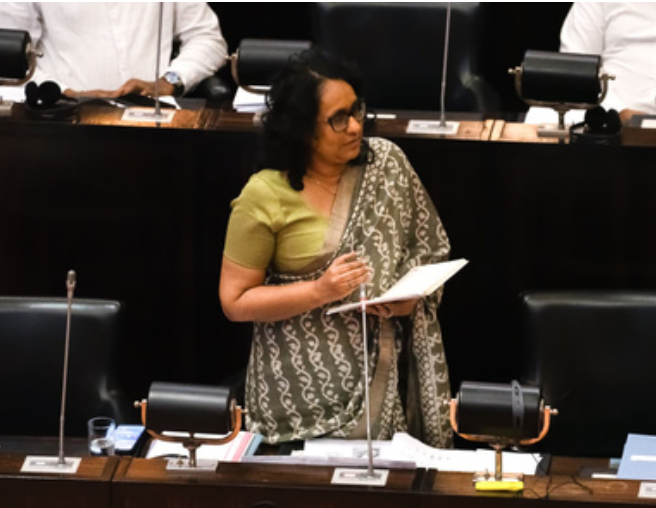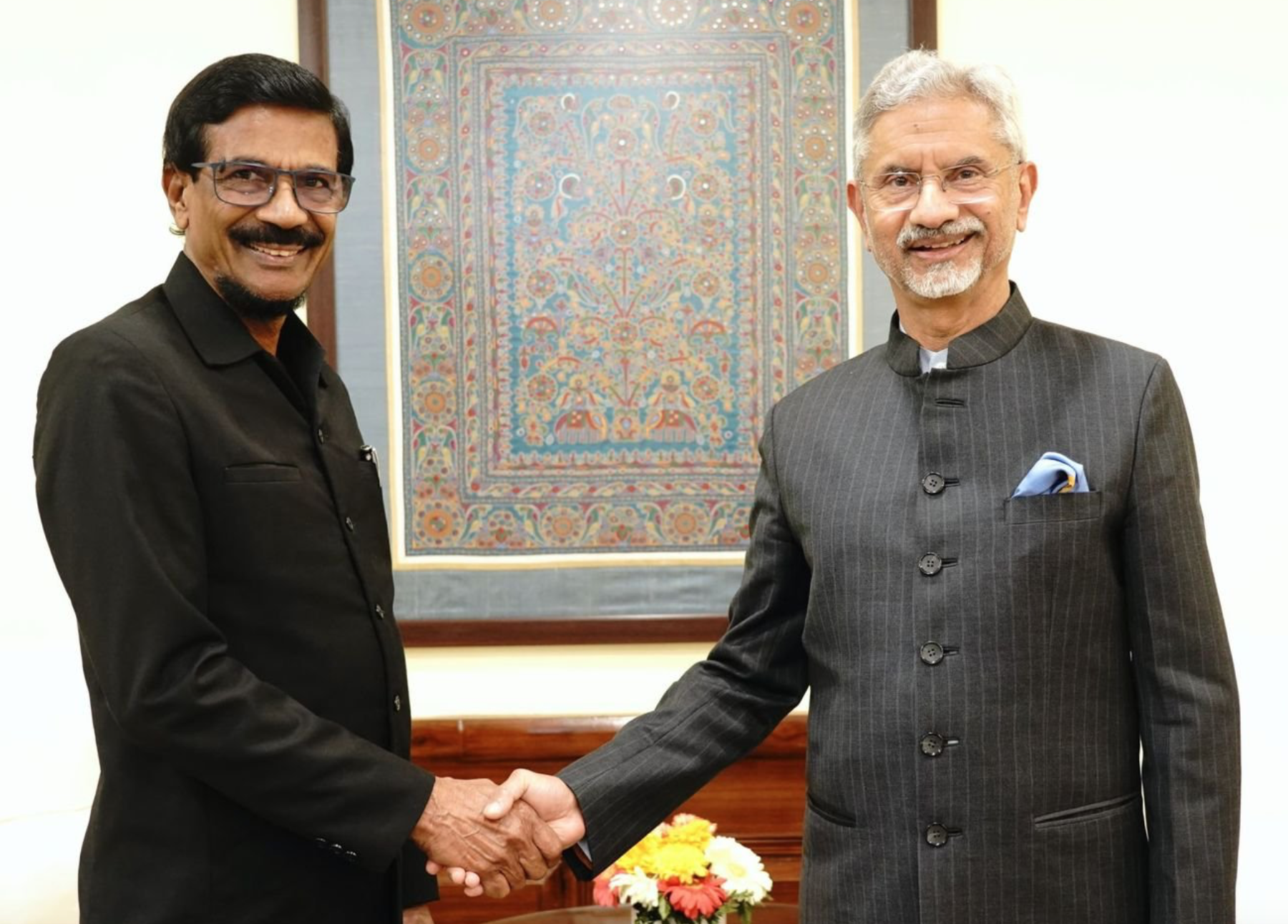
Tilvin Silva’s message from New Delhi is clear: we were never anti-India — only anti-policy.
That distinction is not semantic. It is strategic.
For a party once synonymous with fiery opposition to the Indo–Lanka Accord and the violent upheavals of 1988– 90, the JVP’s General Secretary now speaks of “mutual respect,” “no pressure,” and even describes Prime Minister Narendra Modi’s government as a “genuine friend.”
This is not a small rhetorical adjustment. It is a repositioning.
Silva insists the party opposed the Rajiv Gandhi government’s coercive approach in 1987, not India as a civilisation or neighbour. History, he says, should not be an obstacle to future relations. India has changed. The JVP has changed.
The political question is whether the country believes that.
The visit itself — under the Indian Council for Cultural Relations’ Distinguished Visitors Programme — signals normalisation. The optics are deliberate: Kerala visits, cooperative models like Amul, cordial meetings with Indian leadership. The subtext? The JVP-NPP government is not the ideological insurgent force of the past.
Yet the interview reveals a careful balancing act.
On the Indo-Lanka Accord and the violence of the late 1980s, Silva expresses regret that “some things that should not have happened did take place” — but places primary responsibility squarely on J.R. Jayewardene’s government. The JVP, he argues, reacted to repression and proscription. It did not initiate the spiral.
That framing is consistent with long-standing party narrative. It is also unlikely to settle historical debate.
More revealing is the present-day positioning.
Silva rejects claims of Indian pressure, including on contentious issues like the 13th Amendment.
He denies secret agreements and insists Parliament has seen all frameworks. On the Amul dairy issue, he draws a red line: Sri Lanka will not barter strategic assets, but will accept technological assistance.
That language is calibrated. Cooperative, but sovereign.
In foreign policy terms, the JVP-NPP line is one of multi- alignment: India, China, Pakistan, Bangladesh — all friends. No betrayal of one for the other. It is a pragmatic doctrine, designed to reassure both regional powers and domesticsceptics.
Ideologically, Silva avoids labels. Neither communist nor neoliberal, he says. The goal is “economic democracy” — development with fair distribution. Public and private sectors both have space, but the state retains strategic control.
This is less a doctrinal revolution than an adaptive evolution.
Domestically, Silva dismisses claims of anti-Buddhist sentiment and centralised control within the party. He rejects the idea that he is the “power behind the throne,” stressing collective decision-making within the NPP framework.
The broader picture is this: the JVP has transitioned from oppositional purism to governing pragmatism. It speaks the language of investment, diplomacy and economic stability rather than revolution.
But transformation is not declared — it is demonstrated.
The electorate will not judge the JVP on its reinterpretation of 1987. It will judge it on inflation, growth, corruption prosecutions, constitutional reform, and whether Sri Lanka’s sovereignty is preserved without isolation.
Tilvin Silva says history should not trap the future. That may be true.
But history also teaches that rhetoric must be matched by restraint, transparency and results.
The invitation to India is symbolic.
The test will be at home.
Because your strategy changes depending on the answer