From Industrial Supper to Colombo Social Theatre
In England, it marked the end of a workday. In Sri Lanka, it built an economy.”
England — Where It Began
If we are to speak honestly about “High Tea,” we must start by correcting the record. In 19th-century England, High Tea was not aristocratic. It was not delicate. It was not served on three-tiered stands. It was the working class evening meal.
The Industrial Revolution reshaped British life. Factory workers returned home in the early evening needing sustenance. Tea — increasingly affordable due to imperial trade — became the national drink. High Tea was served at a high dining table, not the low drawing-room tables of the elite. Hence the name.
It included:
Meat pies Fish
Bread
Eggs Hearty fare
This was practicality, not pageantry.
In contrast, Afternoon Tea — introduced by Anna, Duchess of Bedford in the 1840s — was an aristocratic ritual designed to bridge the long gap between lunch and a late dinner. It featured finger sandwiches, scones with clotted cream, and pastries. It was social refinement in porcelain.
Luxury venues like The Ritz London later codified this ritual into a performance of British elegance.
Over time, marketing blurred the terms. Globally, “High Tea” became shorthand for the refined afternoon version — historically inaccurate, but commercially irresistible.
Sri Lanka — Reinvention with Abundance
Sri Lanka inherited tea from the British Empire — but not passively.
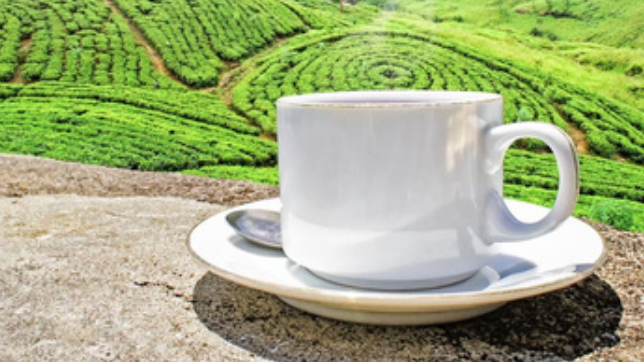
When coffee plantations collapsed in the 1860s due to blight, tea cultivation expanded dramatically under colonial enterprise. By the late 19th century, Ceylon tea was a global brand. Tea was no longer just a British habit; it became an economic backbone.
Yet Sri Lanka’s modern “High Tea” is not a colonial copy. It is a local evolution.
Walk into a weekend High Tea at Galle Face Hotel or Cinnamon Grand Colombo and you will see something distinctly Sri Lankan:
Patties and fish cutlets Mini lamprais
Finger sandwiches Scones
Chocolate éclairs Watalappan
Endless tea and coffee Sometimes prosecco
It is buffet-style. Abundant. Social.
Unlike England’s historical High Tea, Colombo’s version is not about necessity. It is about visibility.
Birthdays are celebrated. Corporate introductions are made. Diplomats mingle. Families gather. It is less about hunger and more about theatre.
The Deeper Contrast
England’s High Tea emerged from industrial discipline.
Sri Lanka’s High Tea emerged from post-colonial adaptation.
England’s version was functional. Sri Lanka’s version is aspirational.
One was rooted in labour.
The other in leisure and networking.
Yet both share a common thread: tea as cultural glue.
Tea in England soothed the industrial workforce.
Tea in Sri Lanka built an export empire.
Today, it anchors a hospitality ritual that blends colonial memory with local confidence.
Final Thought
If we strip away the porcelain and Instagram filters, High Tea tells a bigger story.
In England, it marked the rhythms of industrial society.
In Sri Lanka, it marks the evolution from plantation colony to hospitality capital.
The cup may be the same.
But what it represents has changed entirely.