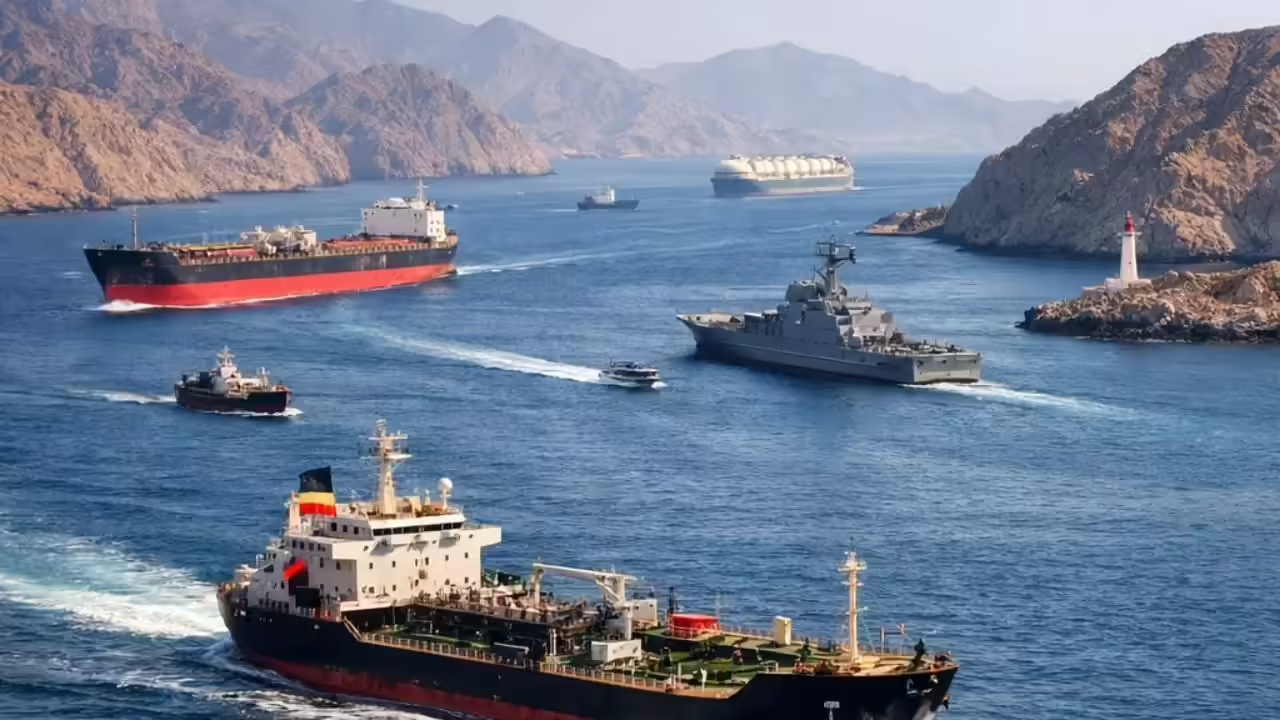
Be that as it may, the Strait of Hormuz is no longer merely a line on a maritime map. It is now the central pressure point of the global economy. As of today, the waterway remains effectively disrupted, with tanker movements sharply reduced and energy markets still reacting to the threat posed by the ongoing Iran war.
The strategic significance is obvious: a huge share of the world’s seaborne oil and gas passes through that narrow route, and any prolonged instability there feeds directly into fuel prices, inflation, freight costs, and investor anxiety.
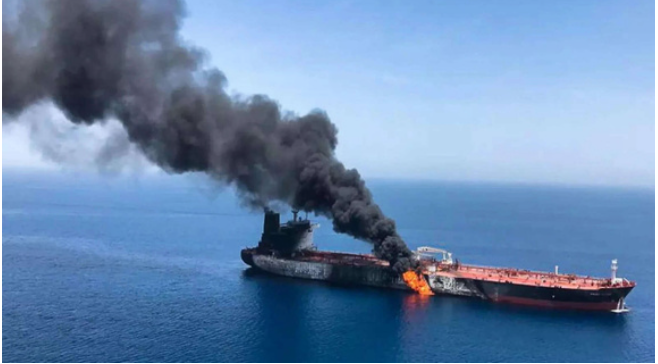
The latest shock came with the attack on a Kuwaiti tanker near Dubai, an incident that underscored how fragile the Gulf shipping environment has become. The attack intensified fears that Hormuz is no longer simply being “pressured” by Iran but has become part of a wider coercive strategy – one that links the battlefield directly to global energy vulnerability. Even where ships are not sunk, the cost of insurance, rerouting, convoy protection, and delay rises sharply.
That in itself can alter trade behaviour.
There is also a clear strategic shift in Washington. Reuters reported today that Gulf markets rallied on a report that President Trump is considering ending the Iran war even if Hormuz remains closed, a sign that the military objective may be evolving from reopening the strait by force to containing the broader conflict and shifting the burden onto diplomacy or allied pressure.
That is a remarkable development. It suggests that even the United States may now be calibrating its ambitions downward in the face of cost, risk, and escalation.
What this means in practical terms is simple enough. Hormuz is no longer just a naval issue. It is a geopolitical multiplier. If it stays unstable, the consequences will be felt far beyond the Gulf – in import bills, reserves, transport costs, and political nerves from Asia to Europe. The world is not merely watching Hormuz. It is now, economically speaking, hostage to it.
GAZA AND ISRAEL: OVERSHADOWED, BUT FAR FROM RESOLVED
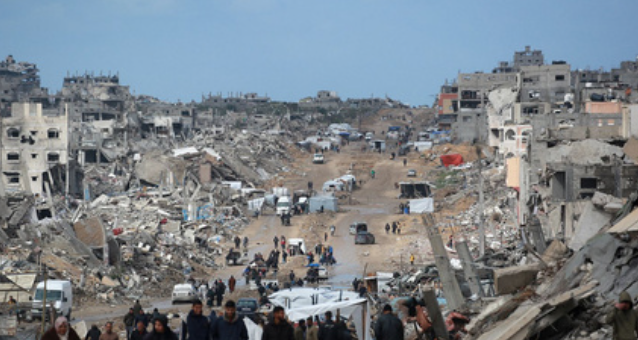
Gaza has, in recent days, slipped behind Iran and Hormuz in the global headline hierarchy. But that should not be mistaken for resolution. The reality today is that Gaza remains devastated and unresolved, even as the world’s attention shifts to the larger regional war.
This is one of the cruellest features of modern conflict: one tragedy is not ended, merely eclipsed by another.
For Israel, the widening confrontation with Iran has not removed the Palestinian question; it has merely changed the media rhythm around it.
In fact, today’s Reuters reporting points to a further hardening in Israeli domestic politics with the passage of a law introducing the death penalty by hanging for Palestinians convicted in military courts of lethal attacks.
The move has drawn criticism precisely because of its discriminatory character and because it arrives at a time when Israel is already under intense international scrutiny over its conduct and legal posture.
That matters because conflict is not only fought with bombs and missiles. It is also fought through law, legislation, and the codification of state power. The Gaza war may be overshadowed for the moment, but Israel’s internal direction suggests that the broader conflict with Palestinians is not cooling. If anything, policy and politics are moving toward a harsher framework at exactly the moment when international attention is elsewhere.
So the latest truth is this: Israel is now fighting on several levels at once – against Iran, against Hezbollah in the north, and within the unresolved and deeply embittered terrain of Gaza and the Palestinian issue. Gaza may no longer dominate the daily global news cycle, but it remains central to the moral and political story of the region. It is not over. It is simply being crowded out by a broader war. And that, in its own way, may prove just as consequential.
LEBANON: THE SECOND FRONT THAT REFUSES TO GO QUIET
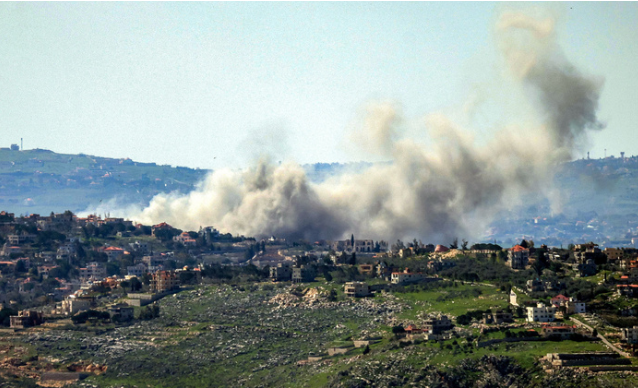
Lebanon remains what it has so often been in Middle Eastern wars: the second front that can never quite be treated as secondary. Today’s developments underlined that point sharply. Reuters reported that four Israeli soldiers were killed in southern Lebanon, a sign that the northern theatre is active, deadly, and not merely a sideshow to the bigger Iran confrontation.
The significance of this goes beyond the immediate loss of life. Every Israeli fatality in southern Lebanon signals that Hezbollah-linked confrontation remains operational and that Israel’s military burden is now spread across multiple arenas. This matters because wars are rarely decided only by firepower; they are shaped by endurance, dispersion, and political bandwidth. A state fighting Iran directly or indirectly while also sustaining a live northern front faces not only military complexity but domestic pressure as well.
There is also the wider diplomatic danger. The Associated Press and other reports today pointed to casualties involving U.N. peacekeepers in Lebanon, which raises the stakes considerably. Once international personnel are killed, the conflict stops being merely bilateral or regional. It begins to trigger broader institutional consequences, emergency diplomacy, and renewed scrutiny of the theatre as a whole. Lebanon has a way of internationalising crises that others prefer to compartmentalise.
What makes Lebanon particularly dangerous is that escalation there often arrives incrementally rather than through a single headline event. One clash becomes another. Localised exchanges become sustained operations. Political space narrows. The latest Israeli fatalities suggest that this front remains very much alive and that Hezbollah, whatever pressures it faces, still has the capacity to exact a cost. In that sense, Lebanon is not peripheral to the current war. It is one of the places where the wider regional strain becomes visible in blood and ground combat. And as long as that remains true, no serious reading of the Middle East crisis can treat the Lebanon front as merely background noise.
DUBAI, THE GULF AND SAUDI ARABIA: STABILITY UNDER STRAIN
The Gulf today is trying to project calm while operating under unmistakable strain. That tension is perhaps best captured by Dubai: a city built on confidence, logistics, and the appearance of uninterrupted normality, now dealing with the shock of a tanker strike in or near its orbit and the economic aftershocks of a widening regional war.
DIRHAM 1 BILLION AID PACKAGE IN DUBAI Reuters reported that Dubai has announced a 1 billion dirham support package to help businesses and families cope with the effects of the Iran war, a step that tells its own story. You do not roll out emergency support if everything is normal.
The attack on the Kuwaiti tanker near Dubai has altered the atmosphere. Even though the fire was controlled and no major spill or casualties were reported, the symbolism is hard to ignore.
An energy vessel loaded with crude was hit in one of the Gulf’s most commercially sensitive corridors. That is not just a military signal. It is an attack on confidence – confidence in ports, insurance, shipping schedules, and the Gulf’s reputation as a managed zone of commerce even amid turmoil.
Saudi Arabia, meanwhile, is responding with strategic adaptation rather than theatrical rhetoric. Reuters reported today that the kingdom has sharply increased oil exports from its Red Sea outlet at Yanbu, bypassing Hormuz as much as possible. This is a reminder that the Saudis have long planned for this sort of disruption. Yet even that flexibility has limits. No Gulf state wants a prolonged war economy, and none can fully insulate itself from a crisis centred on regional shipping and oil security.
The wider Gulf position appears equally conflicted. Publicly, these states want stability. Privately, there is evidence they still want Iran weakened before any true de- escalation. That makes the region’s posture both pragmatic and dangerous: contain the fire, but do not extinguish it too quickly. For now, the Gulf remains outwardly intact. But the strain is visible, and the cost of “managed stability” is rising by the day.