As of today, merchants will no longer incur any service fees for LankaQR transactions amounting to Rs. 5,000 or less. This initiative aims to facilitate seamless person-to-person (P2P) transactions at any time and from any location.
President Anura Kumara Dissanayake emphasized the government’s commitment to digitalization, asserting that transitioning to digital transaction systems will foster a transparent, efficient, reliable, and secure framework. This shift is also intended to gradually incorporate the informal sector into the formal economy.
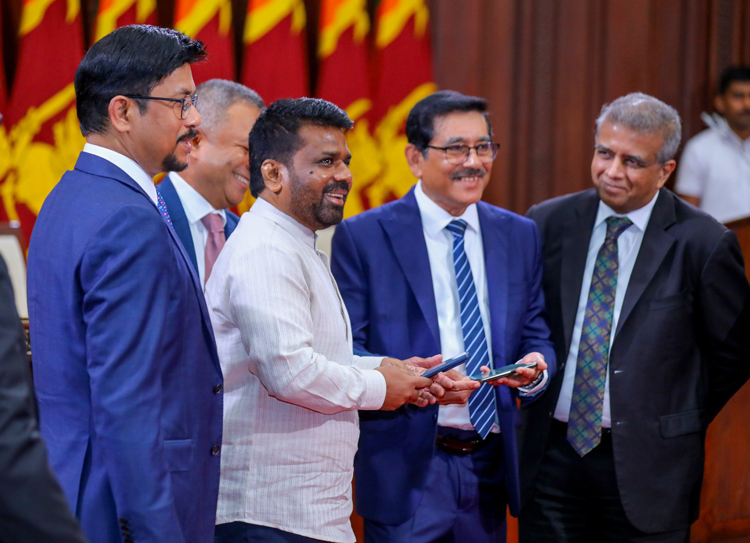
The President made these comments during the launch of the “National QR Payment Adoption Programme” at the Presidential Secretariat this morning.
This program marks a significant advancement in Sri Lanka’s digital economy, with the primary goal of reducing reliance on cash and promoting a cash-lite economy. Financial institutions have agreed to eliminate the Merchant Discount Rate for LankaQR transactions under Rs. 5,000 starting today.
The initiative is being executed with collaboration from the Ministry of Digital Economy, the Central Bank of Sri Lanka, GovTech, LankaPay, and various financial institutions, focusing on four main areas: eliminating transaction barriers, incentivizing public participation, introducing new technologies, and implementing nationwide awareness campaigns.
President Dissanayake acknowledged the strong cultural ties Sri Lankans have with traditional transaction methods, highlighting the need to transition from paper-based systems to modern digital solutions.
He urged banks and financial institutions to assist in achieving the government’s objectives by promoting this program as a more convenient and efficient option for citizens.
President Dissanayake stated, “Our economy and society face limitations due to our inability to systematically and transparently gather data on transactions, economic activities, and social indicators. While we have a clear policy to provide subsidies to targeted communities, identifying these groups remains a challenge.”
He illustrated this point by referencing the recent rise in fuel prices due to the Middle East crisis, noting that both the impact on the national economy and the effects on the fuel sector need assessment. He stressed the necessity of balancing price adjustments to avoid creating a crisis for institutions like the Ceylon Petroleum Corporation.
As a solution, the government has decided to offer a fuel subsidy of up to Rs. 100 on diesel. However, he raised concerns about equity in subsidy distribution, questioning who truly benefits from such support. He argued for the importance of better data collection, suggesting that transaction records could provide insight into an individual’s economic status, thereby improving the targeting of subsidies.
To address these complexities, the President advocated for a shift towards digital transactions, asserting that this would enable subsidies to reach the intended beneficiaries effectively.
This initiative aims to develop a transparent, efficient, reliable, and secure transaction system, facilitating the gradual integration of the informal economy into the formal one. The government has set an ambitious target of building a digital economy worth $15 billion, not just within the digital sector but also through enhanced efficiency in agriculture and small to medium enterprises.
Despite the existing transactional culture in Sri Lanka, there has been insufficient promotion of modern digital solutions. President Dissanayake emphasized the need to transform the existing paper-based transactional relationships into a modern digital framework and called for extensive media outreach and public awareness campaigns to support this transition.
He observed that many everyday transactions, such as giving money to children for school or during cultural festivities, must be integrated into the new digital paradigm. For the QR payment method to gain acceptance, it should resonate with social and cultural practices rather than being limited to specific transaction types.
To effectively align cultural transactions with digital systems, innovative tools and models must be created. The active involvement of banks and financial institutions is crucial for the success of these initiatives. He proposed that if QR-based transactions could be promoted during significant cultural events like the New Year, it could lead to a substantial behavioral shift.
Deputy Minister of Digital Economy, Eng. Eranga Weeraratne, highlighted that Rs. 1.48 trillion in physical currency is currently in circulation and reiterated the goal to digitalize this cash-dependent economy. He noted that while 89% of individuals over 18 have bank accounts, the awareness and use of QR technology remain limited, with cash still dominating retail transactions.
He explained that the aim is to facilitate QR payments even for small purchases and announced that financial institutions have agreed to waive service fees for transactions under Rs. 5,000. Additionally, there will be a lottery-based incentive scheme to encourage public adoption of the system, complemented by a large-scale awareness campaign.
Central Bank Governor Dr. Nandalal Weerasinghe addressed the barriers to QR adoption in the past, announcing two significant measures aimed at overcoming these obstacles. First, the removal of transaction fees for payments below Rs. 5,000 is expected to facilitate wider usage. Second, he highlighted the importance of enabling P2P transactions, which have proven successful in other countries.
Dr. Hans Wijayasuriya, Chief Advisor to the President on Digital Economy, also shared insights at the event, which was attended by various government officials and representatives from financial institutions.
The initiative marks a crucial step towards modernizing Sri Lanka’s economy through digital solutions, with a focus on inclusive participation and engagement with the public.