The Speech Was Calm. The Country Is Not Convinced.
NEWSLINE – The Daily by Faraz Questioning the Answers
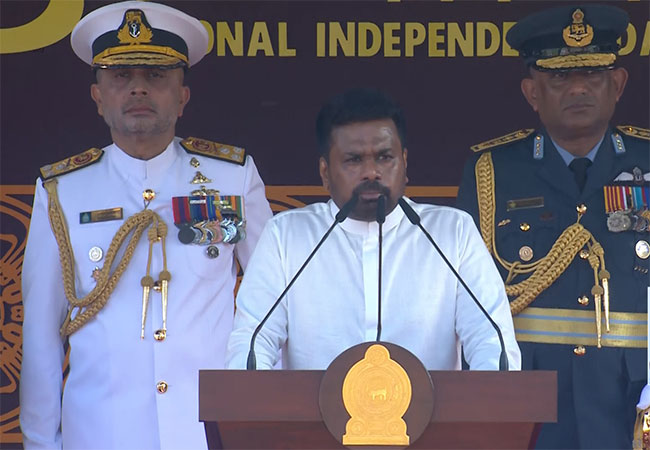
Sri Lanka marked its 78th Independence Day with dignity, ceremony, and restraint. The flags were raised. The bands played. The Republic behaved like a Republic should.
And yet, beneath the surface calm, something else was unmistakable. The country listened — politely, attentively — and then withheld judgment. That, more than applause or criticism, defined Independence Day 2026.
A Speech That Did Not Provoke — Or Persuade
President Anura Kumara Dissanayake delivered a speech that was careful in tone and deliberate in language. It avoided the old traps: no chest- thumping nationalism, no demonisation of minorities, no foreign scapegoats, no triumphalism.
That alone marked a departure.
Calls for unity, warnings against racism and extremism, and the framing of independence as an ongoing project of rebuilding were widely welcomed. Across social media platforms, even critics conceded that the address sounded “presidential”.
But sounding presidential is not the same as sounding decisive. Respect, Not Belief
The dominant reaction online was not anger. It was conditional respect.
Many Sri Lankans acknowledged the speech as sober and mature — but stopped short of embracing it. The refrain repeated across platforms was telling: “Good speech. Now show us.”
This is not cynicism. It is experience speaking. For a country that has endured promises without delivery, plans without timelines, and investigations without conclusions, rhetoric now arrives on probation.
The Accountability Silence
What stood out most was not what the President said — but what he did not say.
While unity and rebuilding featured prominently, accountability remained implicit rather than explicit. There was little direct reference to: economic crimes, asset recovery, unfinished investigations, or consequences for those who bankrupted the State.
That omission did not go unnoticed.
Across political divides, a consistent sentiment emerged:
“Unity is important. But justice is missing.”
The public is not demanding vengeance.
t is demanding closure — the kind that restores faith in institutions rather than prolonging suspicion.
A Country Tired of Ceremonial Independence
Independence Day itself was widely respected. Few mocked the celebrations. Few dismissed the symbolism. But many questioned the substance. One line appeared repeatedly, in different forms:
“We are independent — but are we in control?”
This is the unresolved contradiction of modern Sri Lanka. Political independence exists. Economic sovereignty feels fragile. Institutional authority appears selective. Independence, in the public mind, is no longer a historical milestone. It is a performance metric.
The Generational Divide Is Real
The response also revealed a clear generational split.
Older citizens tended to welcome the President’s emphasis on stability, restraint, and national unity. For them, calm itself felt like progress after years of chaos.
Younger Sri Lankans were less sentimental — and more transactional.
They asked about:
jobs,
housing,
cost of living, accountability timelines.
Their message was blunt:
“Unity doesn’t reduce rent.” “Rebuilding needs prosecutions.”
This is not impatience. It is realism from a generation that inherited crisis without having created it.
Fatigue, Not Hostility
Perhaps the most important takeaway from today’s public reaction is this: the anger has cooled, but the doubt remains. There was no meme storm. No mass ridicule. No collective rejection. Instead, there was something more dangerous for any government: withheld belief.
Citizens are conserving trust. They are waiting to see whether words translate into outcomes.This is the political equivalent of a silent audit.
The Independence Day Test
Independence Day speeches are not judged on the day they are delivered. They are judged in the months that follow.
The President succeeded in lowering the temperature. He did not inflame division. He did not embarrass the office.
But the test of leadership in 2026 is no longer tone. It is proof.
Proof that investigations conclude.
Proof that stolen assets return.
Proof that law applies evenly.
Proof that rebuilding is not merely rhetorical.
The Newsline Bottom Line
The President earned respect today. He did not yet earn belief.
Sri Lanka is no longer asking for inspiration. It is asking for evidence. On this Independence Day, the country did not reject its leaders. It
simply placed them on notice.
Good words were spoken.
Now the Republic waits for action.