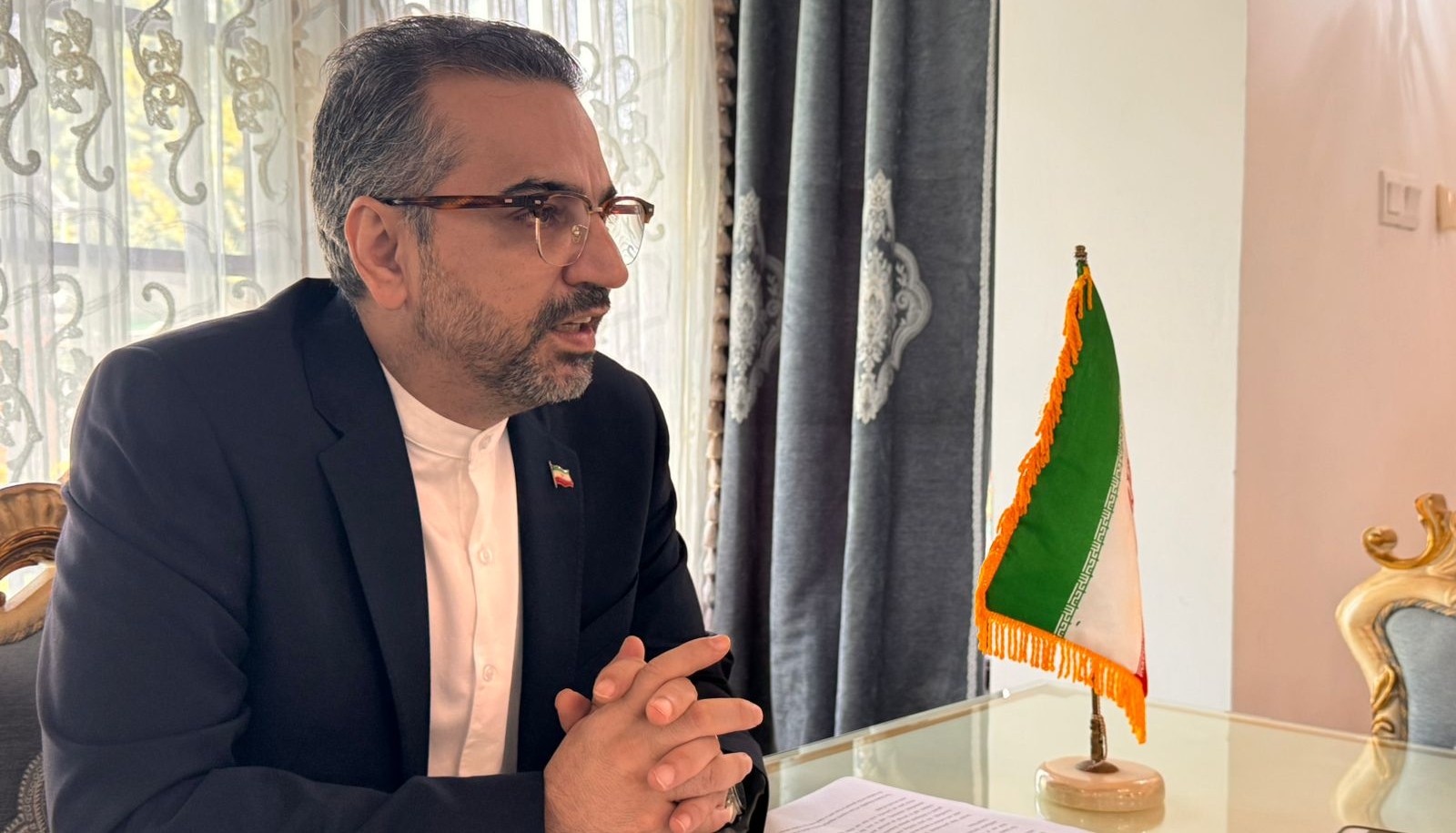
FINANCIAL CHRONICLE – The Tehran government’s ambassador to Sri Lanka, Alireza Delkhosh, declared that Iran is prepared to defend itself without external assistance in the event of a United States invasion. Delkhosh conveyed these sentiments during a meeting with a select group of journalists in Colombo, addressing concerns about a potential U.S. military action prompted by Iran’s alleged failure to safeguard protestors’ rights. These protests originally erupted due to the rapid depreciation of the Iranian rial.
“If the United States takes any wrongful action against Iran, we have our capabilities. We do not rely on any other country,” Delkhosh stated to reporters at his residence near the United Nations office in Colombo. He emphasized Iran’s self-reliance, saying, “We are Iran, and we stand on our capabilities. Unlike others who might seek external defense, we will defend ourselves. We do not depend on other nations.”
Delkhosh further explained that Iran has its own strategies for self-defense and urged neighboring countries to remain vigilant. “Should the United States attack us, all U.S. bases in the region will become our targets,” he warned.
Criticizing the U.S. President, Delkhosh accused him of disregarding international law. “No country can attack another over political disagreements. Yet, Trump threatens Iran. Why? Simply because he wants to dictate terms to Iran, and Iran refuses. Iran rejects any dictation,” he asserted. While expressing Iran’s willingness to negotiate, Delkhosh insisted that discussions must be equitable.
“From an international law perspective, there is no legitimate basis to attack Iran. However, Trump has shown he is not a proponent of international law but rather a person of tweets. His statements fluctuate throughout the day,” Delkhosh remarked. “If he makes the mistake of attacking Iran, we will defend ourselves, and our defense today is stronger than ever.”
Addressing the ongoing protests in Iran, Delkhosh noted that they began on December 28 due to genuine economic grievances but were later co-opted by a foreign intelligence agency. By mid-January 2026, foreign news outlets reported that the protests, triggered by severe economic hardships, had largely been quelled after a forceful crackdown by Iranian security forces.
The unrest reached its peak from January 8–10, spreading across all 31 provinces with millions reportedly participating in demonstrations, strikes, and clashes. Security forces imposed a near-total internet and communications blackout to disrupt coordination, employed live ammunition extensively, and conducted mass arrests. Though no official death toll has been released, reports from foreign agencies and human rights organizations estimate between 2,400 and 3,400 protester deaths, including children.
Delkhosh claimed that the violence escalated when foreign-backed protestors began attacking police and armed forces. “Some Iranians have been paid for these actions, and we have details,” he said. “For instance, there were payments of 500 US dollars for killing one person, 300 US dollars for injuring someone, and varying amounts for arson against public and private vehicles.”
He concluded by saying, “We know both the financiers and recipients of these payments.” (Colombo/January 16/2026)