Early this morning Sri Lanka media raised a question that, at the time, appeared speculative but deeply plausible.
Could there be a second Iranian naval vessel approaching Sri Lanka following the sinking of the Iranian warship IRIS Dena off the southern coast?
By mid-morning that possibility had become confirmation.
Cabinet spokesperson Nalinda Jayatissa acknowledged that another Iranian vessel is indeed present near Sri Lanka’s Exclusive Economic Zone and has sought assistance, placing Colombo in a delicate and uncomfortable diplomatic position.
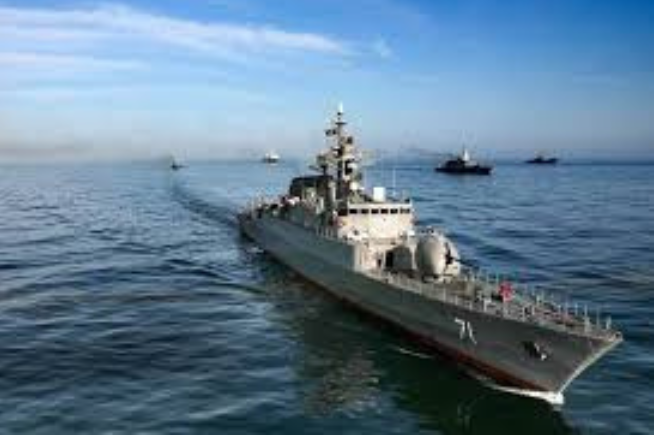
The vessel widely identified as IRINS Bushehr is believed to be a support and logistics ship carrying a sizeable crew complement. Its approach follows closely on the dramatic sinking of the Iranian frigate Dena, an incident that has already drawn Sri Lanka into the wider theatre of the escalating confrontation between Iran and the United States.
Be that as it may, Sri Lanka’s predicament is not straightforward.
International maritime law recognises the obligation to provide humanitarian assistance to vessels in distress. Yet the arrival of a foreign military ship belonging to a nation currently engaged in hostilities introduces obvious geopolitical sensitivities.
Allowing berthing facilities could be interpreted by some as tacit support.
Refusing assistance could raise humanitarian concerns should the crew require aid.
Sri Lanka now finds itself navigating the narrow channel between legal duty and geopolitical caution.
The irony is striking. For decades Sri Lanka has prided itself on remaining outside the direct theatre of global conflicts. Yet geography, shipping lanes and the widening scope of this particular confrontation have unexpectedly brought the island into the strategic conversation.
One has already sunk. The other has just arrived. And suddenly Sri Lanka is no longer merely watching the crisis from afar.