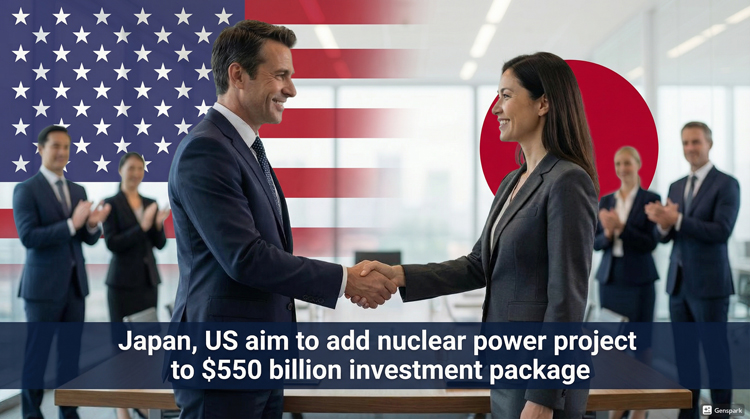
Japan and the United States are collaborating to incorporate a nuclear power project into the second round of agreements under Japan’s $550 billion investment package, according to two sources familiar with the discussions. This project, involving Westinghouse, aims to enhance the energy supply chains of both nations, amid heightened concerns about energy security due to ongoing conflicts in the Middle East.
Several agreements are currently being negotiated, with potential announcements expected during the meeting between Japanese Prime Minister Sanae Takaichi and U.S. President Donald Trump in Washington on March 19, the sources indicated, requesting anonymity due to the sensitivity of the discussions.
In an effort to fulfill its commitments under a U.S. tariff agreement, Tokyo is actively pursuing various deals. To date, Japan has announced three projects valued at $36 billion, including a natural gas power plant in Ohio. Additionally, a project to build a copper smelting and refining facility is under consideration, according to the sources.
To further these discussions, Japan’s Trade Minister Ryosei Akazawa plans to visit the U.S. starting Thursday to meet with U.S. Commerce Secretary Howard Lutnick, as reported by two other sources close to the matter.
Westinghouse, among approximately 20 companies mentioned in a joint fact sheet released by the two governments in October, has expressed interest in projects funded by Tokyo. The U.S. company, owned by Cameco (CCO.TO) and Brookfield (BAM.N), is exploring the construction of pressurized water reactors and small modular reactors with a potential total investment of up to $100 billion, according to the fact sheet.
The involvement of Japanese firms such as Mitsubishi Heavy Industries, Toshiba, and IHI is also a possibility, as noted in the document. Last year, the U.S. government entered a partnership worth at least $80 billion with Westinghouse to construct nuclear reactors, aligning with President Trump’s agenda to boost domestic energy production, especially as the demand increases due to the expansion of artificial intelligence data centers.
The fact sheet further mentioned that Falcon Copper is considering a $2 billion investment in a copper smelting and refining facility, with plans to engage Japanese suppliers and off-takers.
A representative from Japan’s industry ministry stated that the outcome of the negotiations remains uncertain. Mitsubishi Heavy Industries commented that no decisions have been made and that they would evaluate equipment supply opportunities on a case-by-case basis. Toshiba declined to comment, while IHI indicated they would review the situation if formal discussions arise. Attempts to reach Westinghouse and Falcon Copper for comments were unsuccessful outside of their business hours.