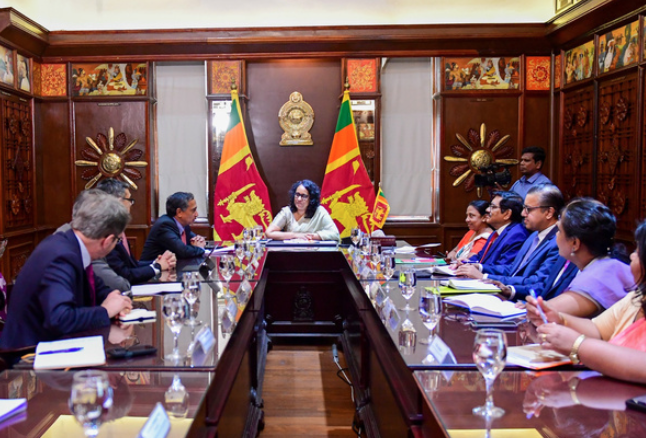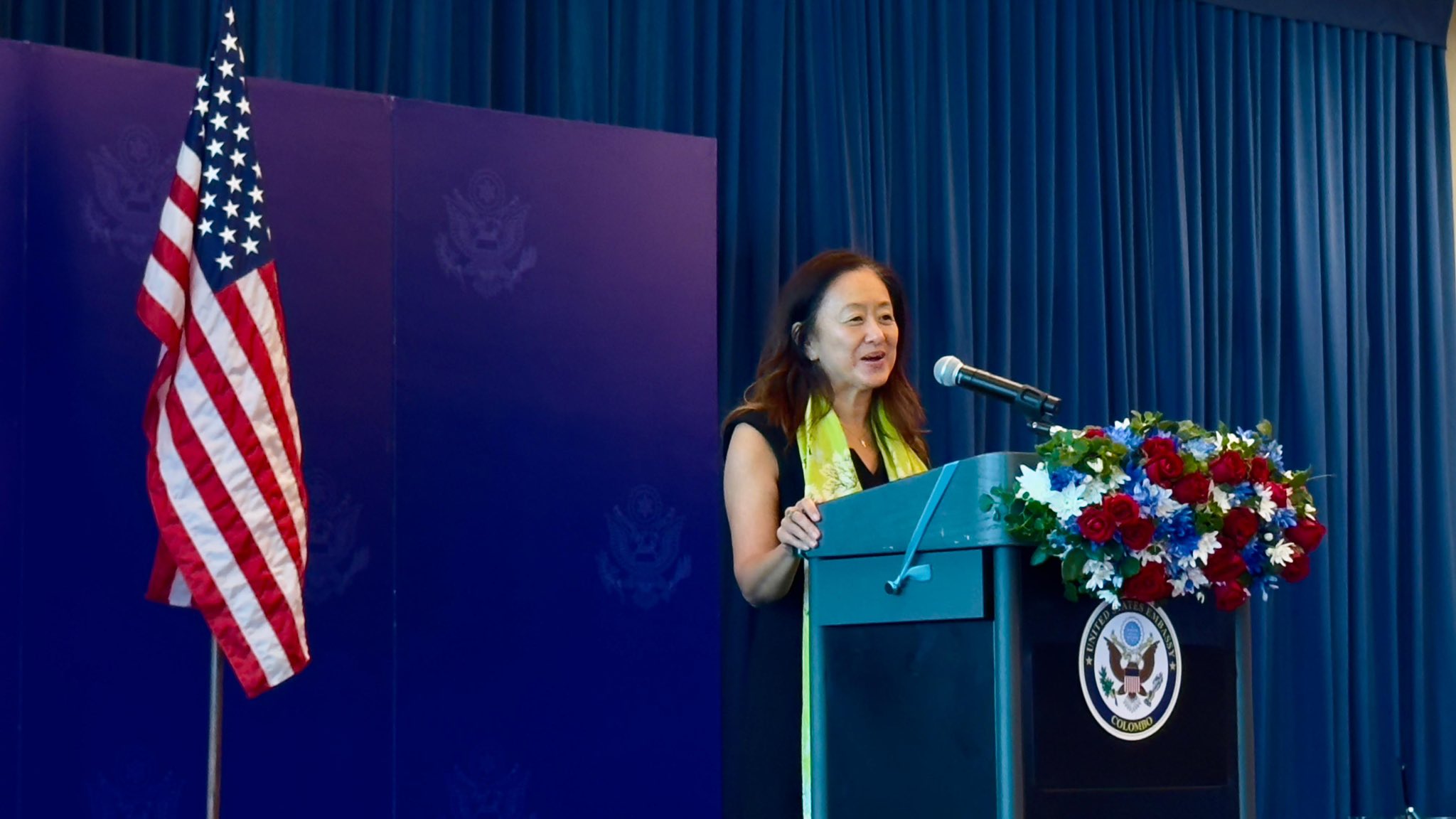
When U.S. Ambassador Julie Chung departs Sri Lanka on January 16, she leaves behind more than the usual exchange of pleasantries and farewell receptions. Her tenure coincided with one of the most politically and economically exposed periods in Sri Lanka’s post-independence history — a phase where sovereignty, survival, and foreign influence collided in full public view.
Chung arrived in Colombo at a time when Sri Lanka’s economic vulnerabilities were no longer theoretical. By 2022, the collapse was visible on fuel queues, medicine shortages, and the streets themselves. The Aragalaya did not merely protest a government; it forced a reckoning with decades of mismanagement. It was into this environment that American diplomacy became unusually visible — and unusually vocal.
This was not quiet diplomacy. Nor was it the old Colombo playbook of discreet cables and ceremonial neutrality. Chung’s tenure marked a shift toward a more public-facing, values-framed engagement: democracy, transparency, anti-corruption, and reform were not just whispered into ministry corridors but posted, tweeted, and stated aloud.
To some, this was welcome clarity. To others, it felt intrusive. But the discomfort itself revealed something important: Sri Lanka’s political class has grown accustomed to external financing without external scrutiny. When the scrutiny arrived — through IMF conditionality, governance language, and blunt diplomatic messaging — it exposed how thin the line between sovereignty and dependency had become.
Chung’s engagement with civil society, youth movements, and reform advocates stood in contrast to the traditional Colombo diplomatic circuit, which often orbits power rather than pressure. That too unsettled those who prefer diplomacy that flatters rather than challenges. Yet the truth is unavoidable: Sri Lanka’s crisis made neutrality a luxury no partner could afford.
Her departure now comes at a moment of tentative stabilisation. The economy is no longer in free fall. Fuel is available. Reserves have stabilised. But the underlying political culture remains largely unreformed. The risk is that as external pressure eases, internal complacency returns.
This is the context in which her exit matters. Not because of personality, but because of precedent. Chung’s tenure reflected a period where Sri Lanka could no longer pretend that economic collapse was a domestic affair, or that international partners would bankroll failure without conditions.
The transition ahead will test whether Sri Lanka’s engagement with the United States — and with the wider rules-based order — matures into institutional consistency, or retreats into transactional comfort.
Diplomats come and go. Structural truths remain. Chung’s departure closes a chapter. Whether Sri Lanka