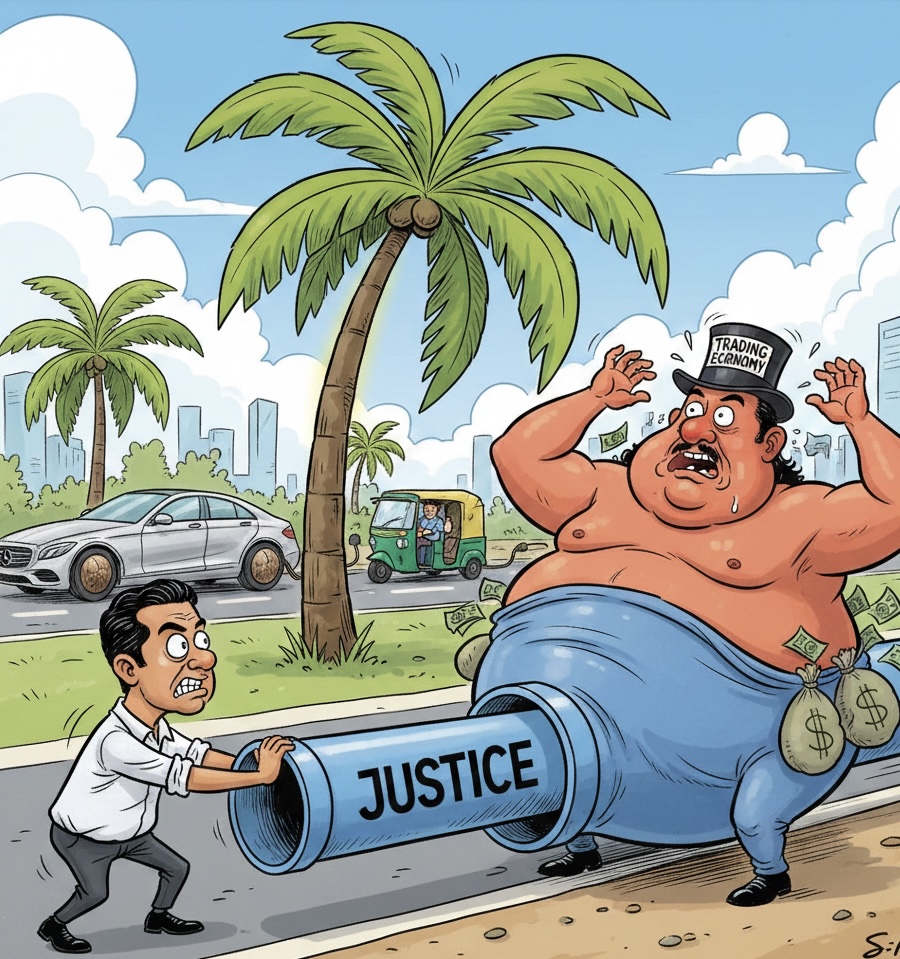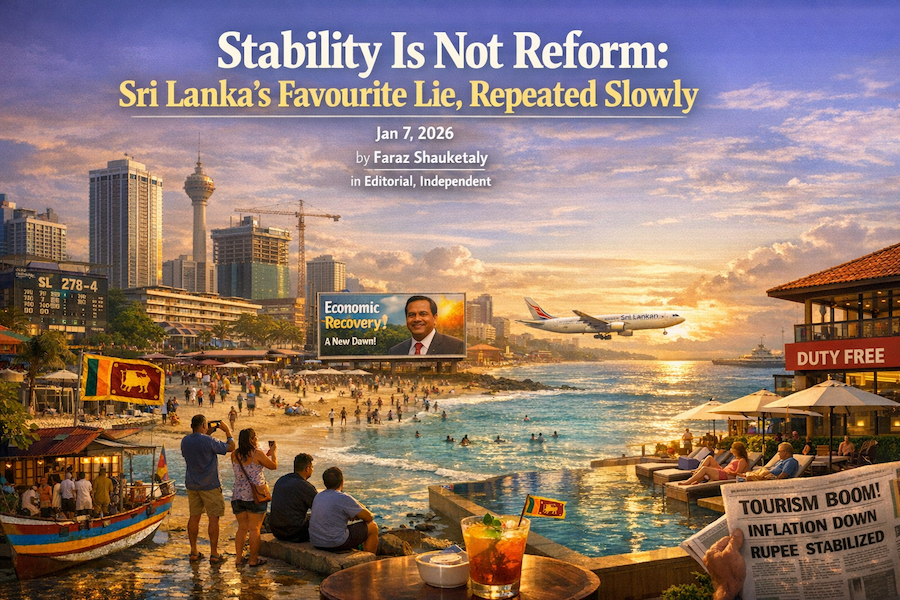
There is a pattern forming. And patterns, if ignored, become warnings.
Across sectors, we are seeing resignations — not routine retirements, not quiet exits — but departures of individuals with proven private-sector track records. Trailblazers. Builders. Operators who know how to read a balance sheet without flinching and make decisions without convening five sub-committees.
When people like that begin stepping away, it raises a question. Why? Is it friction? Is it interference?Is it misunderstanding dressed up as oversight? Or is it something subtler — the slow suffocation of momentum by systems uncomfortable with speed?
Let us be honest.
Sri Lanka voted differently last time. Many in business circles — who historically stood apart from politics — broke ranks with habit and supported an inexperienced group. Not out of ideology. Not out of blind loyalty. But because pressing the restart button felt necessary.
The old model had run out of road.
The expectation was clear: fresh thinking. Less entrenchment. More agility. A country finally prepared to think commercially about its future. But government is not a start-up. And state service culture, in parts, remains deeply ingrained. Process over outcome. Form over function. Control over collaboration.
That is not villainy. It is conditioning.
Yet conditioning can impede progress. Private-sector leaders who cross over into national service bring urgency. They understand that capital is impatient. That opportunity windows close. That execution matters more than circulars. When they begin to exit, one must ask whether the environment allows them to execute — or merely to advise.
Is political interference creeping in? Is caution being misread as obstruction? Are good ideas dying quietly in meeting rooms? Or is there another explanation — burnout, misalignment, or simply the difficulty of reforming systems older than the reformers?
Opinion pages are beginning to murmur. Some speak of bureaucratic inertia. Others of political recalibration. A few suggest personality clashes. None offer clarity. But clarity matters.
Because this moment is bigger than individual resignations. Sri Lanka cannot afford to repel competence. The late billionaire Killi Rajamahendran kept a plaque on his desk that read: “Lead, Follow or get out of the way.”
It was not arrogance. It was instruction.
A nation seeking transformation must decide which of those three roles it is prepared to embrace.
If we aspire to build a USD 150 billion economy — not in rhetoric but in measurable GDP — then comfort with the familiar cannot be the guiding principle. Growth at that scale demands risk tolerance. Regulatory clarity. Institutional speed. And above all, courage to be different.
Political ideology can be shaped later. First, the machine must run.
This is not a call to sideline public servants. It is a call to align systems with ambition. The state and the private sector are not adversaries; they are co-pilots. But co-pilots must share direction.
Sri Lanka stands at a fragile but promising juncture. Restart was pressed. Expectations were raised. If the reformers leave the room, the room must ask why.
Lead.
Follow.
Or get out of the way.
Because the global economy will not wait while we debate process. And neither should we.