Namal Rajapaksa remains in remand over an alleged Rs 100 million payment linked to the SriLankan Airlines Airbus procurement. Now President Anura Kumara Dissanayake has entered the argument with an uncompromising proposition: mother, grandmother, son or political heavyweight if there is a case, the law must apply. The principle is difficult to quarrel with. The real test is whether it applies to everybody.
Namal Rajapaksa will spend at least several more days in remand custody.
The SLPP National Organiser and Hambantota District MP was arrested by the Commission to Investigate Allegations of Bribery or Corruption on September 4 and subsequently remanded until September 18 in connection with an alleged Rs 100 million payment arising from the controversial procurement of Airbus aircraft for SriLankan Airlines.
Submit Your Press Release
Get your company news, announcements, launches, appointments and events in front of a wider audience.


CIABOC’s case goes considerably further than a bald allegation that Rs 100 million changed hands.
According to material placed before court, investigators allege that €1,454,651.24 was received into an account maintained at Standard Chartered Bank in Singapore in the name of BIZ Solutions Inc. They further allege that US$800,000 was subsequently transferred to an OCBC Bank account in Singapore belonging to Sabre Vision Holdings Ltd, a company owned by a Sri Lankan businessman.
CIABOC alleges that Namal Rajapaksa subsequently received a total of Rs 100 million from that businessman on several occasions during 2014 and 2015. The Commission says its investigation includes a statement from the businessman, statements obtained from Airbus officials in France and documentary and other material gathered during the inquiry.
These are allegations. They have not been proved against Rajapaksa and remand is not a finding of guilt.
That distinction matters enormously, particularly now that an investigation has become a political confrontation.
The SLPP has condemned the arrest and alleged that the proceedings are politically motivated. Its supporters have increasingly sought to portray the detention of Namal Rajapaksa as part of a broader campaign against the Rajapaksa family.
President Anura Kumara Dissanayake has effectively answered that argument.
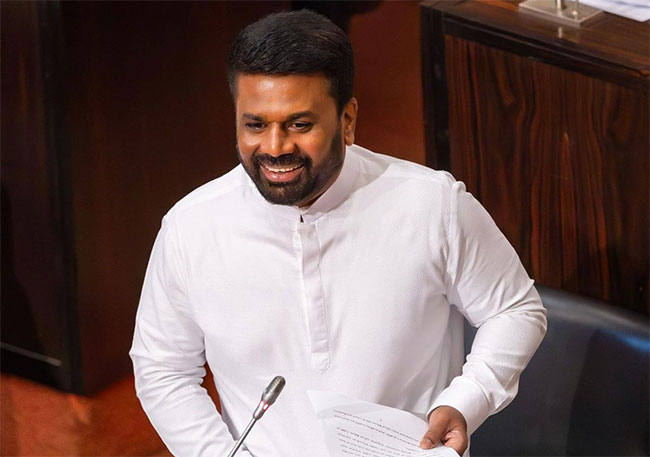
Speaking on September 12, the President said allegations of political revenge and appeals for sympathy would not prevent legal action against those accused of corruption or misappropriating public money. His language was deliberately unsentimental: fathers should have advised their sons not to steal, he said, rather than complain when they were caught.
Behind the political theatre lies a much more important proposition.
No one should be above the law.
Not Namal Rajapaksa. Not a former President. Not a Cabinet Minister. Not an NPP politician. Not a senior public servant. Not a regulator. Not a businessman with the right telephone numbers. Not anybody.
And that is precisely why this case may ultimately test the Government as much as it tests Namal Rajapaksa.
If there is admissible evidence that he received money connected with the Airbus transaction, investigators must pursue it without fear, favour or political interference. If prosecutors believe that evidence establishes criminal liability, they must put it before a court.
But the reverse is equally important.
Namal Rajapaksa is entitled to the presumption of innocence. Remand must never be allowed to become punishment by another name, and an arrest must never be presented to the public as though it were already a conviction.
There is also a larger question for President Dissanayake.
Once a Head of State declares that nobody is above the law, he creates a standard against which his own administration will inevitably be measured.
The public will therefore watch what happens when allegations involve people without a Rajapaksa surname. They will watch investigations involving government institutions. They will watch regulators. They will watch procurement. They will watch whether files move with the same urgency when the politically inconvenient person happens to be standing on the Government’s side rather than the Opposition’s.
That is the beauty and the danger of equality before the law.
It cannot be selective. The next scheduled court date in the present case is September 18.
What happens then will matter to Namal Rajapaksa.
What happens everywhere else may matter considerably more to Anura Kumara Dissanayake. Because the President has now articulated the standard himself.
No matter who you are.
Be that as it may, Sri Lanka does not need one set of people finally brought beneath the law. It needs a country in which nobody was ever above it.