Harsha Vs Harsha
Port City’s First Signal Was the Wrong One
When the names of the four Port City approvals were finally disclosed, the controversy did not end. It finally made sense.
The projects approved were:
• Clothespin — a hotel
• IFC Colombo 1 — mixed development
• Ceylon Real Estate Development Company — mixed development
• ICC Port City — residential units
These approvals were defended before the Committee on Public Finance (COPF) as necessary to demonstrate momentum and honour Sri Lanka’s commitments under the IMF programme while legal refinements were pending.
That explanation answers why something was approved.
It does not explain why this was approved.
Port City’s Deeper Problem: When Investors Arrive — and Are Pushed Away The trouble with Port City is no longer theoretical.
It is no longer about models, masterplans, or legislation still “being refined.”
It is about how investors are being treated once they arrive.
Behind the parliamentary exchanges and approval statistics lies a quieter, more damaging reality: a small but real group of early investors — those who took a chance on what is arguably the most expensive piece of reclaimed land in South Asia — are leaving encounters with Port City management discouraged rather than motivated.
And that should alarm everyone.
From Regulatory Uncertainty to Human Friction
Several investors already present in Port City — few in number, but crucial in signalling credibility — privately describe engagements with the Port City administration as confrontational rather than facilitative, marked by an attitude that feels closer to interrogation than attraction.
At the centre of this unease is the leadership style attributed to Revaan Wickramasuriya, the local Chief of the Colombo Port City Economic Commission.
His formal mandate is clear: attract investment.
Yet investor feedback suggests an environment where:
• policy stability feels uncertain,
• discretion is exercised defensively, and
• “IMF constraints” are invoked as a shield rather than a framework.
IMF programmes require discipline. They do not require hostility. Some argue that having been given the independence, that the local Chief is not doing justice to the major responsibility given to him. The Port City is part of Sri Lanka’s future. Zero tolerance is the meaning that President Anura Kunmara Dissanayaka must look into. If the doctor ain’t good, change the doctor before you hit the ICU.
IMF as Alibi, Not Architecture This distinction matters.
At the Committee on Public Finance (COPF), Port City officials justified selective approvals by arguing the need to remain aligned with IMF commitments during a legal transition.
But investors report that the IMF narrative is now bleeding into day-to-day interactions, used less as a macro anchor and more as a conversation-stopper.
That is dangerous. The IMF sets macro guardrails. It does not micromanage investor engagement. Nor does it mandate confrontational regulatory posture.
When IMF alignment becomes an all-purpose explanation — for delays, denials, or discretion — it ceases to be reassurance and starts to look like cover.
The Parliamentary Alarm Was Not Abstract
This is why the exchanges at COPF matter far beyond Parliament.
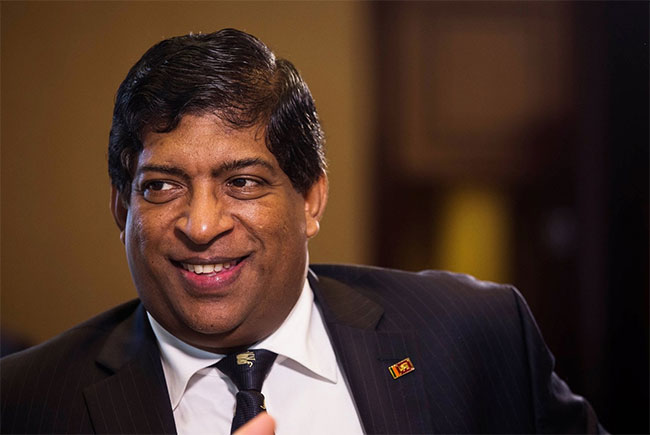
Dr Harsha de Silva, questioning Harsha Amerasekera, was not merely interrogating a process. He was probing whether IMF language was being used to mask a discriminatory approval regime.
That concern gained weight when the four approved projects were revealed: These are not transformative investments. They are property.
Ravi Karunanayake’s Strategic Indictment
It was Ravi Karunanayake, a former Finance Minister once named Asia’s Best, who articulated the deeper failure. His frustration was strategic, not political. Approving housing and real estate while deferring applications from banks and financial institutions, he argued, inverted Port City’s very purpose. If discretion was exercised to send a signal, then the wrong signal was chosen.
Banks bring credibility. Financial services bring foreign exchange. Real estate brings… more real estate. Sri Lanka has plenty of that already.
Investors See the Same Problem — From the Other Side of the Table
What COPF debated in theory, investors are experiencing in practice. Early entrants — those attempting to repurpose barren reclaimed land into viable operations — report a sense that:
• they are being managed as risks, not partners;
• approvals feel opaque and conditional;
• and engagement lacks the confidence expected of a zone selling certainty.
This is not how successful financial centres behave.
Dubai does not lecture investors. Singapore does not browbeat them. They compete to reduce friction, not multiply it.
A Culture Problem, Not Just a Legal One. The danger for Port City is that it is drifting toward a compliance-first, attraction-last culture.
That culture: hides behind macro constraints, treats discretion as defence, and mistakes toughness for seriousness.
But investors do not confuse hostility with rigour.
They read it as insecurity.
The Tragic Irony
Port City was meant to be Sri Lanka’s clean break — a zone governed by clarity, professionalism, and confidence, insulated from the country’s worst administrative habits.
Instead, investors now whisper about: unpredictability, personality-driven encounters, and a regulatory mood that feels punitive rather than persuasive. For a project already battling scepticism, this is self- inflicted damage.
Newsline Bottom Line
Port City’s problem is no longer just what it approves, but how it behaves. You cannot sell certainty while projecting confrontation. You cannot attract capital while treating investors as supplicants. And you cannot hide behind the IMF to excuse strategic timidity or abrasive conduct.
Sri Lanka does not need Port City to be feared. It needs it to be trusted.
Because barren land can be reclaimed with dredgers. But investor confidence, once lost, is far harder to recover.