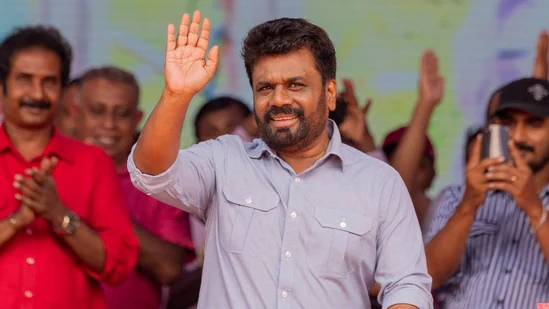
Nearly two years into office, President Anura Kumara Dissanayake faces a question that no amount of electoral arithmetic can dodge: is delivery being delayed by resistance — or by hesitation?
When AKD sought office, his promise was unambiguous and resonant. Those who robbed the Treasury would be held to account. Not investigated indefinitely. Not “reviewed.” Held accountable. It was a pledge that cut across class, party, and ideology — because it spoke to something elemental in Sri Lanka’s recent history: a public that had paid dearly for elite impunity.
Today, that promise remains technically alive — but practically slow off the mark.
Yes, the administration has inherited a wrecked economy, a traumatised bureaucracy, and a public sector that perfected inertia long before this government arrived. Yes, crises — Ditwah included — consume oxygen and attention. But let’s be honest: crises explain delay; they do not excuse drift.
The deeper anxiety is not about timelines. It is about posture.
There is a growing public unease that this government, despite commanding a staggering parliamentary majority, is behaving less like an Executive in charge — and more like an opposition still adjusting to power.
That is not a charge of bad faith. It is a warning about perception. And in politics, perception hardens quickly.
The “Yes, Minister” Problem
Supporters of the President increasingly point to a familiar defence: the civil service. The argument goes that highly experienced — some would say highly entrenched — officials are slowing, diluting, or quietly re-routing reform. The comparison to Britain’s Yes Minister or Yes, Prime Minister is irresistible: a clever, battle-hardened bureaucracy gently outmanoeuvring an earnest political leadership.
It is a tempting narrative. It is also only half the story.
Civil servants do not run countries. They shape how decisions are implemented — sometimes brilliantly, sometimes defensively — but they do not possess independent political authority. When policy stalls, responsibility ultimately travels upward, not sideways.
If senior officials are obstructing reform, the question becomes unavoidable: why are they still there, unchallenged and uncorrected, two years in?
Leadership is not measured by how well one diagnoses resistance. It is measured by how decisively one confronts it.
Accountability, Deferred
Nowhere is this tension more visible than in the matter of accountability for past financial wrongdoing.
Investigations have been announced. Files have been reopened. Statements have been issued. But prosecutions remain rare, timelines opaque, and outcomes uncertain. The public hears process; it was promised results.
The concern is not that cases are complex — they are. Nor that institutions must be respected — they must. The concern is that the moral urgency of the original pledge has been replaced by procedural caution.
Sri Lankans are not asking for show trials. They are asking for credible movement.
Every month that passes without visible progress deepens a corrosive suspicion: that this government is either unwilling — or unable — to confront entrenched interests with the force its mandate allows.
A Majority Without Momentum
This is what makes the current moment so politically dangerous.
Governments with slim majorities blame Parliament. Governments with coalition partners blame compromise. This government has neither excuse.
With overwhelming numbers in the House, AKD’s administration possesses legislative freedom most leaders only dream of. Yet that very advantage sharpens the question: what is stopping execution?
If not Parliament, and not the courts, and not the voters — then where, exactly, is the blockage?
When explanations become circular, confidence erodes.
Governing Is Not Opposition Work
Opposition politics rewards critique, exposure, and moral clarity. Governance demands decisions, disruption, and delivery. The tools are different. The risks are real. But the authority is unquestionable.
There is a growing fear among ordinary citizens — not hostile critics — that the government has yet to fully make the psychological shift from challenger to custodian. That it remains more comfortable calling out the past than reshaping the present.
This fear is not ideological. It is practical.
Sri Lankans voted not for permanent indignation, but for decisive correction.
The Window Is Narrowing
None of this is irreversible. But time is no longer neutral.
Every reformist government has a window — a finite period when public goodwill cushions hard choices and forgives missteps. That window does not close suddenly. It narrows quietly.
President AKD still commands trust. What he must now demonstrate is command over the machinery beneath him.
If the civil service is obstructing, it must be reformed.
If institutions are cautious, they must be guided — firmly.
If cases are slow, the public deserves clarity on why.
The electorate did not vote for perfection.
It voted for direction.
Power has been granted.
The country is waiting for pace.