They promised us the future would drive itself.
It has — but only in carefully fenced neighbourhoods, at carefully chosen hours, under relentless supervision, and with a lawyer never far from the passenger seat.
The era of Level-4 robotaxis — vehicles that truly drive themselves without human supervision — is no longer theoretical. They are operating. They are carrying paying passengers. And yet, they remain fragile political experiments, not the unstoppable revolution once sold to the public.
Nowhere is this tension clearer than in the UAE, Europe, and the UK — regions that want innovation, but refuse chaos.
WHAT “SELF-DRIVING” ACTUALLY MEANS (AND DOESN’T)
Let’s strip away the marketing.
Level 2: Driver assistance. Human responsible. Not autonomy.
Level 3: Conditional autonomy. Rare, limited, controversial.
Level 4 (Robotaxis):
No driver
No steering input
Operates only inside geo-fenced zones
Shuts down if conditions exceed tolerance
Only Level-4 robotaxis qualify as “self-drive autos” in any serious sense.
And there are only a few thousand globally.
UAE: THE GULF MOVES FROM PILOT TO PAYING PASSENGERS
Abu Dhabi — Commercial Reality
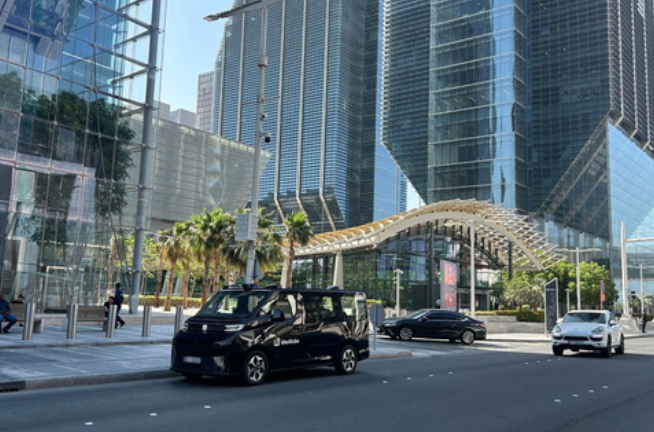
Abu Dhabi has gone further than most Western cities. Operator: WeRide in partnership with Uber
Areas: Yas Island initially; expansion reported into Al Reem and Al Maryah
Status: Fully driverless, fare-paying rides
Vehicle: WeRide GXR (robotaxi based on Geely’s Farizon SuperVan platform)
This is not a demo. It is a regulated, commercial service — and a signal that the UAE intends to be an early autonomy hub.
Dubai — Controlled Ambition
Dubai’s approach is deliberate rather than dramatic. Pilot zones: Umm Suqeim and Jumeirah
Platform: Uber
Regulator: RTA
Status: Public pilot, limited routes, limited hours
Dubai wants autonomy — but not at the cost of public confidence.
EUROPE: ENGINEERING FIRST, SCALE LATER
Europe’s robotaxi story is slower, stricter, and arguably wiser.
Germany: The Volkswagen Model
Operator: MOIA (Volkswagen Group)
Cities: Hamburg and Berlin
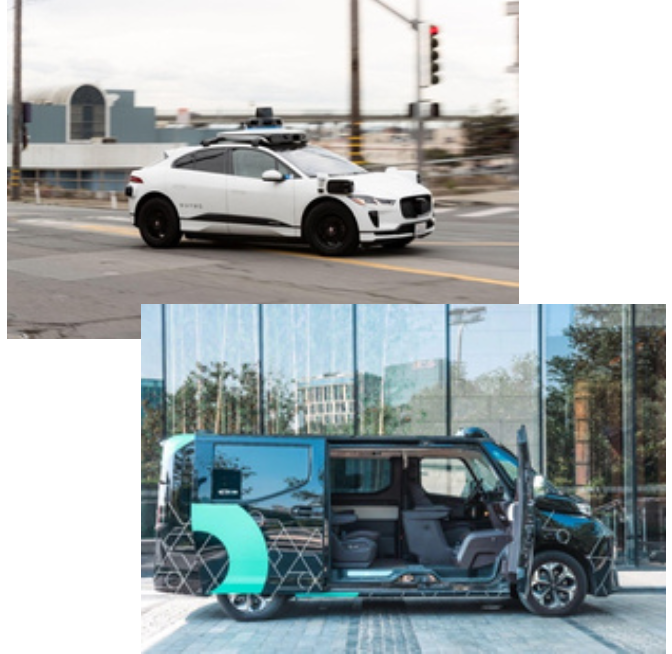
Vehicle: Volkswagen ID. Buzz AD (purpose-built autonomous van)
Approach: Public-road operations with heavy regulatory oversight
Germany treats autonomy like aviation — certify everything, assume nothing.
Norway: Next in Line
City: Oslo
Status: Planned expansion of ID. Buzz AD operations Timeline: From 2026
France: Autonomy, But Contained
Paris has hosted Level-4 autonomous shuttles, notably during Roland-Garros — but these are fixed-route systems, not free-roaming robotaxis.
Europe’s message is clear: Prove safety first. Scale later.
THE UK: WHY LONDON IS THE HARDEST TEST ON EARTH
London is where robotaxis go to be humbled. Zebra crossings with legal supremacy Pedestrians who don’t look
Cyclists who assume immortality
Lanes that appear, disappear, and reappear
Status
Trials planned, not mass deployment
Waymo and Wayve-Uber referenced in preparations Heavy simulation and mapping before any public rollout
The UK isn’t anti-technology. It’s anti-uncontrolled risk.
WHERE ROBOTAXIS ACTUALLY RUN
UAE
Abu Dhabi (Yas Island, Al Reem, Al Maryah) — WeRide GXR
Dubai (Umm Suqeim, Jumeirah – pilot) — WeRide platform
Europe
Hamburg / Berlin — VW ID. Buzz AD (MOIA)
Oslo (planned) — VW ID. Buzz AD
Paris (event-based shuttles) — WeRide/Renault Robobus
UK
London — trials and preparation only (no full public serviceyet)
ACCIDENTS, FATALITIES, AND THE TRUST PROBLEM
Here’s the uncomfortable truth:
Robotaxis don’t need to be statistically dangerous to be politically lethal.
Globally, there have been:
Serious AV-related injuries
At least one well-documented AV test fatality (Uber, 2018, US)
High-profile incidents triggering shutdowns and investigations
In the UAE and Europe, the emphasis has been prevention — slow rollouts, strict domains, instant suspension powers.
Because one viral incident can undo a decade of engineering.
WHY THIS IS HARDER THAN IT LOOKS
Edge cases — construction zones, emergency vehicles, unpredictable humans
Cost — sensors, compute, remote support, insurance Regulation — every city is a new rulebook
Public psychology — humans forgive humans; they don’t forgive machines
The robotaxi’s problem isn’t driving. It’s being judged.
NEWSLINE BOTTOM LINE
Level-4 robotaxis are real — but they are fragile guests in our cities.
The UAE is leading by permitting carefully. Europe is leading by regulating methodically.
The UK is leading by asking the hardest questions.
The revolution didn’t stall. It simply met reality.
And reality, it turns out, has zebra crossings.