Be that as it may, accountability in public office has often been diffused – spread across institutions, diluted by process, and rarely borne personally.
This week, the Supreme Court changed that equation.
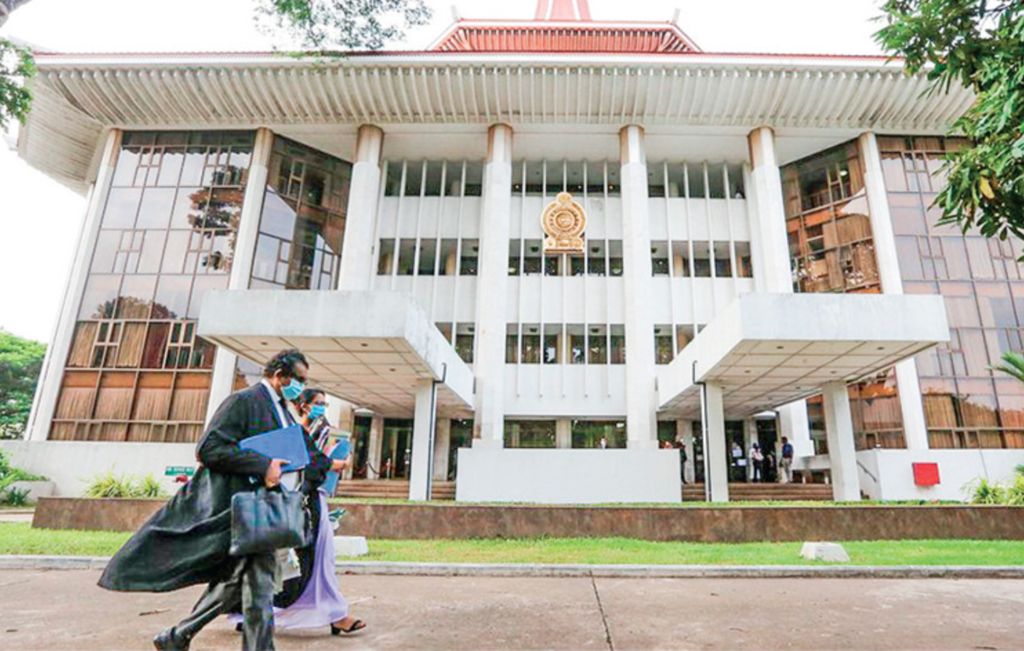
In a significant ruling, former Health Minister Keheliya Rambukwella was held personally liable for violating the fundamental rights of citizens in relation to a controversial medicines procurement process. He has been ordered to pay Rs. 75 million, with senior officials also facing substantial personal penalties.
At the centre of the case was the procurement of medicines from a supplier not registered with the National Medicines Regulatory Authority. The Court found that established safeguards had been bypassed, and that public funds had been deployed in a manner that was arbitrary and unlawful.
The message is clear. Public office does not shield personal responsibility
The ruling goes beyond damages. The Supreme Court has directed the Bribery Commission to examine whether criminal liability arises.
At the same time, the Attorney General has informed court that a forensic audit of all medicines procured during the period in question will be undertaken.
That second development may prove even more consequential.
Because while the judgment establishes accountability in one instance, the audit has the potential to widen the scope – examining patterns, decisions, and financial flows across an entire period of public procurement.
The implications are structural.
If upheld in practice, this marks a shift from a system where responsibility is collective and diffuse – to one where it is specific and personal.
The ruling answers one question. The audit may raise many more.
Why the Rambukwella Case Resonates Beyond Corruption
Be that as it may, Sri Lanka is no stranger to allegations of corruption. Public outrage, while often sharp, has also become cyclical – rising with each scandal and receding with time.
This case feels different.
It is not simply about money, contracts, or procedural breaches. It touches something far more fundamental: trust in the systems that are meant to protect life itself.
At the centre of the controversy is the procurement of medicines – products that do not exist in abstraction, but are administered to people who are already vulnerable. When irregularities occur in this space, the consequences are not theoretical. They are immediate, personal, and potentially irreversible. That is what distinguishes this moment.
Corruption in infrastructure may waste public funds. Corruption in healthcare risks something far more profound. It raises the possibility that decisions taken at the highest levels may have compromised the safety and well-being of patients who had little choice but to rely on the system.
Even where causation is debated or unproven in individual cases, the perception alone carries weight. Because healthcare occupies a unique position in the social contract.
Citizens may tolerate inefficiency in many areas of governance. They may even endure delays, bureaucracy, or fiscal mismanagement. But when it comes to medicine, hospitals, and care, expectations are absolute. The state is not merely a provider – it is a custodian of life.
Any breach of that expectation triggers a deeper response.
This is why the case has resonated so widely. It is not only about alleged misconduct. It is about the fear that the system itself may no longer be reliable.
That fear extends beyond a single procurement or a single administration. It raises broader questions about oversight, accountability, and the integrity of public institutions.
The Supreme Court’s ruling, in holding individuals personally liable, addresses one dimension of that concern.
But the wider issue remains.
Trust, once shaken in areas as fundamental as healthcare, is not easily restored. And in that sense, the public reaction is not merely about the past.
It is about the future and whether the systems that people depend on at their most vulnerable moments can still be relied upon.