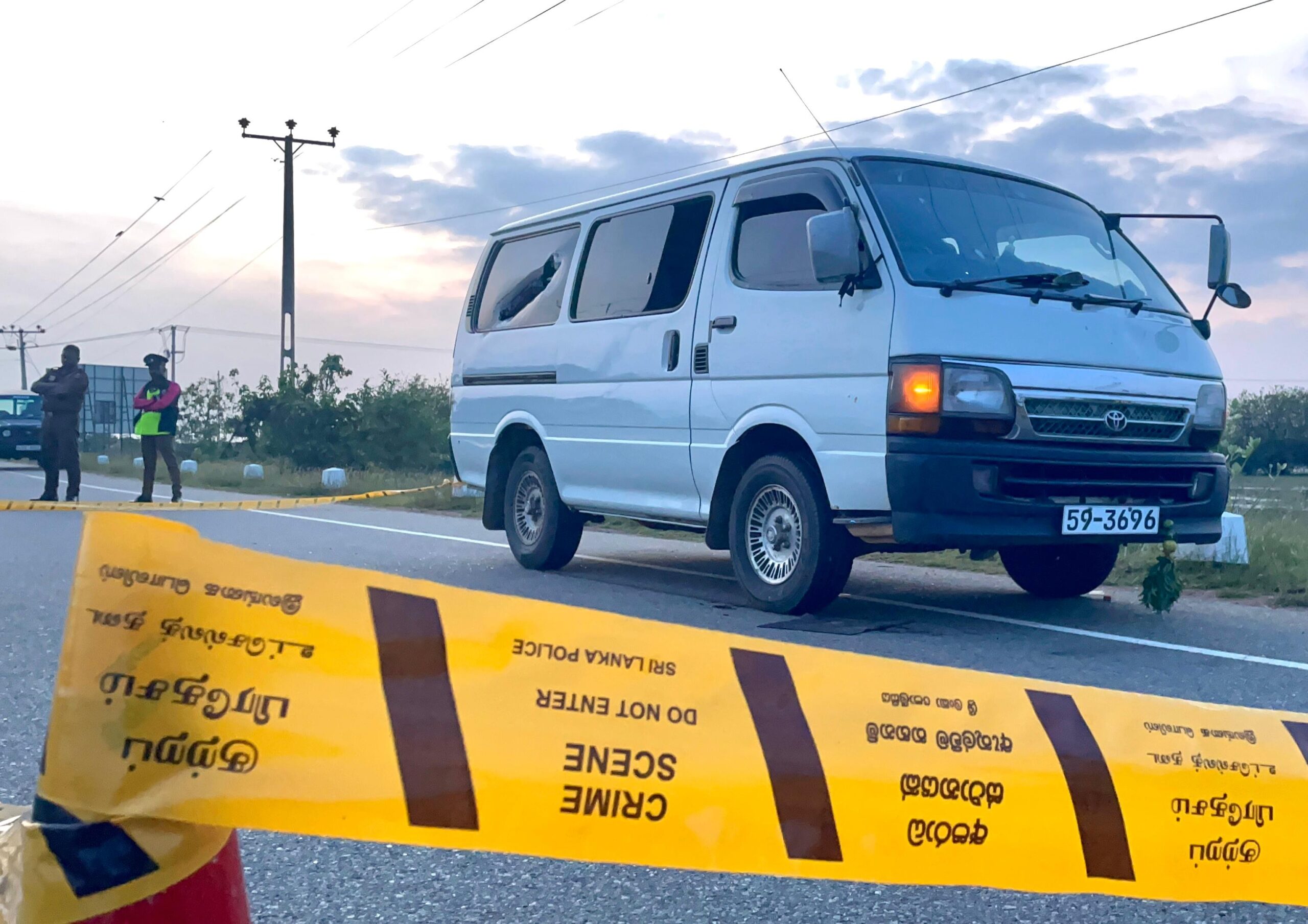
Who Pulled the Trigger — and Why? A 17-year-old boy is dead because he did not stop at a police order. Let that sentence settle. Not because he carried a bomb. Not because he opened fire. Not because he rammed officers.
Because he did not stop. Yes, he was unlicensed. Yes, he broke the law. Yes, ignoring police commands is serious. But since when did a traffic offence become a death sentence?
The Question the Police Cannot Dodge
The Sri Lanka Police now carry the burden of proof. Not a press statement. Not a defensive briefing. Proof. Was there an imminent threat to life? Was the vehicle being used as a weapon? Were officers directly in danger? Were warning procedures followed? Were non-lethal options exhausted?
If the answer to those questions is unclear, then we are not looking at a tragic inevitability.
We are looking at a failure of judgement.
“Shoot the Tyres” — Or Don’t Shoot at All?
The public instinct is simple: aim at the tyres. Professionals will tell you that disabling a moving vehicle with precision fire is difficult and dangerous. That is true. But here is the harder truth: If you cannot safely disable a vehicle, then lethal fire should only occur when lives are in immediate danger. Was that the case here? If not, why was a firearm discharged in a manner that killed a minor?
Policing is not about punishing disobedience.
It is about protecting life — including the life of the suspect.
The War Reflex
But seventeen years after the defeat of the Liberation Tigers of Tamil Eelam (LTTE), Sri Lanka cannot continue policing civilians as though every checkpoint is a battlefield.
War reflex cannot be default protocol.
If officers still operate under a mindset where non- compliance equals lethal suspicion, then something has gone very wrong in post-war policing culture.
Trigger Discipline Is the Line Between Order and Fear
The State holds a monopoly on lethal force. That power demands trigger discipline — not emotional reflex. When police bullets kill a teenager, the standard is not “Did he obey?”
The standard is: Was there absolutely no other option? If there was another option, this is not just tragedy. It is institutional failure.
What Must Happen Now
Immediate independent investigation. Suspension pending inquiry if protocol breach is suspected. Release of any CCTV or body-camera footage. Clear public explanation of the threat assessment. Secrecy will not calm this. Transparency will. Because if citizens begin to believe that fleeing a checkpoint can end in death, trust in law enforcement collapses.
And without trust, policing becomes occupation.
NEWSLINE Verdict
A 17-year-old should not leave a traffic stop in a coffin. If the officers acted lawfully under real threat, prove it. If they did not, accountability must be swift. Lethal force is not a convenience. It is the last line. .The tragedy took place within the former conflict zone areas. Ironically the driver was just 17 years old. He was an infant at the time the war on each other had come to an end. How tragic.
And if that line is thinning, Sri Lanka must confront it now.