Questioning the Answers
By Faraz Shauketaly
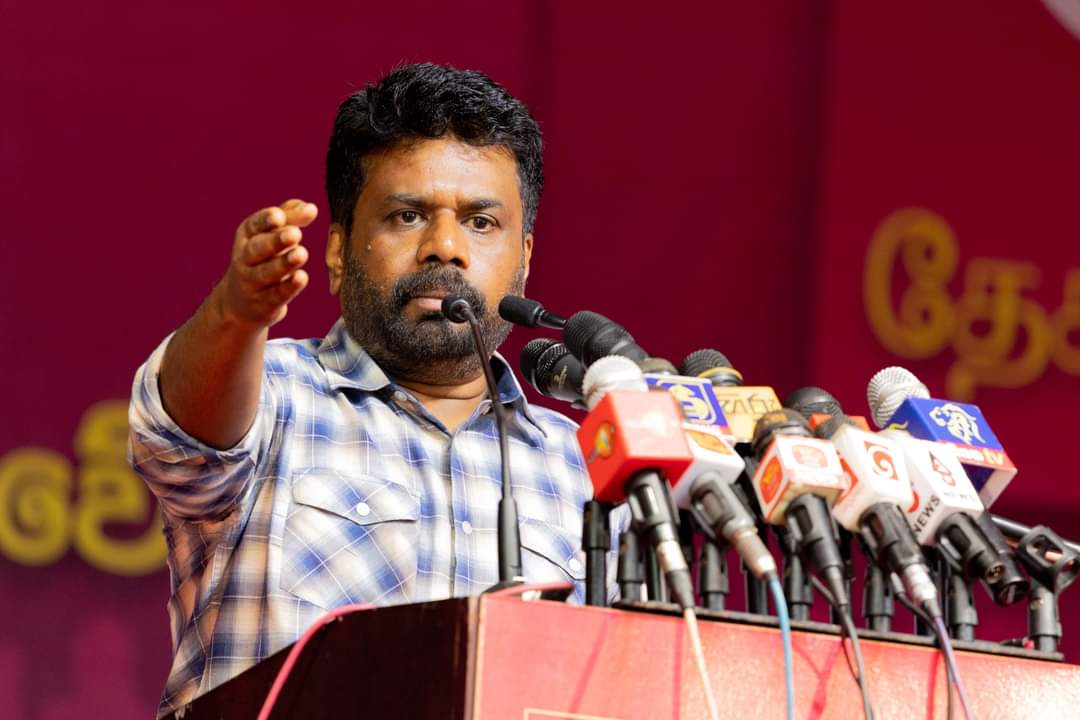
When Anura Kumara Dissanayake travelled to the North today, the choreography was familiar. Smiles were exchanged. Hands were shaken. Cameras captured the symbolism of a southern President walking northern soil with confidence, curiosity, and a carefully neutral vocabulary.
And he will have found, as every visiting leader does, that the Tamil people are unfailingly polite.
They are welcoming. They smile easily. They listen patiently.
This has often been misunderstood.
Politeness in the North is not endorsement. Courtesy is not amnesia. Hospitality is not political surrender. These distinctions matter—especially for a President whose political instincts lean toward reformist language and moral clarity.
The North has seen many visits. Too many, perhaps. Each came wrapped in its own promise of difference. Each carried the hope—sometimes genuine, sometimes manufactured—that this time would be the turning point.
History suggests caution.
The warmth is real. So is the scepticism.
President Dissanayaka will likely hear appreciation for simply showing up. Presence still counts in Sri Lanka’s politics. Absence has been felt more sharply here than in any other part of the island.
But he will also encounter something more complex: measured realism.
For over seventy years, Tamil political consciousness has been shaped not by speeches, but by outcomes. By what followed commissions. By what survived elections. By what quietly failed after delegations left.
Marginalisation in the North was not episodic. It was structural. It did not arrive with the war, nor did it leave with its end.
Language policy, land ownership, public employment, security governance, memorialisation, accountability—these were not footnotes. They were lived experience.
That history produces a particular political temperament: one that listens carefully, welcomes respectfully, and withholds belief until evidence arrives.
Political flourish meets political memory
President Dissanayaka is not known for flamboyance. His rhetoric tends toward the earnest, the reformist, the corrective. That may help. But even restrained language can sound like flourish when filtered through decades of disappointment.
The North has heard:
Promises of equality that stalled at implementation Assurances of reconciliation that stopped at symbolism Development pledges that arrived without consultation Security guarantees that never fully relaxed
As a result, northern audiences have become adept at separating tone from substance.
A remark that plays well in Colombo may land differently in Jaffna. Not because it is offensive—but because it has predecessors.
The paradox of “normalcy”
One of the quiet challenges facing President Dissanayaka is the concept of normalcy. Southern politics often frames progress in the North as a return to normal life: roads built, schools functioning, businesses reopening.
For northern Tamils, the question is more pointed: normal for whom?
The paradox of Normalcy
Development without dignity feels transactional. Stability without accountability feels conditional.
This does not mean there is hostility. On the contrary, the North has shown remarkable restraint in its expectations. What it resists is being asked to celebrate the baseline.
Smiles should not be mistaken for satisfaction
Visitors often leave the North reassured by the warmth of their reception. It is tempting to interpret courtesy as closure.
That would be a mistake.
Tamil society in the North has learned to coexist with uncertainty. It has learned that confrontation rarely yields results, while patience occasionally does. This has produced a political culture that is calm on the surface and analytical underneath.
People will listen to President Dissanayaka’s words. They will note what he chooses not to say. They will watch what follows his visit more closely than the visit itself.
Will administrative practices change?
Will land issues move beyond committees?
Will language equality be enforced, not just affirmed? Will the state’s posture feel less supervisory and more civic?
These are not abstract demands. They are everyday questions.
A moment, not a miracle
To his credit, President Dissanayaka does not appear to be selling miracles.
That restraint may be his greatest asset in the North. Grand reconciliation narratives have lost credibility here. Incremental, verifiable change has not.
The North does not expect instant transformation. It expects consistency. It expects honesty about limits. It expects fewer promises and more follow-through.
If this visit signals a willingness to engage without theatrics, to listen without defensiveness, and to act without publicity, it will be remembered kindly—even if quietly.
The test begins after the motorcade leaves
Northern Tamils are often described as “resilient”. That word is overused and under-examined. What it really means is that they have learned to live with uncertainty while maintaining dignity.
President Dissanayaka will leave the North today having been received warmly. That was never in doubt.
The real assessment begins tomorrow.
Not in speeches.
Not in statements.
But in files that move—or don’t.
In policies that shift—or stall.
In whether this visit becomes a reference point for change, or just another entry in a long ledger of well- meaning arrivals.
The North will not get carried away. It never does. It will wait. It always has.