In a significant development reflecting the evolving dynamics of global trade, Sri Lanka and Japan have signed a landmark Economic Cooperation Agreement aimed at enhancing trade relations between the two nations, according to a statement by the Sri Lankan government.
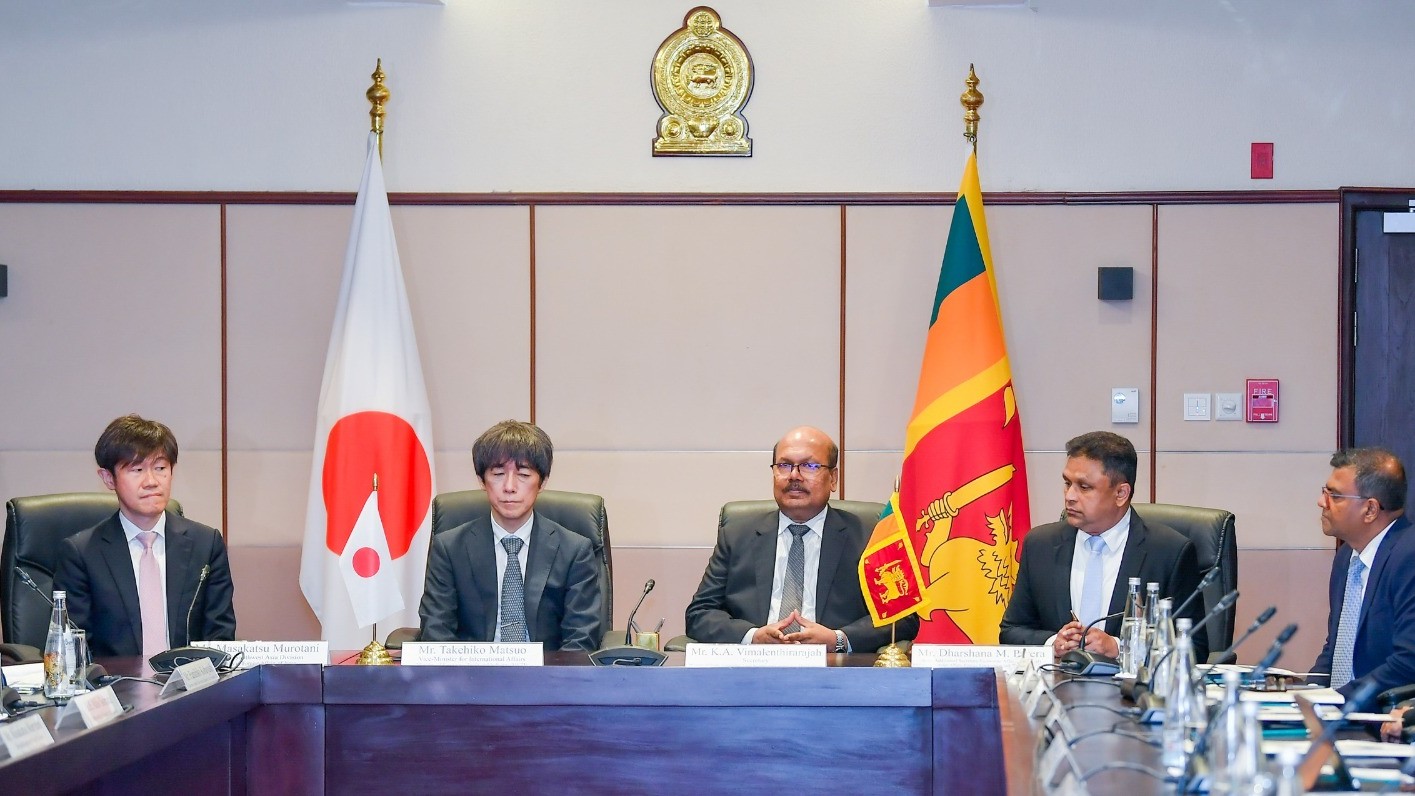
The Sri Lanka-Japan Intergovernmental Economic Policy Dialogue, which took place at the Ministry of Finance, resulted in a Memorandum of Cooperation (MoC) designed to formalize a strategic economic roadmap between the countries.
The agreement, signed by senior representatives from both governments, outlines a plan for an industrial economic corridor and a comprehensive review of Sri Lanka’s export capacity. A dedicated working group will be established to operationalize this corridor, marking a shift toward deep, institutionalized bilateral ties.
Representing Sri Lanka, Trade Ministry Secretary K. A. Vimalenthirarajah and Foreign Ministry’s Acting Additional Secretary Dharshana M. Perera signed the agreement. On behalf of Japan, it was signed by Matsuo Takehiko, Japanese Vice Minister for International Affairs at the Ministry of Economy, Trade and Industry (METI), and Murotani Masakatsu, Director of the Southwest Asia Division at the Ministry of Foreign Affairs.
This strengthening of Asian partnerships occurs amid the America First policies and universal tariff regimes of the second Trump administration, which are significantly impacting international trade.
As Washington shifts toward isolationism and leverages market access as a tool, countries like Sri Lanka and Japan are increasingly seeking “strategic autonomy” through regional collaborations.
By reinforcing their long-standing friendship and focusing on Foreign Direct Investment (FDI), both countries are building a safeguard against the unpredictability of the U.S. consumer market.
The dialogue also included contributions from the Japan External Trade Organization (JETRO) and leading Japanese companies such as Itochu and Mitsui, who shared their business experiences in Sri Lanka.
Officials expressed optimism that this new era of cooperation would not only attract essential investment to Sri Lanka but also establish a stable, rules-based trade environment independent of fluctuating trans-Pacific tensions.
As the U.S. continues to pursue its aggressive tariff strategy, this Sri Lanka-Japan alliance underscores a broader global trend toward a multipolar economic order in which middle powers and regional giants are crafting their own engagement frameworks.
(Colombo/February 17/2026)