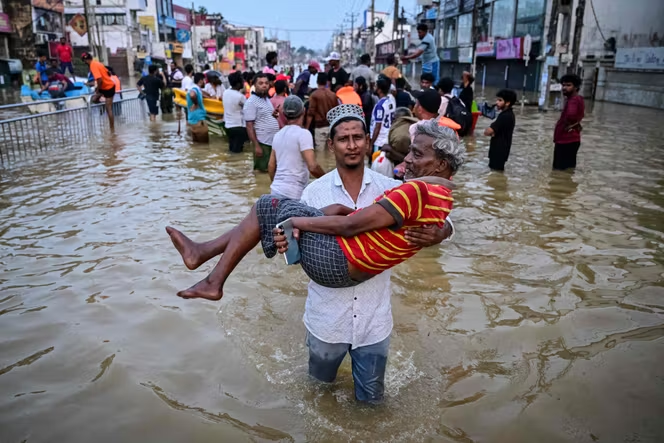
Sri Lanka has appealed for at least Rs. 31 billion in international assistance after catastrophic floods swept across the island, destroying farmland, crippling irrigation systems, and derailing efforts to stabilise the fragile post-crisis economy.
The government’s request for emergency support comes as the Colombo Stock Exchange (CSE) suffered a sharp downturn on Monday, falling 3.04 percent to a two-month low. The benchmark index plunged by more than 600 points.
“Market dropped by over 600 points, mainly due to the flood situation,” said Navin De Silva an Independent Research Analyst in Sri Lanka. “In my opinion, we will continue to see selling pressure.”
Government Seeks Urgent Funding
According to a communication issued by the Foreign Ministry on 28 November, Sri Lanka urgently requires funds to repair critical agricultural and irrigation infrastructure severely damaged by heavy rains and landslides.
The government’s request includes:
- Rs. 15 billion to restore paddy lands and vegetable cultivation
- Rs. 4.8 billion to rehabilitate minor irrigation tanks
- Rs. 900 million for damaged anicuts
- Rs. 8.3 billion for minor irrigation systems
- Rs. 1.8 billion to repair canals
More than 510,000 hectares of cultivated rice fields have been submerged or washed away. To replant these areas, authorities have sought international assistance for 112,000 metric tonnes of Urea, 30,000 metric tonnes of MOP, and 30,000 metric tonnes of TOP. Infrastructure failures continue to emerge, including the breach of the Mavil Aru dam wall in the Eastern Province.
Communities Hit Amid Ongoing Hardship
The disaster has struck households still reeling from the 2022 economic collapse. The 2023 UNDP–Oxford Multidimensional Vulnerability Index found that 48 percent of Sri Lankan households have limited or no capacity to withstand shocks, leaving them severely exposed to climate-induced disasters.
Families already living on the edge have now lost homes, crops, livestock and income sources within days.
Economic Pressures Intensify
The cyclone’s economic impact comes as Sri Lanka’s external sector faces renewed strain. The Central Bank’s latest data shows that the country recorded current account deficits in both September and October, with October alone posting a USD 199.5 million deficit. The year-to-date surplus has begun to narrow sharply.
Imports surged 26.7 percent year-on-year in October to USD 2.16 billion, while exports slipped 0.7 percent. This widened the trade deficit to USD 1 billion—almost double the gap recorded a year earlier. Vehicle imports accounted for USD 261 million for the month, bringing cumulative imports to USD 1.46 billion for 2025.
Tourism earnings, a key pillar of the recovery plan, are also underperforming. Despite higher arrivals, average daily tourist spending fell by 13.5 percent to USD 148 per day. Analysts attribute the decline to post-pandemic travel shifts, currency depreciation and tighter budgets among visitors. The Sri Lanka Tourism Development Authority reported that independent travellers—who tend to spend less per day but stay longer—now make up a growing share of arrivals, with women accounting for 58 percent of tourists.
Worker remittances remain one of the few bright spots. October recorded the highest monthly inflow since December 2020. Yet overall pressure on the external sector persists, with the rupee depreciating five percent against the US dollar this year and foreign investors pulling funds from the CSE in October.
Reserves Under Pressure
With USD 435 million in external debt servicing obligations due in the final quarter of 2025, economists warn that Sri Lanka’s ability to maintain foreign reserves is increasingly uncertain. Even with expected inflows from the IMF and ADB, the combination of agricultural collapse, infrastructure destruction and weakening export competitiveness is likely to strain Colombo’s financial position further.
A Long Road to Recovery
Cyclone Ditwah has already caused hundreds of deaths and affected more than a million people across the island, according to initial assessments. Entire districts remain underwater, key roads and bridges are damaged, and thousands of families have been displaced.
With the full extent of the destruction still being assessed, Sri Lanka’s recovery promises to be long, costly and heavily dependent on international support.
The crisis has once again exposed the fragility of the island’s economy—and the severe vulnerabilities of communities facing the compounded effects of economic mismanagement, austerity and intensifying climate disasters.