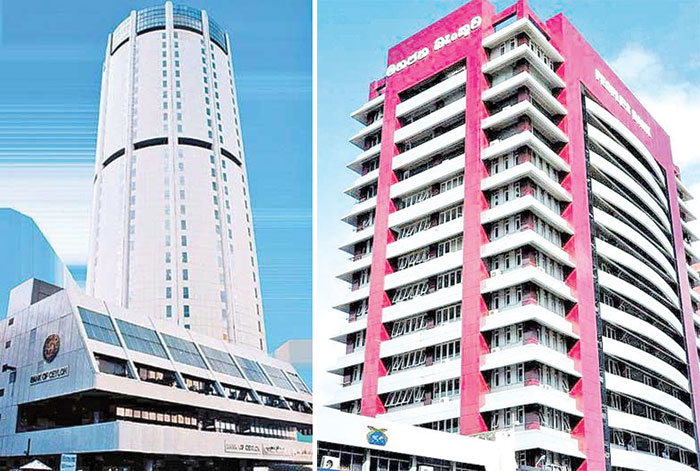
FINANCIAL CHRONICLE – The Central Bank of Sri Lanka is set to reassess its inflation target amidst discussions to lower the current high target, which allows the bank to increase prices by up to 7 percent annually. This initiative is part of renewing an agreement with the government, according to S Jegajeevan, Director of Economic Research. The agreement, formalized in October 2023 through a new central bank law, defines ‘price stability’ with an inflation ceiling of 7 percent and a floor of 5 percent.
Historically, under a 5 percent inflation target, Sri Lanka experienced repeated currency crises, particularly after the civil war, as foreign exchange shortages emerged from liquidity injections aimed at maintaining a mid-corridor rate. Critics argue that the aggressive macroeconomic policies permitted under this target eventually contributed to a sovereign default.
Technical Analysis
Jegajeevan told reporters in Colombo earlier this month, “We can continue at the same rate or we can revise it. This year, we plan to revisit the technical analysis because the economic conditions and global conditions have changed significantly.” Since September 2022, the central bank has provided monetary stability, allowing interbank rates to rise and pursuing broadly deflationary policies, despite a controversial rate cut in May 2025, which complicated reserve collection efforts.
The central bank benefited from a relatively benign monetary policy by the Federal Reserve, which kept global commodity prices in check. Since September 2022, inflation has been limited to around 4 percent, providing a strong foundation for economic recovery and allowing prices misaligned by currency collapse to normalize gradually.
Stakeholder Consultation
Jegajeevan emphasized the importance of stakeholder consultation in the upcoming review, stating, “We will conduct a stakeholder consultation and, based on the reviews, propose a possible inflation target. If both parties do not reach a consensus, the target will be decided by the Cabinet of Ministers, and the central bank will be expected to achieve it.”
There is increasing advocacy for a more stringent 2 percent inflation ceiling to mitigate the central bank’s potential to cause social unrest and political instability through inflationary rate cuts. Critics of the central bank’s liquidity injections, including inflationary open market operations and single policy rates that impair interbank market function and risk pricing, are gaining momentum.
In the past, Sri Lanka experienced similar inflation rates to the US until the 1980s when the central bank began depreciating the currency. The US addressed its inflation under Federal Reserve Chairman Paul Volcker, while Sri Lanka and other countries that abandoned the gold standard experienced record inflation, a situation only ameliorated in 2022. High-performing East Asian countries like Singapore, Taiwan, and Hong Kong adopted opposite approaches.
Tighter Ceiling
Analysts advocate for a 2 percent inflation ceiling to prevent a second sovereign default, especially in a scenario where private credit has rebounded and any liquidity injections to raise inflation could quickly lead to foreign exchange shortages and currency depreciation. External sovereign defaults became common after the IMF’s Second Amendment in the 1980s, particularly in Latin American countries with reserve-collecting central banks and flawed operational frameworks. Defaults typically occurred when central banks in these countries failed to raise rates in alignment and extended credit cycles beyond the Federal Reserve’s actions by injecting liquidity to target policy rates.
Historically, central banks could not escape accountability for currency depreciation or failure to maintain pegs, as such actions could create hardship and undermine democracy. Unlike in the 19th century, when classical economics dominated and members of parliament had substantial knowledge of the adverse effects of inflation, contemporary central banks often avoid accountability, contributing to significant currency collapses.
In the past, parliamentary members, including those associated with economic theorists like David Ricardo and banking experts like Alexander Baring, held central banks accountable for their actions. Now, with fewer issuers and the dominance of macroeconomic theory over classical economics, central banks often avoid accountability for currency depreciation, causing economic difficulty and undermining democratic principles. (Colombo/Feb22/2026)