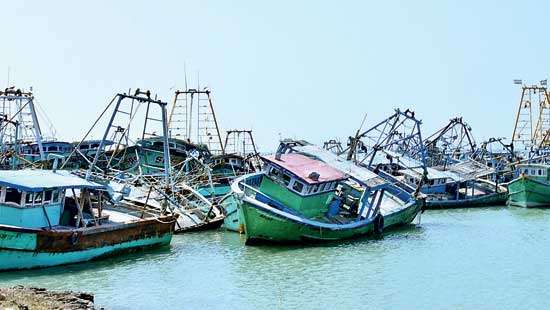
The Sri Lankan government has announced a new compensation scheme for fishermen whose boats have been damaged or lost, following concerns over inadequate insurance payouts. The initiative was outlined by President Anura Kumara Dissanayake in Parliament, where he explained the updated method for compensating affected fishermen.
According to President Dissanayake, all marine fishing operations require insurance coverage for their boats, and fishing licences are issued by the Ministry of Fisheries only if the vessel is insured. However, he noted that many insurance policies are undervalued, resulting in compensation amounts that are insufficient to purchase a replacement boat.
“Although compensation is received through insurance, that amount is insufficient to purchase a new boat because sometimes they insure for less amounts,” President Dissanayake told Parliament on Friday. “We therefore decided that the insurance compensation should be paid to the Cey Nor Foundation, which will then provide a new boat.”
In addition to receiving a new boat, affected fishermen will also be provided with a voucher worth Rs. 100,000 to purchase up to five fishing nets and related gear. The Cey Nor Foundation will further assist fishermen by undertaking repairs of damaged boats.
For those involved in inland fisheries, the government will provide Rs. 100,000 for each boat and Rs. 15,000 per net, up to a maximum of Rs. 75,000.
“Our objective is to rejuvenate the fisheries industry,” President Dissanayake emphasized.
The Sri Lankan fisheries sector has experienced considerable losses in the aftermath of Cyclone Ditwah. The cyclone brought rough seas, coastal flooding, and strong winds, resulting in the destruction of fishing boats, engines, nets, and onshore infrastructure.
Many small-scale fishermen lost their main sources of income as vessels were destroyed or swept inland. Key facilities such as fish landing sites, ice plants, and storage units were also damaged or rendered unusable. Prolonged fishing bans imposed for safety further disrupted daily incomes, particularly affecting coastal communities already facing economic challenges.
These disruptions have also impacted supply chains and market access, affecting fish availability and prices. The resulting challenges have raised concerns about food security and the long-term recovery of a sector that supports hundreds of thousands of livelihoods across Sri Lanka.