Sri Lanka’s latest nationwide electricity failure has exposed a familiar contradiction. The country is investing in renewable energy, yet its ageing electricity infrastructure struggles to manage the power already available. The consequences are being borne by consumers, businesses and taxpayers.
Sri Lanka has sunshine in abundance, wind corridors capable of producing substantial electricity and hydroelectric reservoirs constructed through decades of public investment. Yet the country continues to struggle with power interruptions, rising electricity costs and dependence on imported fossil fuels. The nationwide electricity breakdown on October 17 was another reminder that energy security remains an aspiration rather than an achievement.
The interruption disrupted electricity and water supplies, affecting households, commercial establishments and essential services. It also exposed the vulnerability of a national electricity network that must accommodate changing patterns of generation and consumption. For businesses already contending with increased operating costs, the interruption represented another entirely avoidable burden on productivity.
The government’s response has been to reaffirm its commitment to renewable energy, including its ambition to generate 70 percent of electricity from renewable sources by 2030. That objective is both economically sensible and environmentally necessary. However, the challenge is no longer simply one of generating electricity but ensuring that the national grid can accommodate and distribute it reliably.
Sri Lanka has made substantial progress in rooftop solar generation. Thousands of households and businesses have invested their own money in equipment that reduces dependence on conventional electricity generation. Yet during periods of particularly strong sunshine, the electricity system can experience difficulties absorbing the available solar supply, requiring restrictions on generation to maintain stability.
Submit Your Press Release
Get your company news, announcements, launches, appointments and events in front of a wider audience.


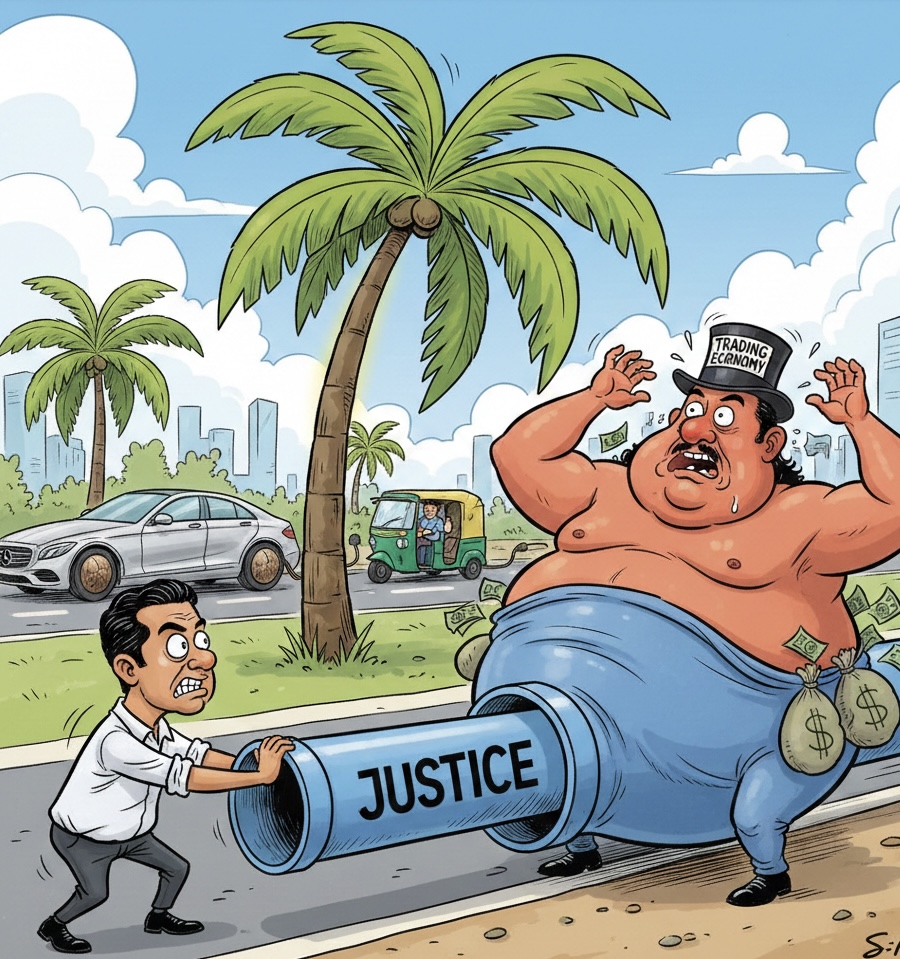
That presents an extraordinary contradiction. A country concerned about the cost of imported fuel can find itself unable to use all the renewable electricity its citizens are capable of producing. The difficulty is not the availability of natural resources but the adequacy of transmission infrastructure, storage facilities and the technical systems required to manage increasingly complex electricity flows.
The government has acknowledged the need for substantial investment in transmission networks and battery storage. These measures are necessary, but their implementation must be accompanied by transparent financing arrangements and realistic completion schedules. Sri Lanka has witnessed too many ambitious infrastructure announcements that subsequently become trapped in administrative delays, contractual disputes and shifting political priorities.
There is also the question of fairness to consumers who invested in rooftop solar systems under policies actively encouraged by successive administrations. Changes to electricity pricing and compensation arrangements may become necessary as the energy system evolves. Nevertheless, households and businesses should not be unfairly disadvantaged because policymakers failed to anticipate the consequences of their own incentive schemes.
The broader electricity debate has for years been dominated by disagreements involving public utilities, private generators, trade unions, renewable energy developers and politicians. Each has defended its preferred approach, frequently presenting technical and financial arguments that ordinary consumers have little opportunity to challenge. What is often missing is a serious examination of whether the resulting decisions deliver affordable and reliable electricity.
For the small manufacturer whose machinery stops during an outage, the debate is not theoretical. Neither is it theoretical for the student preparing for examinations, the hospital maintaining essential equipment or the pensioner attempting to manage a limited monthly income. Electricity is an essential service, and its reliability should be regarded as a fundamental measure of competent public administration.

The government deserves support where it pursues economically sound renewable energy development. Equally, it must accept responsibility for ensuring that investment in generation is matched by improvements in transmission, storage and system management. Announcing new megawatts is meaningless if the electricity cannot be delivered when and where it is needed.
Be that as it may, Sri Lanka’s electricity problem is not principally a shortage of sunshine, wind or water. It is a test of planning, management and institutional accountability. A country blessed with abundant natural resources should not remain vulnerable to darkness because successive administrations failed to build an electricity system capable of using them.