By Faraz Shauketaly NewsLine – Turning Point
Sri Lanka’s political class has discovered a new favourite word: recovery. It is spoken with confidence, delivered with charts, and repeated often enough to suggest inevitability. Recovery is happening. Recovery is underway. Recovery is proof that the worst is behind us.
It is also, increasingly, a euphemism.
Because what Sri Lanka is actually doing is stabilising — barely — while congratulating itself for not collapsing. That may be an achievement in a post-crisis economy. It is not a strategy. And it is certainly not transformation.
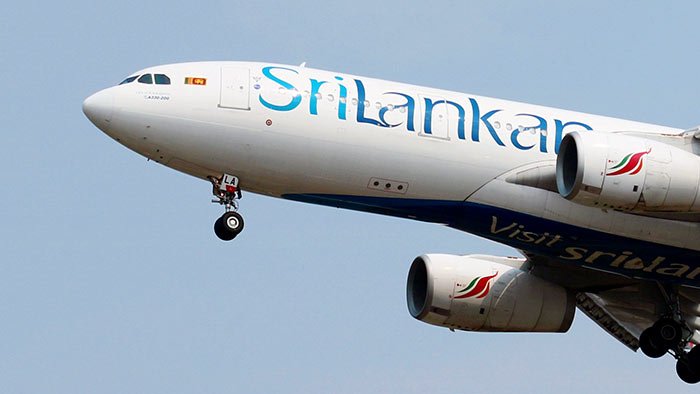
The centrepiece of this week’s optimism is tourism. The government has set a target of three million tourists, presenting it as the engine that will pull the economy forward after floods, debt restructuring, and social exhaustion. Airlines are aligned. Hotels are marketing resilience. The slogans are ready.
But let’s be honest. When a country leans on tourism again as its primary recovery lever, it is not signalling confidence. It is signalling a lack of alternatives.
Tourism is not development. It is exposure. It is vulnerable to weather, war, pandemics, airline economics, and geopolitics that Sri Lanka does not control. Betting the economy on arrivals is not forward planning — it is risk recycling.
Yes, tourists bring dollars. They always have. They also disappear quickly.
Meanwhile, manufacturing — the sector every government claims to want — continues to survive largely without policy support. Apparel exports grew modestly last year, despite global headwinds. That matters. It shows industrial muscle has not vanished. But survival should not be confused with expansion. Factories are holding on, not scaling up.
If this were truly a production-driven recovery, we would be talking about export diversification, technology upgrades, energy reliability, logistics reform, and credit access for manufacturers. Instead, we talk about hotel room counts and arrival numbers.
That tells you where the comfort zone lies.
On the fiscal front, the state is doing what states under pressure always do: raising revenue where resistance is weakest. Casino and gaming levies have been increased. Sin taxes are politically neat. They don’t require confrontation with powerful interests or structural reform. They buy time.
Sri Lanka has been buying time for decades.
What is missing — again — is a serious conversation about the tax base. Who pays? Who doesn’t? Who produces value, and who merely intermediates it? These questions remain politically inconvenient, which is precisely why they are never asked loudly.
Away from the economic headlines, the social reality remains uneven. Post-disaster recovery has not been universal.
Some communities rebuild. Others wait. Refugees, informal workers, and displaced families do not feature in glossy recovery narratives. Economic recovery, it turns out, is selective.
Even cricket — the country’s emotional escape hatch — reflects the imbalance. The return of Lasith Malinga as a consultant coach is welcome, but symbolic. Results, particularly in women’s cricket, underline a deeper truth: systems matter more than icons. Development pipelines cannot be replaced by nostalgia.
Zoom out, and the global context offers no comfort.
While Sri Lanka celebrates stabilisation, the world is becoming more unstable. North Korea is testing hypersonic missiles, reminding everyone that strategic volatility is not a future threat — it is a present condition. Even sport is no longer insulated. Bangladesh has asked for World Cup matches against India to be moved to Sri Lanka over security concerns. When cricket schedules bend to geopolitics, you know the temperature has changed.
Against this backdrop, Sri Lanka’s recovery narrative feels dangerously inward-looking.
The economy today rests on a narrow set of pillars: tourism, apparel, remittances, and a small cluster of production-heavy firms. Everything else is either aspirational or extractive. Trading still dominates. Import margins still feel safer than factory floors. Capital still prefers speed over patience.
This is not accidental. It is the outcome of decades of policy that rewarded proximity over productivity and trading over making.
And yet, the political language refuses to adapt. Recovery is spoken of as momentum. Stability is framed as success. Survival is marketed as growth.
That is the real risk.
Because a country that mistakes stabilisation for transformation eventually stops demanding more of itself. It lowers expectations. It manages decline politely.The uncomfortable truth is this: Sri Lanka is not short of ideas. It is short of execution. It is not short of plans. It is short of political courage to disrupt comfortable economic behaviour.
Tourism targets will not fix that. Sin taxes will not fix that. Press conferences will not fix that.
Only structural change will. Until then, Sri Lanka will continue to call survival recovery — and wonder, years later, why the promised prosperity never arrived.
That is not an economic failure. It is a political one.