Sri Lanka is in a stronger position to withstand global oil price shocks compared to the crisis in 2022, supported by a $7 billion foreign reserve buffer, according to the country’s central bank governor. This statement comes as global oil prices have surpassed $115 per barrel.
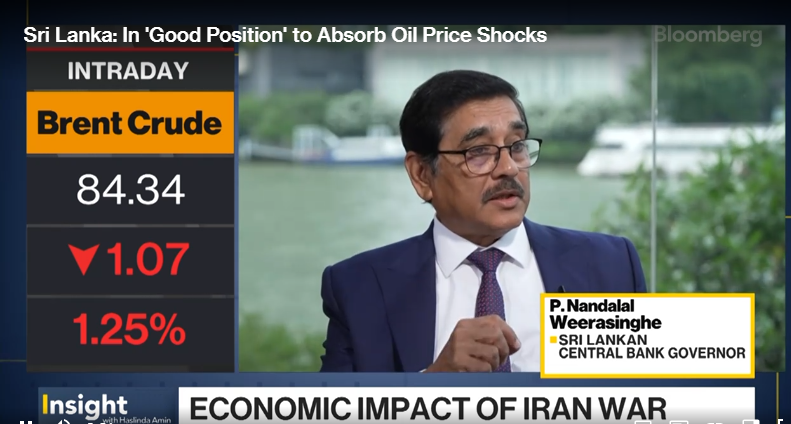
While the ongoing conflict following the US-Israeli attack on Iran could present challenges for oil-importing nations like Sri Lanka, the country’s current economic indicators provide a “good space” to absorb potential shocks, Nandalal Weerasinghe told Bloomberg.
“We are much better prepared compared to the past. For instance, during the crisis, inflation was at 70%. If this conflict had occurred under those conditions, it would have been much worse and incredibly difficult,” Weerasinghe stated.
He added, “Currently, we are in a favorable position, with inflation at the end of last month at 1.6%, compared to the 5% target the Central Bank aims to achieve.”
Weerasinghe emphasized, “There is significant space for us to absorb such price shocks into domestic inflation. However, there will still be some adverse implications for a small economy like ours, which relies on oil imports. This will inevitably affect both inflation and the balance of payments. But we can manage this because we have built external reserve buffers. In 2022/23, reserves were nearly at zero, but today we have over $7 billion, providing a sufficient buffer for the external sector.”
Regarding market volatility, he explained that under the current flexible inflation-targeting framework, the exchange rate acts as a natural “shock absorber.”
“In our inflation targeting framework, the exchange rate functions as the shock absorber, allowing us to absorb the shock through the exchange rate,” Weerasinghe mentioned.
When questioned about the possibility of returning to fuel shortages seen in previous years, the governor clarified that the 2022 shortage resulted from a lack of foreign exchange to purchase fuel at any price.
“This time it’s different. We have adequate reserves,” he said, noting that any future shortages would likely stem from global supply chain disruptions affecting all countries, rather than a shortage of dollars in Sri Lanka.
However, Weerasinghe cautioned that a prolonged global conflict could impact petroleum prices, tourism, and trade, necessitating the government to maintain strict monetary and fiscal policy buffers.
(Colombo/Mar9/2026)