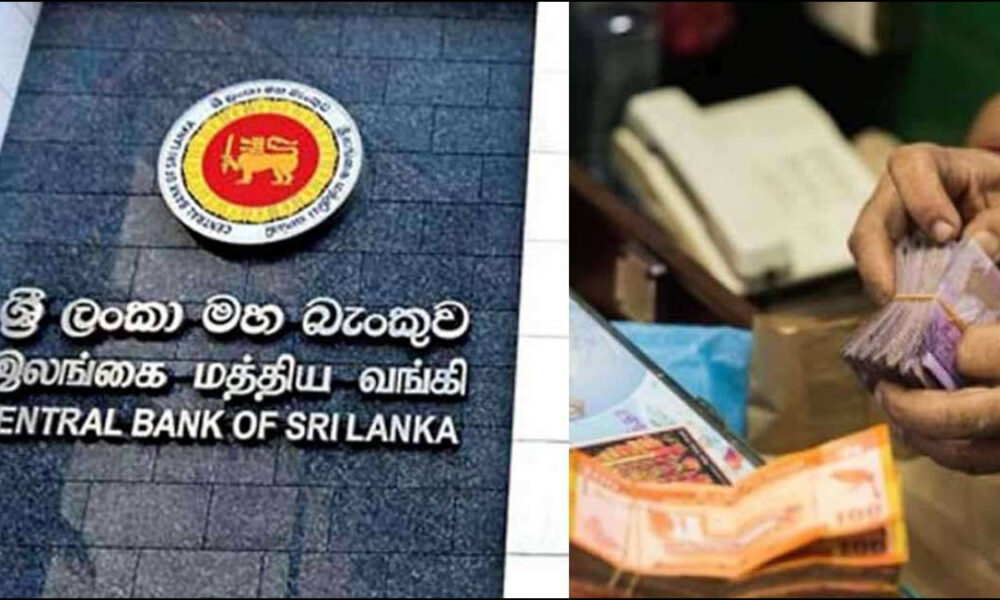
FINANCIAL CHRONICLE – The Central Bank of Sri Lanka has firmly upheld its 5% inflation target, which it has established in collaboration with the government for the upcoming three years, labeling it as the sole “optimal solution.” The Bank dismissed assertions that this target is excessively high and detrimental to the purchasing power of the populace.
Economists and critics of monetary policy have urged the Central Bank to reduce its inflation target from 5% to 2%. They argue that a lower target is crucial to disrupt the nation’s ongoing cycle of currency instability. Advocates for the 2% target contend that maintaining a 5% benchmark would inherently lead to a gradual decline in domestic purchasing power, resulting in price increases exceeding 15% over a three-year span.
Given the country’s struggle to recover from hyperinflation, detractors argue that a 5% inflation target fosters a situation where nominal prices and living expenses consistently outpace real wage growth, putting continuous pressure on lower- and middle-income families.
Nonetheless, the Central Bank has recommended and formalized an agreement with the government to uphold the 5% inflation target until October 2029. Central Bank Governor Nandalal Weerasinghe articulated during a panel with his junior staff that inflation targets are determined based on a nation’s growth potential and capability for expansion.
In response to inquiries about the advantages of a 2% inflation target, Weerasinghe stated, “While it may appear beneficial for purchasing power, it is actually detrimental. It would lead to a country that grows significantly below its potential… It does not optimize welfare and would negatively impact more individuals than it benefits.”
Submit Your Press Release
Get your company news, announcements, launches, appointments and events in front of a wider audience.


A key argument for adopting a 2% inflation target is the need for external stability and the protection of the Sri Lankan rupee. With Sri Lanka maintaining a 5% target while its main trading partners, including the United States, Eurozone, and major Asian countries, aim for 2%, a structural inflation gap of approximately 3% becomes ingrained in the economy. Economic theory suggests that this ongoing inflation disparity could exert consistent downward pressure on the domestic currency, prompting nominal exchange rate depreciation.
Supporters of a 2% target assert that it would align Sri Lanka with international standards, stabilize long-term exchange rate expectations, and mitigate recurring balance-of-payments challenges.
However, Weerasinghe reiterated that the 5% target strikes the “right balance,” and emphasized that extensive research informed this decision. “We do not see any alternative figures that would be better, whether it be 4%, 2%, or 3%,” he remarked. He also cautioned that a reduced inflation target could worsen the situation, stating, “If inflation hampers growth below its potential, that would not be the optimal solution.” He expressed confidence in the recommendation made to the government, which has been agreed upon.
The Central Bank plans to review the inflation target in the future, with any adjustments being based on data and evidence. Analysts have highlighted that a 2% inflation target is essential for lowering long-term interest rates and promoting capital investment. Under the current 5% target, which allows for fluctuations between 3% and 7%, lenders and foreign bondholders require a higher inflation risk premium to offset potential price volatility. This scenario drives up domestic borrowing costs for both private sector entities and the government.
By adopting a stricter 2% target, the Central Bank could enhance policy credibility, lower nominal interest rates across the yield curve, and create a more stable environment for long-term private sector investment and sustainable debt practices. Data indicates that the Central Bank has consistently missed its inflation targets for most quarters in the three-year period ending September 2026, attributing the failures to fluctuating energy prices. Disinflation was linked to lower energy costs leading to targets falling below the 3% lower limit, while higher energy prices resulted in surpassing the 7% upper limit. (Colombo/October 09/2026)