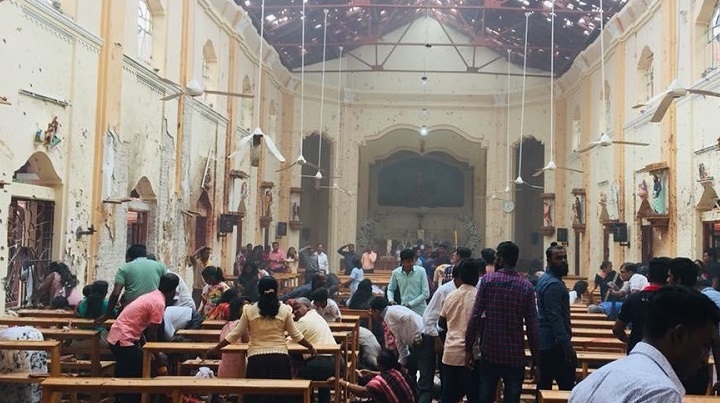
The arrest of Major General Suresh Salley, the former head of Sri Lanka’s State Intelligence Service (SIS) and Military Intelligence, on February 25, 2026, represents a significant shift in the country’s ongoing pursuit of justice related to the 2019 Easter Sunday attacks. These attacks, carried out by Islamist suicide bombers, resulted in the tragic loss of at least 269 lives and have long been mired in allegations of a “deep state” conspiracy and high-level cover-ups.
Salley’s arrest stems from his alleged involvement in the attack, accusations he has consistently denied. A trusted figure within the military, Salley was closely aligned with former President Gotabaya Rajapaksa, having been appointed as Defence Secretary in 2005 during Mahinda Rajapaksa’s presidency.
This arrest is not just about detaining a military officer; it strikes at the core of the intelligence network that operated under the Rajapaksa administration. For survivors and the families of the victims, Salley has been a figure of intense suspicion, especially after a 2023 Channel 4 documentary accused him of facilitating a meeting between the bombers and a third party to instigate a security crisis that could lead to governmental changes. The whistleblower from the documentary, currently seeking asylum overseas, has yet to provide a statement within Sri Lanka.
Despite Salley’s vehement denials, analysts suggest that his arrest indicates that investigators may have found evidence linking him to the conspiracy. Should this lead to the unraveling of the plot behind the Easter Sunday attack, it could mark the end of an era of impunity for high-ranking military and intelligence officials in Sri Lanka. However, it is important to note that Salley has not yet been proven guilty in a court of law.
The arrest also signals a significant shift within the State Intelligence Service. As the former SIS chief under Gotabaya Rajapaksa, Salley wielded considerable power, often operating behind the scenes. His detention may prompt a reevaluation of the intelligence hierarchy and could spark public debate over what the intelligence services knew prior to the attacks and whether information was purposefully withheld for political reasons. A successful prosecution could expose the interactions between state intelligence and extremist elements, revealing systemic issues within the intelligence community.
Politically, this move is a bold step for the current administration. By apprehending an individual closely linked with the previous regime, the government demonstrates its commitment to truth and reconciliation, aligning with its election promises. However, this action carries the risk of backlash from military factions and nationalist groups that view Salley as a war hero. The central question remains whether Salley acted independently or as part of a larger, coordinated effort.
This arrest moves Sri Lanka closer to identifying the mastermind behind the attacks, a demand consistently voiced by the Catholic Church and civil society. Nonetheless, there is a risk that the government’s actions could be perceived as a political maneuver rather than a sincere effort for justice. Rohan Gunaratna, an expert on terrorism and national security, argued in a column that the arrest is “politically motivated” and suggested that those responsible for Salley’s arrest should be investigated for negligence leading to the Easter Sunday attack.
Internationally, Salley’s arrest carries substantial implications. Sri Lanka has faced ongoing pressure from the UN Human Rights Council (UNHRC) and foreign governments to conduct a transparent and independent investigation. By taking decisive action against a high-profile figure like Salley, Sri Lanka aims to restore its credibility on the global stage, signaling its capability to investigate its security establishment, which could influence future human rights resolutions and economic aid.
(Colombo/February 25/2026)