FINANCIAL CHRONICLE – In Sri Lanka, the growth rate of new active credit cards saw an uptick in May compared to April; however, this momentum diminished in June, according to official statistics. This shift occurred alongside the Central Bank’s decision to tighten monetary policy in May.
During May, the country witnessed the addition of 25,720 new active credit cards, nearly double the 12,999 recorded in the previous month. However, in June, the increase slowed to 14,139 new cards. By the end of June, the total number of active credit cards had reached 2,268,712, marking a rise from 2,224,852 at the end of April, which represents a 2 percent growth over two months.
In the first half of this year, the number of active credit cards grew by 4.7 percent, accounting for an increase of 102,526 cards. The rise was more pronounced in 2025, with a 7.8 percent increase (157,730 cards) following a 4.8 percent gain (91,371 cards) in 2024. This growth can be attributed to the nation’s economic recovery and aggressive credit card promotional campaigns amid declining interest rates.
Experts noted that numerous banks have partnered with supermarkets and other retailers to enhance credit card promotions, benefiting from the unexpected recovery of the economy. Nonetheless, they pointed out that the slowdown observed in June compared to May could be linked to a 100 basis point increase in the Central Bank’s policy rate. With the implementation of tighter monetary policies and fuel rationing since March, consumer spending appears to have diminished.
The economic recovery and stabilization in Sri Lanka have encouraged consumers to increase their credit usage since 2023. Some analysts remarked that elevated penalty interest rates on credit cards had led certain users to cancel their cards during the economic crisis, but with rates now declining, those customers may be reactivating their cards.
Submit Your Press Release
Get your company news, announcements, launches, appointments and events in front of a wider audience.


With the recent policy rate hike from the Central Bank, analysts anticipate a slowdown in the issuance of new active credit cards, likely accompanied by a rise in penalty rates. In 2023, active credit cards experienced a decline of 1.8 percent (39,991 cards) following the country’s declaration of bankruptcy in 2022, which was exacerbated by a significant increase in the Central Bank’s monetary policy rates.
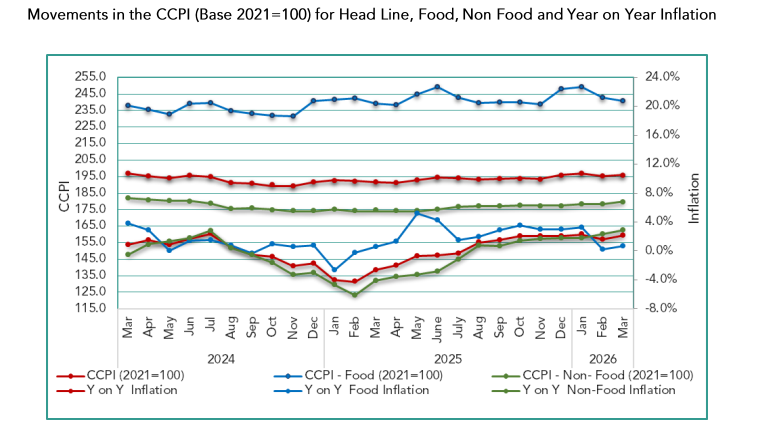
The Central Bank had dramatically raised interest rates in April 2022 to combat hyperinflation. However, inflation rates gradually decreased to a deflationary state by September 2024 before shifting back to positive figures in August of the previous year, following eight reductions in key policy rates since June 2023.
The cycle of policy tightening by the Central Bank commenced after inflation surged in April, which was driven by a steep depreciation of the rupee and rising prices due to fuel price hikes. (Colombo/August 24/2026)