The ongoing military conflict in the Middle East has significantly impacted the Sri Lankan tea industry, as exporters face challenges in supplying tea to the region. The industry estimates a revenue loss of approximately $10-15 million per week due to logistical issues and war-related risks that prevent fulfilling existing orders.
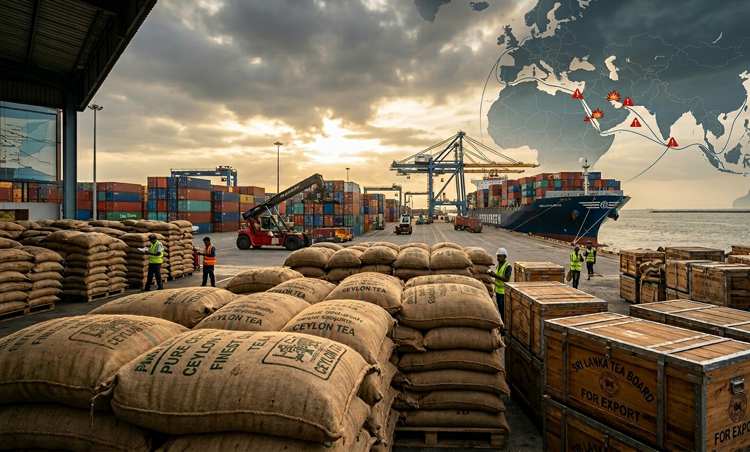
About 52% of Sri Lanka’s tea exports are destined for the Middle East, primarily sourced from the low-grown areas of the country, which are predominantly managed by smallholder farmers. In 2025, around 125 million kilograms of Ceylon tea, valued at USD 750 million, were exported to this region. Major importers include Iraq, Iran, Libya, Turkey, Saudi Arabia, Syria, and the United Arab Emirates. Although Libya and Turkey can be accessed via Africa, high freight charges currently deter buyers from importing tea.
The primary supply routes to Middle Eastern countries pass through the Strait of Hormuz and the Red Sea’s Suez Canal. Despite no official blockade at the Suez Canal, major shipping lines have ceased using these routes due to war risks. Consequently, tea exports to the region have nearly stalled due to several factors:
- Major shipping lines suspended services immediately after the conflict began.
- Several seaports in the region temporarily closed during the initial stages.
- Although some shipping lines resumed limited operations from March 4, freight charges increased by approximately USD 1,800 for a 20′ container and USD 3,000 for a 40′ container.
- Existing insurance coverage for exporters is no longer valid.
- A lack of regular and scheduled vessels operating from Colombo to Middle Eastern destinations.
Tea exporters are facing significant cash flow constraints, as payments for already dispatched shipments have been delayed due to the unsettled regional situation. This has limited their purchasing capacity, as evidenced by a decline in tea auction prices this week, with overall prices dropping by about Rs. 50 per kg and low-grown tea prices by about Rs. 75 per kg.
If the situation persists for a few more weeks, the tea auction will likely face severe impacts, with buyers potentially reducing tea purchases if export movements remain restricted. This could directly affect the income of smallholder tea farmers.
In January 2026, the country earned $121.8 million from tea exports, a 5% increase compared to $112.7 million in January 2025. While February 2026 figures are not yet available, they are expected to be similar to or higher than last year’s. The disruption in March’s tea exports will undoubtedly affect both the volume and value, though exact amounts are currently indeterminate.
Notably, Sri Lanka has settled about 95% of its debt to Iran through a tea-for-oil mechanism. Even if the military conflict ends, continuing tea supplies to Iran will be challenging unless a new system is implemented. Under ongoing US sanctions, exporters may be unable to supply tea to Iran outside this barter system. Iran annually purchases about 11 million kg of tea from Sri Lanka under this arrangement.
The issue was discussed with the Minister of Plantation & Community Infrastructure during a meeting on March 4, 2026. To mitigate the industry’s challenges, tea industry representatives have jointly requested government support to address cash flow issues and consider absorbing some of the additional freight and insurance costs. They have also sought government assistance to obtain the remaining $50 million payment due on tea shipments already made to Iran under the barter arrangement.
Tea Exporters Association
6/3/2026