The Colombo Stock Exchange (CSE) of Sri Lanka concluded the year with a notable increase in its main All Share Price Index (ASPI), which rose by 41.7 percent year-on-year, according to data from its official site. This growth, however, is slightly below the 49 percent year-on-year increase reported in 2024.
Brokers attributed the surge in local stock investments to the lower interest rates offered by traditional options like fixed deposits, prompting investors to seek alternatives in the stock market.
On Wednesday, the ASPI closed at 22,624.31, marking a 0.79 percent increase or a rise of 178.42 points from the previous session. Similarly, the more liquid S&P SL20 index saw a gain of 0.75 percent, or 46.03 points, finishing at 6,157.38.
The session witnessed significant investor interest in sectors such as capital goods, which recorded a turnover of 2 billion rupees, followed by food, beverage & tobacco with 488 million rupees, and the banking sector with 455 million rupees. These sectors contributed to the total market turnover of 4.6 billion rupees.
Key contributors to the ASPI included John Keells, which increased by 60 cents to 21.70 rupees; Senkadagala Finance, up by 118.75 rupees to 1,315.25 rupees; ACL Cables, rising by 5.10 rupees to 89.80 rupees; Sampath Bank, up by 1.50 rupees to 146.50 rupees; and HNB Assurance, which climbed by 12.75 rupees to 114.75 rupees.
The All Share Total Return Index (ASTRI) achieved a 44.23 percent increase, while the total return for the S&P SL20 climbed 28.76 percent for the year. The share volume for the session stood at 122,814,483 with 34,463 trades recorded, while the net foreign outflow was 103 million rupees.
The market faced a significant downturn in April 2025 when reciprocal tariffs announced by the US on “liberation day” affected investor confidence. On April 7, just two days before the tariffs were to be implemented, trading was halted during the opening session as the index dropped by 4.64 percent, closing at 14,660. However, the market quickly rebounded by 4.74 percent on April 10 following news that US President Donald Trump paused the tariffs for a 90-day period.
In a historic moment, the ASPI surpassed the psychological 20,000 mark during intraday trade on August 4. It subsequently hit 21,000 on September 19 and reached 22,000 on October 3.
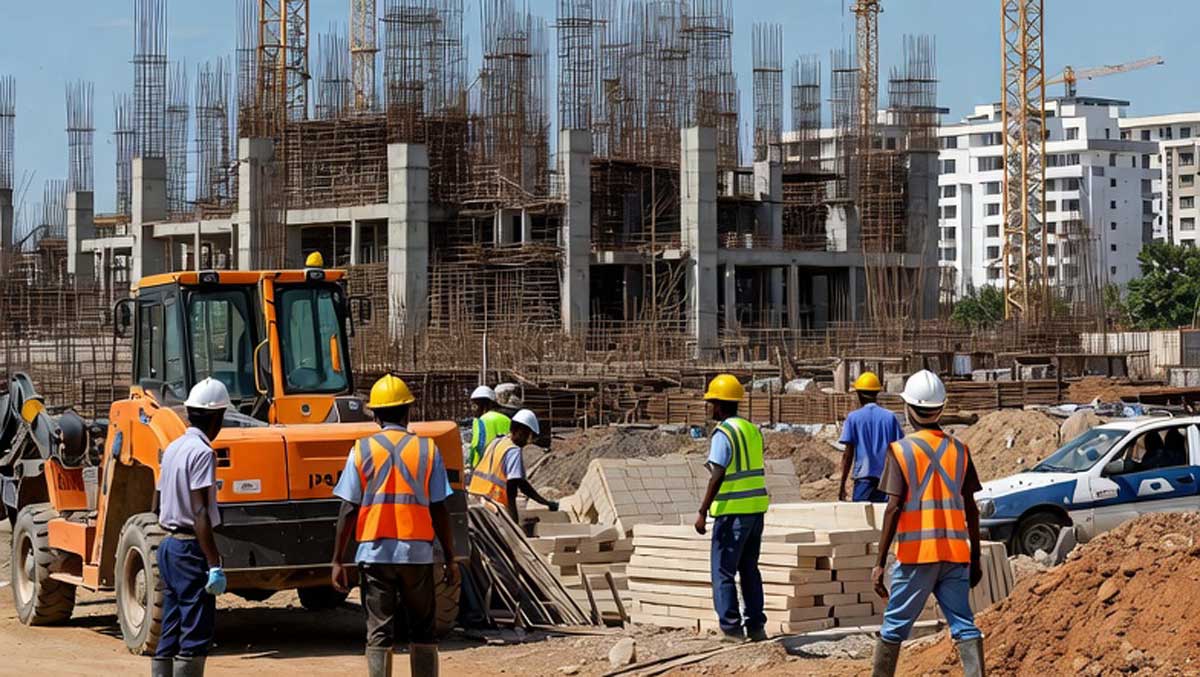
Following the impact of Cyclone Ditwah on November 28, the index experienced a 3.04 percent drop, reaching a two-month low due to selling pressure. Nevertheless, shares in construction and related sectors gained as a result of the cyclone’s destruction, which subsequently pushed the index upwards.
Globally, stock markets in 2025 have recovered to pre-pandemic levels, consolidating earlier losses. According to Reuters, “World stocks enjoy a quiet end to the year after a $15 trillion surge.”
Japan’s Nikkei 225 index saw a decline of 0.37 percent, closing at 50,339.48, influenced by a drop in technology shares, as reported by Japan’s Mainichi newspaper. Meanwhile, Pakistan’s Karachi Stock Exchange 100 index fell by 0.24 percent to 174,054.32. The Pakistan Observer attributed the positive growth in the stock market this year to “multiple economic developments that have lifted investor sentiment.”
Hong Kong’s Hang Seng index ended 0.87 percent higher at 25,630.54, with investors evaluating Chinese market data, according to CNBC. In India, equity markets concluded their tenth consecutive year of annual gains, with the Nifty 50 trading 0.74 percent higher at 26,129.60, and the Sensex index up by 0.64 percent at 85,220.60, as reported by Reuters.
As of 4:45 pm Sri Lankan time, spot gold was trading at 4,318.37 US dollars, down by 5.62 percent at the year-end. (Colombo/Dec31/2025)