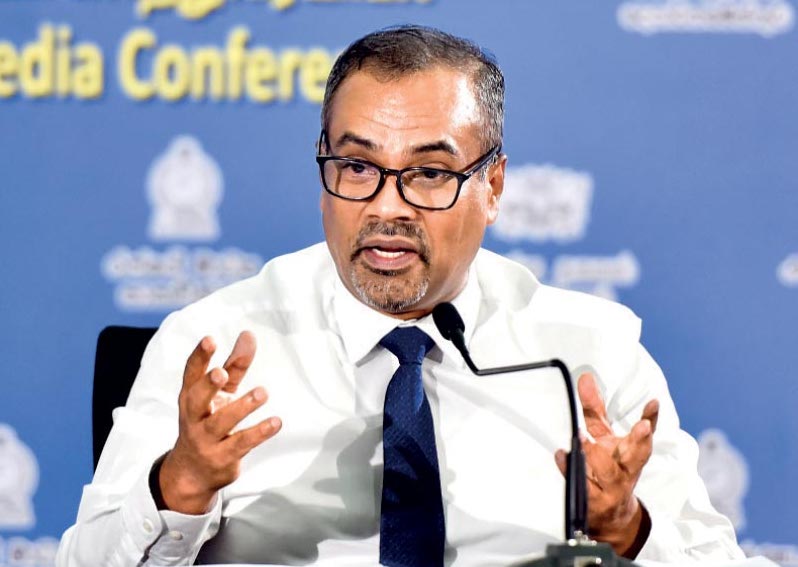
Sri Lanka is expected to exceed the primary spending limit of 13 percent of gross domestic product (GDP) in 2026 due to cyclone relief efforts, but will continue to adhere to the International Monetary Fund (IMF) debt sustainability targets, Deputy Minister of Finance and Planning Anil Jayantha Fernando announced.
The government is seeking parliamentary approval for an additional 500 billion rupees in expenditure for 2026. This supplementary estimate will increase total spending by approximately 1.4 percent of GDP, bringing the total to an estimated 7,657 billion rupees, according to Minister Fernando.
“We are exceeding the target because it is an emergency,” Minister Fernando explained. He added that Sri Lanka remains committed to achieving a debt-to-GDP ratio of 95 percent by 2032, as outlined in the IMF’s debt sustainability plan.
Fernando also emphasized that Sri Lanka will continue servicing its foreign debt, countering claims that repayments would only resume from 2028. “We are servicing foreign debt even now. There are payments due on restructured sovereign bonds from 2018, but we are meeting our obligations every year,” he said.
The 95 percent debt-to-GDP limit is a key benchmark set in the debt sustainability analysis. With the central bank maintaining inflation below its 5 percent target and sustaining a stronger rupee—even amid recent concerns about depreciation to 310 rupees per US dollar—Sri Lanka has so far met or exceeded IMF debt targets.
Historically, depreciation and the resulting foreign debt increases have not been fully accounted for in budget deficits. This has allowed macro-economists to avoid initial parliamentary scrutiny for monetary debasement, though rising national debt becomes a political issue when problems arise, analysts note.
Analysts also point out that before the adoption of inflationary policies and open market operations in the 1920s, government budgeting was generally based on historical cost accounting and cash-based principles.
Lower inflation provides greater real purchasing power for citizens and increases tax revenues, in contrast to high inflation environments where spending power and real tax collections erode. Stable inflation helps maintain consistent spending for government activities over time.
The current fiscal approach, which emphasizes revenue-based consolidation, departs from classical economic principles that recommend spending restraint. Under this doctrine, there is less emphasis on controlling expenditure, making the 13 percent primary spending limit an important safeguard against unchecked government spending.
External macro-economists have urged the government to increase capital spending as a form of stimulus. However, according to classical economic theory, capital expenditures should address critical infrastructure needs that yield long-term returns, rather than serve as short-term economic stimulus.
The importance of spending limits is underscored by the observations of Cyril Northcote Parkinson, who famously noted that government expenditures tend to expand to absorb all available revenue. “There is no surplus. There never has been. There never will be. Additional earnings cannot be allocated because they are quietly absorbed. We are no wealthier at the end of the month. We may actually be poorer,” Parkinson wrote, emphasizing that the elasticity of government revenue allows for continual spending increases.
Ultimately, the government has the ability to tax, borrow, and print money, which underscores the need for strong fiscal restraints to ensure long-term economic stability.
(Colombo/Dec17/2025)