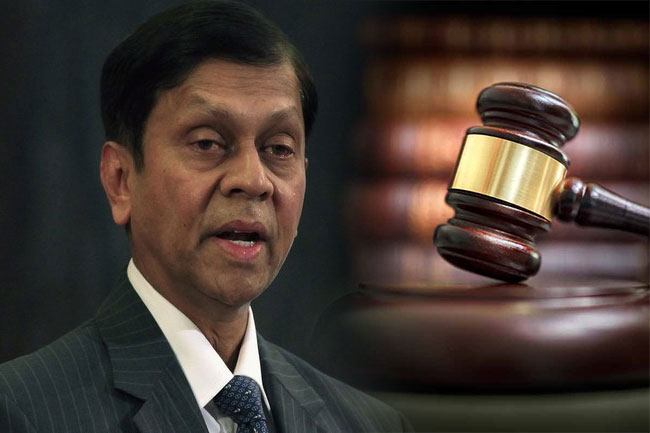
Sri Lanka’s long and often untidy pursuit of accountability has once again found a familiar name in its sights. The reported search for Shameendra Rajapaksa— linked to the long-running Airbus transaction—has reignited a debate that goes well beyond one individual: is justice being pursued evenly, or episodically?
The backdrop is not in dispute.
A British court, following a multi-jurisdictional investigation, fined Airbus SE after the company admitted to paying inducements in several countries, including Sri Lanka. Court findings referred to payments linked to aircraft purchases by SriLankan Airlines, including inducements connected to its then Chief Executive Officer.
On the strength of those findings, Sri Lankan authorities initiated domestic proceedings. That, too, is proper. International judgments do not substitute for local accountability; they trigger it.
Where the matter becomes problematic is how narrowly the net appears to be cast.
One Board Member, One Narrative?
Reports suggest that travel restrictions imposed on the former CEO were quietly lifted at some point, and that he may now be outside the jurisdiction—possibly in Australia. That detail, however, requires official confirmation. Speculation is not evidence, and Newsline makes no finding of fact on location or culpability.
What can be asked—fairly and squarely—is this:
Why does the investigative spotlight appear to rest on a single board member when the decisions in question arose from a collective governance structure?
SriLankan Airlines, like any state-owned carrier, operated through a Board of Directors, bound by fiduciary duties, committee processes, and collective approvals. Aircraft purchases of the scale involved in the Airbus transaction are not executive whims; they are board-level decisions, often routed through finance, procurement, and ministerial oversight.
A single director cannot unilaterally commit an airline to multi-billion-dollar aircraft orders.
If inducements were paid to influence outcomes, the logical investigative path would examine:
the full board in office at the time,
the approval processes used,
the minutes, sub-committee recommendations, and dissent (if any), and
the role of officials beyond the boardroom.
Yet, at the time of writing, there are no confirmed reports of other directors from that period being formally questioned or charged. That absence—if accurate—raises uncomfortable questions about selectivity, not justice.
Optics Matter in Accountability
This is where the case risks drifting from legal pursuit into political optics.
The pursuit of “another Rajapaksa,” fair or otherwise, inevitably invites accusations of inequity—that accountability is being personalised rather than institutionalised. Sri Lanka has been here before: high- profile chases, partial prosecutions, prolonged investigations, and ultimately no closure.
Justice delayed is one problem. Justice perceived as uneven is worse.
This is not an argument for impunity. Nor is it a defence of any individual named or unnamed. It is an argument for process integrity.
If evidence exists against one director, it should be tested in court.
If evidence exists against others, it should be pursued with equal vigour.
If evidence does not exist beyond a single actor, the authorities owe the public an explanation as to why.
The Bigger Question
The Airbus case is now old enough to demand answers, not headlines.
Sri Lanka cannot afford accountability that looks episodic, personality-driven, or politically convenient. Nor can it sustain investigations that stretch on indefinitely, producing neither convictions nor institutional reform.
The public is entitled to ask:
Why only one?
Why not all?
And why, after all these years, is there still no resolution?
Until those questions are addressed transparently, the Airbus case risks becoming not a landmark in accountability—but another exhibit in Sri Lanka’s long gallery of unfinished justice.
And unfinished justice, history tells us, convinces no one.