SIX YEARS LATER — WHY THIS ARREST MATTERS
The arrest of the retired former Head of Military Intelligence — who later served as head of the State Intelligence Service — is not routine. It is not administrative housekeeping. It is not a procedural footnote.
It is a development that strikes at the centre of the unanswered questions surrounding the Easter Sunday bombings of 2019.
For nearly six years, Sri Lanka has lived with unfinished business. Two hundred and seventy-nine lives were lost. Churches were desecrated. Families were broken. Governments changed. Commissions were appointed. Reports were tabled. Promises were repeated.
Yet closure never came.
The central question has always been this: did elements within the intelligence establishment possess prior knowledge of the attacks? Foreign intelligence alerts were received. Names were known. Internal warnings were reportedly circulated. The system had information. The attacks still happened.
It was that question which moved from local debate to international spotlight in 2022 when Channel 4 News commissioned Executive Producer Ben de Pear and his Team Basement Films. The programme raised allegations and aired testimony questioning whether state-linked intelligence actors may have had foreknowledge.
The reaction at home was immediate and fierce. Parliamentarians condemned the film. Former President Gotabaya Rajapaksa described it as “absurd” and “a tissue of lies.”
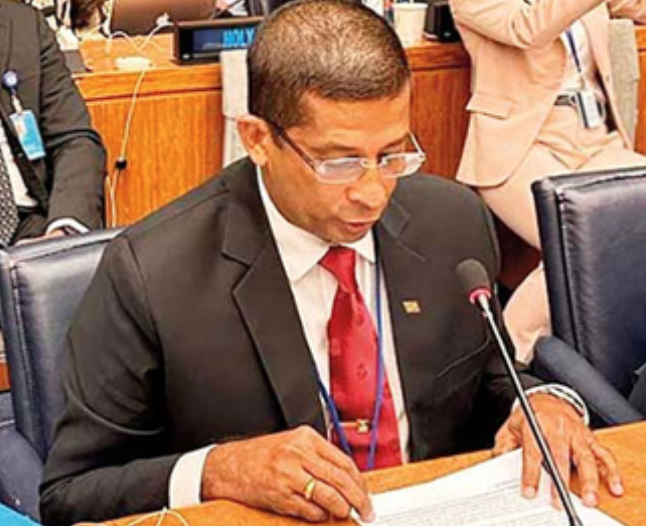
Major General Sallay strongly denied the allegations. He stated publicly that he was not in Sri Lanka on the day of the attacks.
Channel 4 did not assert that he was. That statement came from Sallay himself. It was also notable that he responded to the programme through privately funded legal representation, writing formally to OFCOM, the UK broadcast regulator. OFCOM ruled that the broadcaster had afforded him
adequate opportunity to respond and did not fault the documentary.
Almost perversely, whilst these denials are crowding the space like a limited-over cricket final, what is shocking, unconscionable too, is that desite a full 14 days lapsing since the Sri Lanka state received intelligence of the attack. Not a word was brough to the notice of the public, the Church, the Police. Then President Sirisena almost too conveniently left with family to India and onward to Siam.
The controversy never subsided. It lingered, especially within the Catholic community, where grief has remained intertwined with frustration at the lack of finality.
This arrest, nearly six years on, therefore carries institutional weight. It signals that investigators may now be prepared to move beyond the periphery and into the command structures of intelligence itself. For years, critics argued that accountability stopped short of power. If this development is substantive, it marks a shift.
There are multiple narratives surrounding Easter 2019. Some stories may ultimately prove irrelevant to the Police. Others may prove crucial. It is therefore an absolute imperative that every single aspect is fully and independently investigated. Selective inquiry will not suffice. Says Malcolm Cardinal Ranjith, “a full investigation of every aspect is essential.”
Only a comprehensive examination can bring dignity to the dead and credibility to the state. It is only then that those who perished may finally lay in peace.
Caution remains essential. Arrest is not conviction. Questioning is not proof. Due process must prevail. But the symbolism of this moment is undeniable.
Sri Lanka is navigating fragile recovery and rebuilding institutional trust. If the machinery of justice is finally prepared to test itself without fear or favour, history may record this as the point where rhetoric gave way to reckoning.
Six years is a long time in politics.
It is an eternity in grief.
The nation waits — not for spectacle, but for truth.